
- Release Year: 2000
- Platforms: Windows
- Publisher: Interplay Entertainment Corp.
- Developer: Taldren, Inc.
- Genre: Simulation, Strategy, Tactics
- Perspective: Behind view
- Game Mode: LAN, Online PVP, Single-player
- Gameplay: Business simulation, Managerial, Space flight, Vehicular
- Setting: Futuristic, Sci-fi
- Average Score: 77/100
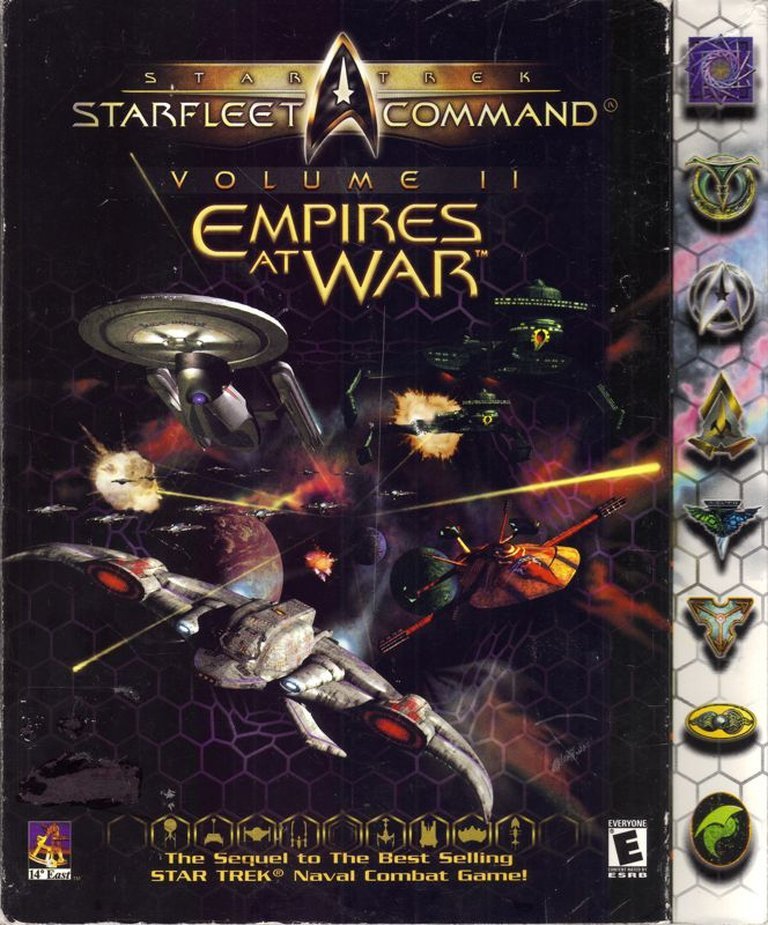
Description
Star Trek: Starfleet Command Volume II – Empires at War is a strategic space simulation game that continues the storyline from its predecessor. Players navigate a hex-based map, engaging in real-time combat with various alien races, each equipped with unique ships and weapons. The game features a dynamic mission generator and a diverse array of spacecraft, from small corvettes to massive battleships, allowing for tactical depth and strategic decision-making.
Gameplay Videos
Star Trek: Starfleet Command Volume II – Empires at War Free Download
Star Trek: Starfleet Command Volume II – Empires at War Cracks & Fixes
Star Trek: Starfleet Command Volume II – Empires at War: Review
Introduction
Set phasers to “engage” for a voyage into one of Star Trek‘s most ambitious tactical simulations. Released in December 2000 by Taldren and published by Interplay, Star Trek: Starfleet Command Volume II – Empires at War (SFC2) sought to refine its predecessor’s formula while introducing bold new systems. Yet, like a starship venturing into uncharted space, its journey was marked by both exhilarating innovation and frustrating turbulence. This review argues that Empires at War is a masterclass in tactical depth and lore fidelity but stumbles under the weight of its own complexity and repetitive design, leaving it as a cult classic for Trekkies and simulation enthusiasts rather than a mainstream triumph.
Development History & Context
Developed during the golden age of Star Trek gaming, Empires at War emerged from Taldren’s desire to expand upon the success of 1999’s Starfleet Command, itself an adaptation of the Star Fleet Battles board game. The team, led by designer Erik Bethke and programmer Marc Hertogh, faced significant challenges:
- Technical Constraints: Built on an enhanced version of the original’s engine, the game retained its 2D plane combat but added 3D ship models and dynamic lighting. The era’s hardware limitations necess