
- Release Year: 2021
- Platforms: Nintendo Switch, PlayStation 4, PlayStation 5, Windows, Xbox One, Xbox Series
- Publisher: Aniplex, SEGA Corporation, SEGA Europe Ltd.
- Developer: CyberConnect2 Co., Ltd.
- Genre: Action
- Perspective: Third-person
- Game Mode: Online PVP, Single-player
- Gameplay: Arena combat, Combo-based combat, Fighting
- Setting: Fantasy
- Average Score: 76/100
Description
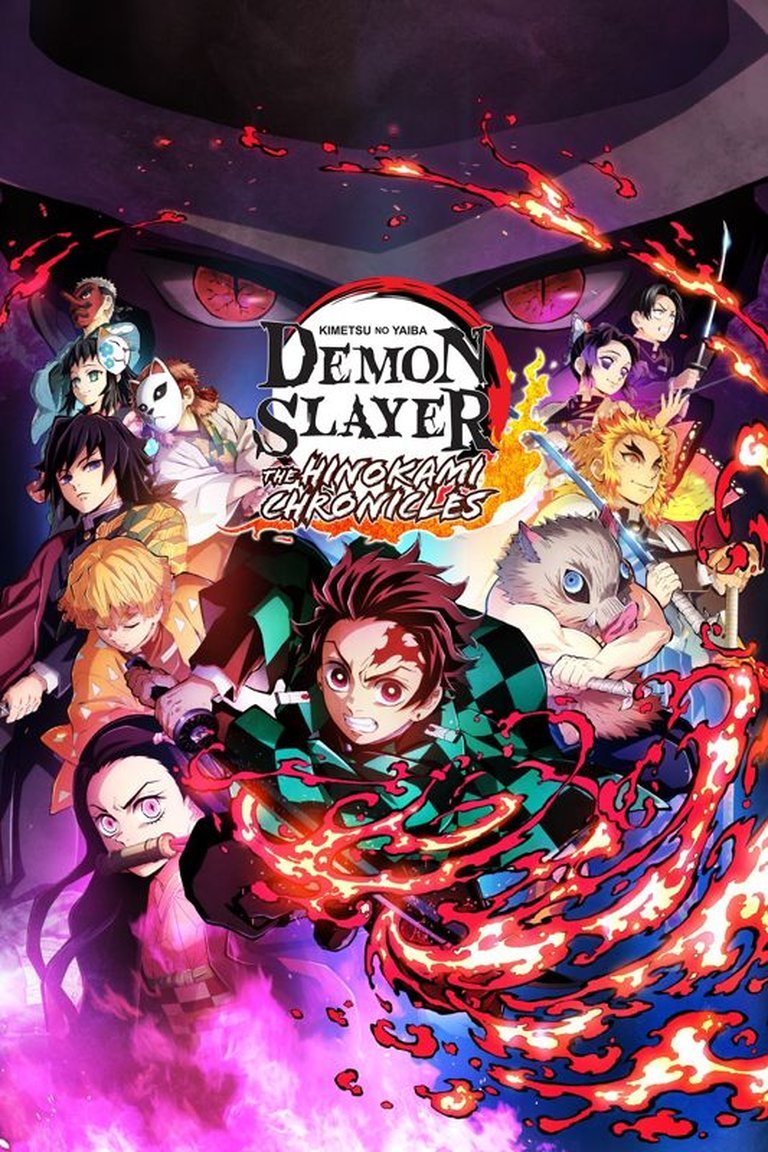
Demon Slayer: Kimetsu no Yaiba – The Hinokami Chronicles is a 3rd-person action-fighting game set in Taisho-era Japan, adapting the hit anime/manga’s story. Players follow Tanjiro Kamado, a kind-hearted boy turned demon slayer after his family is slaughtered and his sister Nezuko transformed into a demon. The game features intense combat against supernatural foes, iconic characters from the Demon Slayer Corps, and key story moments from the series, blending arena battles with dramatic narrative sequences in a visually striking anime-style world.
Gameplay Videos
Where to Buy Demon Slayer: Kimetsu no Yaiba – The Hinokami Chronicles
PC
Demon Slayer: Kimetsu no Yaiba – The Hinokami Chronicles Free Download
Demon Slayer: Kimetsu no Yaiba – The Hinokami Chronicles Cracks & Fixes
Demon Slayer: Kimetsu no Yaiba – The Hinokami Chronicles Mods
Demon Slayer: Kimetsu no Yaiba – The Hinokami Chronicles Guides & Walkthroughs
Demon Slayer: Kimetsu no Yaiba – The Hinokami Chronicles Reviews & Reception
ign.com : A bigger, better version of its predecessor.
cbr.com (76/100): Surpassed its predecessor’s more divisive score.
siliconera.com : The sequel feels more well-rounded and fun.
Demon Slayer: Kimetsu no Yaiba – The Hinokami Chronicles: Review
Introduction
In the pantheon of licensed anime games, Demon Slayer: Kimetsu no Yaiba – The Hinokami Chronicles stands as a shimmering blade forged with reverence for its source material. Released in 2021 amidst the meteoric rise of Koyoharu Gotōge’s Demon Slayer franchise, the game sought to translate the anime’s kinetic combat and emotional narrative into an interactive experience. Developed by CyberConnect2, the studio behind the acclaimed Naruto: Ultimate Ninja Storm series, The Hinokami Chronicles promised a love letter to fans—a promise it delivers, albeit with a few demonic blemishes. This review dissects the game’s legacy as a hybrid arena fighter and action-adventure title, evaluating whether it merely rides the coattails of its anime counterpart or carves its own path in gaming history.
Development History & Context
Studio & Vision
CyberConnect2, renowned for its expertise in anime adaptations, aimed to replicate the Ultimate Ninja Storm formula’s success with Demon Slayer. Leveraging their proprietary 3D animation techniques and Unreal Engine 4, the studio sought to capture Ufotable’s iconic art style while infusing the combat with cinematic flair. The vision was clear: prioritize accessibility for casual fans while embedding enough depth for competitive play, all framed within a story mode that recreated pivotal arcs from the anime.
Technological & Market Constraints
Launched in a post-Demon Slayer: Mugen Train fervor, the game faced pressure to capitalize on the franchise’s zeitgeist. Development coincided with the COVID-19 pandemic, which likely impacted motion capture and voice recording. Despite this, CyberConnect2 optimized the game for PlayStation 4, PlayStation 5, Xbox One, Xbox Series X/S, PC, and later Nintendo Switch, ensuring broad accessibility. The decision to avoid open-world mechanics in favor of linear, story-driven segments reflected both technical limitations and a desire to maintain narrative focus.
Gaming Landscape
In 2021, the arena fighter genre was saturated with titles like Dragon Ball FighterZ and Jump Force. The Hinokami Chronicles differentiated itself by emphasizing single-player storytelling—a risky move in a multiplayer-dominated genre—while banking on Demon Slayer’s explosive popularity to attract fans. Its success hinged on balancing fan service with substantive gameplay, a challenge CyberConnect2 navigated with mixed results.
Narrative & Thematic Deep Dive
Plot & Adaptation
The Hinokami Chronicles adapts the anime’s “Unwavering Resolve Arc” (Season 1) and Mugen Train film, following Tanjiro Kamado’s quest to avenge his family and cure his demonified sister, Nezuko. The narrative unfolds through episodic chapters, alternating between exploration segments in diorama-like environments and bombastic boss fights. While the story adheres slavishly to the source material—often replicating dialogue and shot compositions verbatim—it occasionally truncates emotional beats, relying on players’ preexisting investment to fill gaps.
Characterization & Dialogue
Characterization shines through faithful voice acting (both Japanese and English casts reprise their roles) and expressive 3D models that mimic Ufotable’s animation. Tanjiro’s earnest determination, Nezuko’s silent resilience, and Zenitsu’s comedic cowardice are rendered with care. However, supporting characters like Sabito and Makomo feel underdeveloped, their arcs reduced to vignettes. Dialogue oscillates between poignant (“Even if I’m reborn… I’ll keep protecting everyone!”) and melodramatic, mirroring the anime’s tonal shifts but sometimes straining under the weight of excessive exposition.
Thematic Resonance
The game echoes the franchise’s core themes: familial bonds, perseverance against despair, and the moral ambiguity of demonhood. Tanjiro’s empathy for demons—humanized through tragic backstories—adds narrative depth, while battles against Upper and Lower Moons explore the cost of vengeance. Yet, thematic complexity is often overshadowed by the game’s relentless action, leaving quieter moments feeling like interludes rather than integral storytelling.
Gameplay Mechanics & Systems
Core Combat Loop
At its heart, The Hinokami Chronicles is a 3D arena fighter with deceptively simple mechanics. Players control a team of two characters, chaining light/heavy attacks, dashes, and guard breaks into combos. Each fighter boasts three unique special moves tied to their Breathing Style or Blood Demon Art, consuming a regenerating skill gauge. The standout feature is the Ultimate Art system: cinematic supers triggered by filling a meter through combat, culminating in attacks like Tanjiro’s Hinokami Kagura: Dance or Rui’s Cutting Thread Cage, all rendered with jaw-dropping visual splendor.
Innovations & Flaws
CyberConnect2’s signature QTE-driven boss battles elevate key story fights (e.g., vs. Akaza or Enmu), blending interactive drama with mechanical challenge. However, the combat’s simplicity becomes a double-edged sword. While accessible, it lacks the depth of contemporaries like Guilty Gear Strive, with limited combo customization and a defensive meta overly reliant on parries. The versus mode—supporting local and online play—suffers from balance issues (e.g., spammable projectiles) and a modest roster (18 characters at launch, expanded to 31 via updates).
Progression & UI
Outside combat, the game incorporates light RPG elements. Kimetsu Points earned in story mode unlock cosmetics, character variants (e.g., “Kimetsu Academy” skins), and gallery items. The UI is functional but uninspired, with menus echoing the anime’s aesthetic but lacking intuitive navigation. Exploration segments—while visually charming—are criticized for repetitive “detective vision” sequences where players track scents or sounds, padding runtime without adding meaningful gameplay.
World-Building, Art & Sound
Visual Direction
The Hinokami Chronicles is a technical marvel, cel-shaded to replicate Ufotable’s ethereal art style. Character models burst with detail: Tanjiro’s scar glows during combos, Nezuko’s demon form radiates menace, and environments like the snow-laden Mount Sagiri or the fiery Mugen Train evoke the anime’s painterly backdrops. Battles are awash in particle effects—water dragons, lightning flashes, and swirling flames—though excessive visual noise can occasionally obscure gameplay.
Sound Design & Music
The soundtrack, composed by Go Shiina (Tales of Zestiria) and featuring anime themes like LiSA’s “Gurenge,” amplifies emotional beats. Voice acting is pitch-perfect, with Natsuki Hanae (Tanjiro) and Abby Trott (Nezuko) delivering standout performances. Sound effects—the shing of blades, the crackle of demonic energy—immerse players in the world, though repetitive battle barks (“Water Breathing, Tenth Form!”) grow tiresome.
Atmosphere & Immersion
From the haunting serenity of the Butterfly Mansion to the claustrophobic dread of the Infinity Train, the game captures Demon Slayer’s tonal range. Dynamic weather, day/night cycles, and ambient sounds (e.g., cicadas in rural villages) deepen immersion. However, static NPCs and minimal interactivity outside combat remind players they’re experiencing a curated homage rather than a living world.
Reception & Legacy
Critical & Commercial Response
Upon release, the game garnered mixed-to-positive reviews (averaging 70/100 on Metacritic). Critics praised its visuals and faithfulness to the anime but criticized repetitive exploration and shallow versus mode. Commercial success was undeniable: it sold 1.32 million copies by December 2021, surpassing 3.5 million by 2024. Nominated for Best Fighting Game at The Game Awards 2021, it lost to Guilty Gear Strive but cemented Demon Slayer’s viability in gaming.
Evolution & Industry Impact
The game’s legacy lies in bridging anime fandom and gaming. Its success greenlit a 2025 sequel, The Hinokami Chronicles 2, which expanded the roster and refined mechanics. While not revolutionary, it demonstrated the profitability of story-driven anime adaptations, inspiring titles like Jujutsu Kaisen: Cursed Clash. However, its reliance on the IP’s popularity highlights the genre’s stagnation—few licensed fighters dare innovate beyond fan-service frameworks.
Conclusion
Demon Slayer: Kimetsu no Yaiba – The Hinokami Chronicles is a paradoxical triumph. As an interactive monument to its source material, it excels, replicating the anime’s beauty and heart with technical prowess. Yet, as a standalone game, it falters, shackled by repetitive design and combat that prioritizes spectacle over depth. For fans, it’s an essential companion to the anime—a kinetic retelling of Tanjiro’s journey. For the industry, it’s a reminder that licensed games, while lucrative, must evolve beyond nostalgia to endure. In the annals of video game history, The Hinokami Chronicles will be remembered not as a revolution, but as a finely crafted blade—sharp, beautiful, and unmistakably familiar.