
- Release Year: 2015
- Platforms: Android, Macintosh, PlayStation 4, PS Vita, Windows
- Publisher: Devolver Digital, Inc.
- Developer: Acid Nerve
- Genre: Role-playing (RPG)
- Perspective: Diagonal-down
- Game Mode: Single-player
- Gameplay: Action RPG, Puzzle elements
- Setting: Fantasy
- Average Score: 80/100
Description
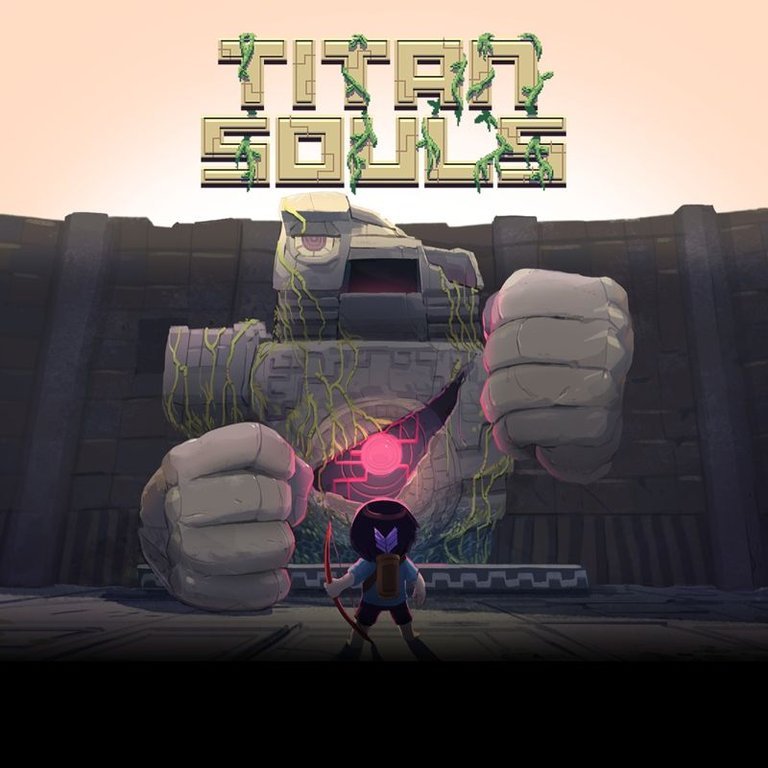
Titan Souls is a challenging single-player action RPG set in a desolate, fantastical world where a lone wanderer seeks to defeat nineteen colossal Titans, each guarding a fragment of the primordial Titan Soul. Armed only with a single magical arrow, players engage in tense one-hit-kill battles against unique bosses, requiring precise timing, observation, and strategy. The sparse, atmospheric environments—ranging from icy valleys to ancient shrines—serve as backdrops for these encounters, with minimal exploration or progression beyond the battles. Inspired by titles like Shadow of the Colossus and Dark Souls, the game emphasizes skill and perseverance in its minimalist yet punishing design.
Gameplay Videos
Where to Buy Titan Souls
Titan Souls Cracks & Fixes
Titan Souls Mods
Titan Souls Guides & Walkthroughs
Titan Souls Reviews & Reception
metacritic.com (74/100): An example of how powerful a game can be when a developer concentrates on executing one idea.
ign.com (80/100): Titan Souls is itself an unassuming and short expression of mechanical excellence.
opencritic.com (87/100): One singular great idea is the foundation for a smart and occasionally thrilling action puzzler.
theloonybinblog.wordpress.com : Titan Souls is a semi-isometric pixel-art action/adventure game.
Titan Souls Cheats & Codes
PlayStation Vita (PSV)
Use with VitaCheat utility.
| Code | Effect |
|---|---|
| $A200 8117DBEE 809BF040 $A200 8117DF9E 809BF040 |
Walk Through Wall |
| $A100 81171CA4 0000BF00 | God Mode |
Titan Souls: A Desolate Pilgrimage Through Shadow and Arrow
Introduction
In the echoing chambers of indie gaming’s lineage, Titan Souls (2015) stands as a stark monument—a game that strips away the periphery of narrative and exploration to distill the Shadow of the Colossus formula into a minimalist, brutal ballet of one-hit combat. Developed by the UK-based studio Acid Nerve and published by Devolver Digital, this pixel-art odyssey plunges players into a forsaken world where 19 titans guard fragments of a primordial soul. Its legacy lies not in grandeur but in refinement: a relentless gauntlet where patience, pattern recognition, and precision fuse into moments of sublime triumph. This review argues that while Titan Souls stumbles in narrative depth and pacing, its mechanical purity and atmospheric design cement it as a cult classic that reshaped expectations of indie boss-rush gameplay.
Development History & Context
Studio Vision & Origins
Titan Souls emerged from Acid Nerve’s participation in Ludum Dare 28 (2013), a game jam themed “You Only Get One.” The prototype—developed in Adobe Flash by designer-programmer Mark Foster and artist Andrew Gleeson—won top honors for mood, audio, and overall design. Its core conceit was radical simplicity: a single arrow, one-hit mechanics, and three titans. Over six months, Acid Nerve expanded the concept into a full release, porting it to a custom engine with composer David Fenn’s haunting score.
Technological & Creative Constraints
Drawing inspiration from Shadow of the Colossus, Dark Souls, and early Legend of Zelda titles, Acid Nerve embraced pixel art not as nostalgia-bait but as a pragmatic choice. With a two-person core team (later supplemented by Abstraction Games for ports), the studio focused on precision over scale. The PS Vita and Android versions (2015) maintained fidelity but highlighted the game’s reliance on controller precision—a challenge on smaller screens.
The Indie Landscape of 2015
Released amid a surge of “Soulslikes” and minimalist indies (Hotline Miami, Furi), Titan Souls capitalized on a market hungry for uncompromising difficulty. Devolver Digital’s marketing framed it as a “boss-rush pilgrimage,” leveraging the era’s fascination with masochistic gameplay. Yet unlike contemporaries, it rejected procedural generation or loot systems, doubling down on handcrafted encounters.
Narrative & Thematic Deep Dive
The Silenced Wanderer
The game’s lore is whispered through environments, not dialogue. Players control a nameless, barefoot child armed with a mystical bow, traversing ruins to slay titans bound to shards of the “Titan Soul”—a cosmic essence bridging Earth and the afterlife. The plot, as summarized by MobyGames, centers on a “quest for truth and power,” but this vagueness serves as deliberate abstraction.
Symbolism & Environmental Storytelling
Titans embody elemental and existential themes:
– Gol-Iathetch (stone golems) evoke futility, crumbling when their weak points—often literal hearts—are pierced.
– Knight Elhannon, a legendary slayer turned titan, mirrors the player’s path, suggesting cyclical futility in the pursuit of power.
– Truth, the final boss, manifests as a floating eye encircled by wheels—a nod to Fullmetal Alchemist’s Truth but reinterpreted as an omniscient, indifferent force.
The overworld’s shattered temples and overgrown forests imply a fallen civilization that once worshipped these titans. Murals depict rituals and battles, framing the player’s journey as another link in a chain of doomed seekers—a theme underscored by the Elder, an optional titan who cryptically warns, “You will be sought in turn.”
Themes of Isolation & Sacrifice
Mechanics reinforce narrative: the player’s fragility (one-hit deaths) mirrors the titans’ vulnerability, blurring hunter and prey. Victory transitions show the hero violently reclaiming their arrow—a visual metaphor for the cost of power. The absence of NPCs or dialogue amplifies isolation, positioning the world itself as a tomb for ambition.
Gameplay Mechanics & Systems
The Arrow & The Dance
Combat reduces RPG conventions to their essence:
– Single-Arrow System: Firing or recalling the arrow roots the player, creating tension between offense and defense.
– One-Hit Vulnerability: Titans telegraph attacks via elaborate animations, demanding spatial awareness (e.g., dodging rolling boulders or laser grids).
– Puzzle-Boss Design: Each titan requires exploiting environmental interactions. Mol-Qayin (lava creature) must be lured into solidifying its magma shell; Eyecube retaliates with beams that propel it airborne, exposing its core.
Innovations & Flaws
– Psychedelic Precision: Success hinges on pixel-perfect aim and timing, evoking the “aha!” moments Portal critics praised.
– Frustration Factor: Lengthy boss runbacks (notably for The Soul) drew ire. As Destructoid noted, “Traversing empty landscapes between attempts sapped momentum.”
– Replay Modes: Hard Mode amplifies speed/attack patterns; Iron Mode permadeath appeals to masochists. Yet without procedural elements, repetition dulls longevity.
UI & Progression
The HUD vanishes outside combat, immersing players in David Fenn’s mournful guitar melodies. Progression is nonlinear—players unlock areas after defeating four initial guardians—but the lack of upgrades or collectibles narrows the focus to pure skill.
World-Building, Art & Sound
Pixel Poetry
Acid Nerve’s art direction merges 16-bit austerity with subtle 3D flourishes. Titans loom in diorama-like arenas: ice caves refract light through crystalline bosses; forests shroud plant-themed foes in dappled shadows. The palette shifts from ashen grays (ruins) to volcanic reds, mirroring the journey’s escalating stakes.
Acoustic Atmosphere
Fenn’s soundtrack oscillates between serenity and dread. Exploration themes feature fingerpicked guitar melodies, evoking solitude, while boss tracks (like The First Gate) escalate with frenetic strings and percussion. The contrast heightens emotional whiplash—a “clever juxtaposition,” per Game Informer.
The Weight of Silence
Ambient sounds—wind whistling through ruins, lava bubbling—deepen immersion. Titans roar without dialogue; their threat is conveyed through animation (e.g., Sludgeheart’s gelatinous quaking). This minimalism strengthens the mythic tone, though some critics (Polygon) lamented the “empty world” as underdeveloped.
Reception & Legacy
Critical Divide
Titan Souls earned a 74 Metascore, praised for innovation but critiqued for brevity (~3-hour runtime):
– PC Gamer (87/100): “A singular great idea… smart and occasionally thrilling.”
– IGN (8/10): “Creative fights and fluid controls” overshadowed by “generic environments.”
– Polygon (6.5/10): “Anticlimactic” bosses and “repetitive patterns.”
Controversy & Resilience
A 2015 review-bombing campaign—sparked by artist Andrew Gleeson mocking critic TotalBiscuit—briefly marred its Steam rating. Yet sales remained robust, with ports to PS4/Vita expanding accessibility.
Industry Influence
Titan Souls’ DNA resurfaces in:
– Furi (2016): Hybridizing bullet-hell and melee combat.
– Eldest Souls (2021): Pixel-art soulslike boss rushes.
It also prefigured the “one-hit wonder” subgenre, proving minimalism could coexist with depth.
Conclusion
Titan Souls is a masterpiece of reduction—a game that hones combat to a razor’s edge while sacrificing narrative richness and exploratory depth. Its titans are puzzles etched in fire and shadow, demanding not reflexes alone but cerebral engagement. While the empty overworld and occasional control jank tarnish its polish, Acid Nerve’s vision endures as a testament to indie audacity. For all its starkness, Titan Souls captures a universal truth: in gaming, as in myth, the greatest challenges are often the simplest. It belongs not atop Mount Olympus but in the pantheon of cult classics—a flawed yet unforgettable pilgrimage.