
- Release Year: 2023
- Platforms: Windows
- Publisher: Midnight Factory Games
- Developer: Midnight Factory Games
- Genre: Adventure
- Perspective: Side view
- Game Mode: Single-player
- Gameplay: Graphic adventure, Hidden object, Mini-games
- Setting: Europe
- Average Score: 100/100
Description
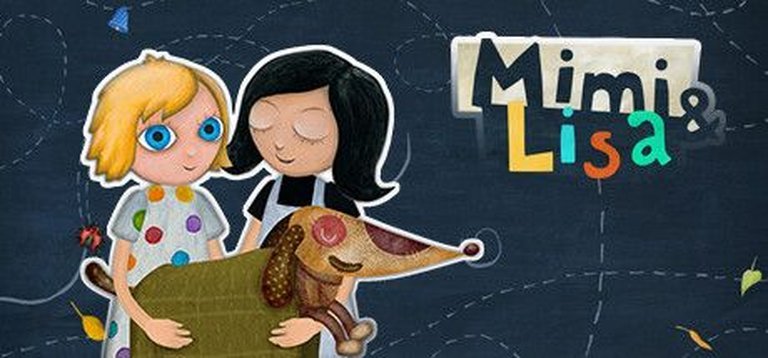
Mimi and Lisa: Adventure for Children is a charming 2D puzzle-adventure game adapted from the TV series of the same name, where players guide the magical Mimi and imaginative Lisa through whimsical locations. Designed for young audiences, the game features simple point-and-click puzzles, hidden object challenges, and mini-games set in familiar environments from the show, all accompanied by fairy-tale visuals and enchanting music. With endorsements from the Slovak Arts Council, it offers a child-friendly exploration of joyful stories and light problem-solving activities.
Gameplay Videos
Where to Buy Mimi and Lisa: Adventure for Children
PC
Mimi and Lisa: Adventure for Children Cracks & Fixes
Mimi and Lisa: Adventure for Children Reviews & Reception
steambase.io (100/100): Mimi and Lisa – Adventure for Children has earned a Player Score of 100 / 100.
Mimi and Lisa: Adventure for Children: Review
Introduction
In a gaming landscape saturated with blockbuster titles, Mimi and Lisa: Adventure for Children emerges as a quiet yet culturally significant anomaly—a Slovakian-developed educational adventure designed explicitly for children aged 4–9. Released in March 2023, this adaptation of the eponymous TV series offers a gentle entry point into gaming for preschoolers and early elementary students while weaving themes of empathy, inclusivity, and sensory exploration into its fabric. This review argues that while Mimi and Lisa lacks mechanical complexity, it shines as a thoughtfully crafted, government-endorsed educational tool that prioritizes emotional intelligence and accessibility over traditional gameplay depth.
Development History & Context
Vision Amidst Constraints
Developed by Midnight Factory Games—a small Slovakian studio based in Bratislava—Mimi and Lisa was born from a mission to create “high-quality mobile and PC games for children with educational elements.” The studio, led by producer Branislav Cíbik, emphasized professionalism despite its modest size, consulting with established developers and assembling a multidisciplinary team of animators, sound designers, and Unity programmers. Notably, the project received endorsement and funding from the Slovak Arts Council, situating it within a broader cultural initiative to support local media and inclusive storytelling.
Technological and Market Landscape
Built in Unity for Windows (and later HTML5 via itch.io), the game leverages straightforward 2D side-scrolling mechanics to accommodate its young audience’s limited motor skills and attention spans. Released into a market dominated by hyper-stimulating children’s games (e.g., Roblox, Minecraft), Mimi and Lisa deliberately avoids sensory overload, focusing instead on tactile, low-pressure interactions. Its March 2023 launch coincided with a surge in demand for educational games post-pandemic, yet it faced challenges standing out in a crowded Steam storefront without major marketing resources.
Narrative & Thematic Deep Dive
A Tale of Sensory Worlds
The narrative centers on two companions: Mimi, a blind girl who perceives her environment through sound, touch, and smell, and Lisa, her sighted, exuberant friend. The duo navigates domestic and outdoor settings inspired by the TV series—sewing with neighbors, baking cakes, decorating Christmas trees—while solving simple challenges that require collaboration. Mimi’s blindness is neither tragic nor sensationalized; instead, it’s framed as a unique perspective that enriches her interactions.
Layered Themes
– Empathy and Inclusion: Mimi’s reliance on non-visual senses encourages players to rethink how environments can be navigated, fostering awareness of disability. Lisa’s contrasting curiosity provides balance, illustrating how differing abilities strengthen friendships.
– Order vs. Adventure: Mimi’s “carefully tidy room” symbolizes safety and routine, while Lisa introduces playful chaos—a dichotomy reflecting childhood’s tension between security and exploration.
– Education as Joy: Puzzles are disguised as whimsical tasks: identifying shapes by touch, matching sounds to objects, or locating hidden items. Learning is framed as a collaborative adventure rather than a chore.
Dialogue and Characterization
Though dialogue is minimal (relying on voice-overs in English, Czech, and Slovak), Mimi and Lisa’s personalities emerge through expressive animations. Mimi’s cautious tenderness contrasts with Lisa’s exuberant gestures, creating a dynamic that resonates with young players without relying on text.
Gameplay Mechanics & Systems
Core Loop: Exploration and Mini-Games
The gameplay revolves around point-and-click exploration across 2D side-scrolling environments (e.g., Mimi’s room, gardens, a bakery). Players switch between characters to solve context-sensitive puzzles:
– Mimi’s Challenges: Audio-based tasks (e.g., identifying objects by sound) or tactile interactions (e.g., sorting textured shapes).
– Lisa’s Challenges: Visual hunts (hidden-object scenes) or kinetic mini-games (e.g., rapid clicking to “decorate” a tree).
Progression and Accessibility
– No Fail States: Designed to nurture confidence, puzzles offer infinite retries with gentle auditory cues guiding success.
– Dual-Character Mechanics: Switching perspectives teaches problem-solving via complementary strengths, though some critics note the system feels underdeveloped (Steambase).
– UI/UX: A clean, icon-driven interface ensures intuitive navigation, though the lack of keyboard support limits accessibility for players with motor impairments.
Flaws
– Repetition: Mini-games recur frequently, risking monotony for older children.
– Pacing: Real-time interactions lack urgency, which may frustrate seasoned young gamers accustomed to faster feedback loops.
World-Building, Art & Sound
A Hand-Drawn Fairytale
The art direction mirrors the TV series’ aesthetic: soft pastel backgrounds, fluid character animations, and a tactile, storybook-like quality. Environments are densely packed with interactive elements—fluttering curtains, chirping birds—that reward curiosity without overwhelming the player.
Sound as a Narrative Device
Sound designer Robert Bruckmayer crafts an auditory landscape central to Mimi’s experience:
– Diegetic Audio: Wind chimes, rustling leaves, and character footsteps provide environmental storytelling.
– Musical Themes: Whimsical, piano-driven melodies shift seamlessly between locations, evoking a “magical fairytale atmosphere” (Steam).
– Voice Acting: Warm, expressive narration (available in three languages) ensures comprehension across age groups.
Atmosphere
The game’s greatest strength lies in its coziness—a safe, inviting space where failure is impossible, and exploration feels rewarding. This ambiance aligns perfectly with its preschooler target demographic.
Reception & Legacy
Critical and Commercial Performance
At launch, Mimi and Lisa garnered minimal mainstream attention, with zero critic reviews on aggregation sites like MobyGames. However, it holds a 100% positive user score on Steambase based on eight reviews, with parents praising its “gentle educational value” and “non-stressful design.” Commercial success remains modest; priced at $2.99, it occupies a niche within the family-friendly indie market.
Legacy and Influence
While not revolutionary, the game contributes to two growing trends:
1. Sensory-Inclusive Design: Its focus on non-visual gameplay predates titles like The Vale: Shadow of the Crown, proving disability can inspire mechanics rather than limit them.
2. Regional Game Development: As a Slovak Arts Council-funded project, it exemplifies Eastern Europe’s burgeoning investment in culturally specific children’s media.
Conclusion
Mimi and Lisa: Adventure for Children is a tender, purposeful creation—a game that understands its audience and executes its vision with sincerity. Its simplistic mechanics and repetitive mini-games prevent it from transcending its educational niche, but its empathetic storytelling and sensory-driven design carve out a unique space in children’s gaming. For parents seeking a gentle introduction to interactive media—or educators exploring disability awareness tools—it’s a small but meaningful gem. In video game history, it may be remembered less for innovation than for its quiet assertion that inclusivity begins in childhood’s earliest digital adventures.
Final Verdict: A flawed yet heartfelt stepping stone into gaming for young children, elevated by its commitment to empathy and accessibility.