
- Release Year: 1998
- Platforms: Windows
- Publisher: Pin-Ball Games Ltd.
- Developer: Pin-Ball Games Ltd.
- Genre: Action
- Perspective: 3D
- Game Mode: Hotseat, Single-player
- Gameplay: Arcade, Pinball
- Average Score: 60/100
Description
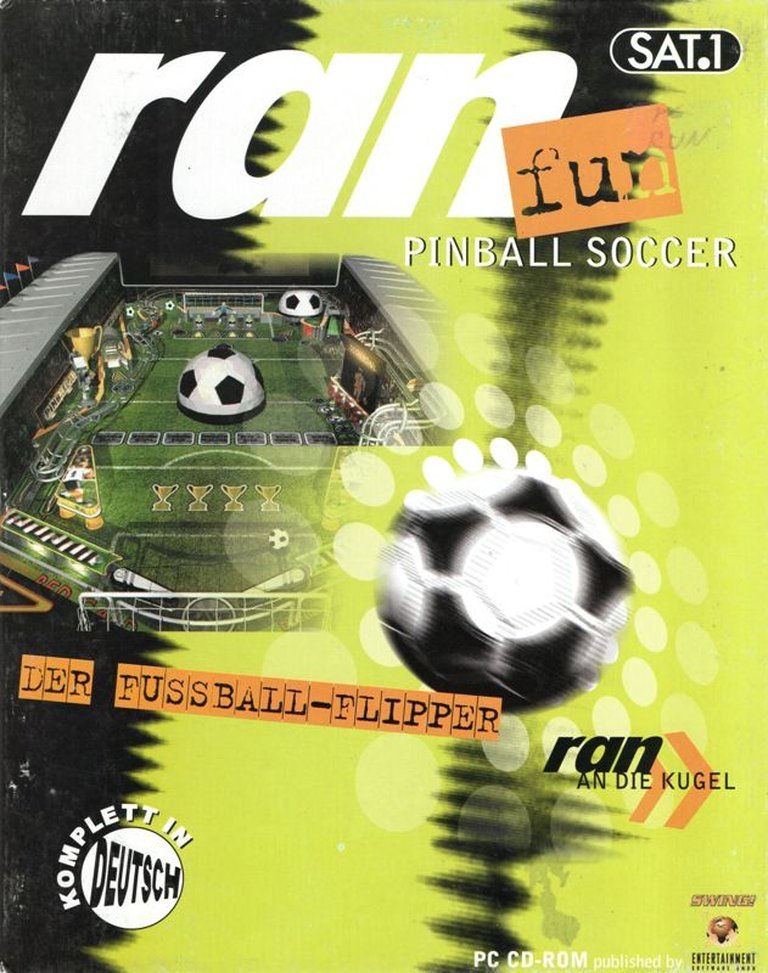
Pinball Soccer ’98 is a unique blend of soccer and pinball, offering an innovative gaming experience. Players defend their goal using traditional pinball flippers while facing off against four defenders and a goalkeeper on the opposing side. Completing objectives allows for free kicks, corners, and penalties, with referees actively involved on the playing field. The game features two tables, with one needing to be unlocked, and supports two-player mode for competitive play.
Gameplay Videos
Pinball Soccer ’98 Reviews & Reception
mobygames.com (52/100): A game that combines soccer and pinball, featuring two tables and multiplayer mode.
game-over.net (68/100): Not bad, not the greatest pinball ever, but its fun.
squakenet.com : A smart soccer themed pinball game that offers a lot of fun.
Pinball Soccer ’98 Cheats & Codes
PC
Run Soccer ’98 Pinball, then press LEFT, C, DOWN, C, UP, C, DOWN, UP, LEFT, C, RIGHT, C, LEFT at the language selection screen. A sound will confirm code entry. During gameplay, press A + UP to display the passwords dialog box.
| Code | Effect |
|---|---|
| ARSENAL | Extra ball |
| BRAZIL | Quick multiball |
| ENGLAND | Super Spinners |
| SOUTHPORT | Power Flippers |
| CAMELOT | Super Spiral |
| TRACKS | Rollercoaster Tycoon demo |
| IMGOINGNOW | Debug mode |
| COASTERS | Rollercoaster Pinball |
| PARTNERS | Rollcage Stage 2 demo |
| TIMETOLOSE | Expert mode |
| TIMETOWIN | Easy mode |
| DIFFICULT | Hard mode |
| DOG | Show memory information |
Pinball Soccer ’98: Review
Introduction
In the pantheon of late-’90s experimental arcade sports hybrids, Pinball Soccer ’98 stands as a quirky, polarizing cult oddity. Developed by UK-based Pin-Ball Games Ltd. during the height of World Cup fever, this soccer-meets-pinball hybrid dared to fuse two genres that had rarely shared a digital table—with mixed results. While it failed to ignite mainstream success, its bizarre premise and audacious gameplay loops offer a fascinating case study in late-’90s indie experimentation. This review dismantles its legacy, from its half-burst innovations to its enduring niche appeal among pinball purists and sports sim contrarians.
Development History & Context
A Small Studio’s Ambition
Pin-Ball Games Ltd. was no stranger to niche pinball titles, having previously developed Judge Dredd Pinball (1998). The core team—including designer Ian Margetts (“White Ghost”) and programmer Mike Fox (“the Trike”)—sought to capitalize on 1998’s soccer craze while pushing the boundaries of pinball simulation. The studio operated under tight constraints: CD-ROM storage limitations, era-appropriate 3D rendering (DirectX 5/Win95 compatibility), and a budget that prioritized functionality over polish.
The 1998 Gaming Landscape
Released amid a flood of soccer sims (FIFA 98, ISS Pro ’98), Pinball Soccer ’98 stood out as a novelty. Yet its timing was both a blessing and a curse. The game’s experimental fusion of genres clashed with an era dominated by hyper-competent sports simulations and arcade staples. Critics praised its creativity but questioned its execution, with some dismissing it as a cynical cash-in on World Cup hype.
Narrative & Thematic Deep Dive
A Thematic Mashup, Not a Story
Pinball Soccer ’98 lacks traditional narrative, instead framing its gameplay through the lens of soccer spectacle. Thematic elements—crowd chants, referee interventions, and goal celebrations—evoke the atmosphere of a stadium match. Objectives like earning free kicks and penalties mimic soccer rules, while the unlockable second table (a rare reward for skilled play) subtly nods to escalating difficulty curves in sports tournaments.
Subtext: Chaos vs. Control
The game’s core tension lies in its juxtaposition of pinball’s frenetic physics with soccer’s structured rules. Referees interrupting play to kick the ball back to flippers symbolize this clash, creating a meta-commentary on the unpredictability of both sports. It’s a flawed but intriguing attempt to marry precision (pinball) with improvisation (soccer).
Gameplay Mechanics & Systems
Core Loop: Flippers vs. Forwards
The game’s central mechanic pits players’ flipper-controlled “defense” against AI-controlled strikers and a goalie. Key features include:
– Two Tables: A base soccer stadium and an unlockable variant (details scarce due to low completion rates).
– Soccer Mechanics: Earn free kicks, corners, and penalties by completing objectives (e.g., hitting targets).
– Multiplayer: Split-screen duels where both players wield flippers to defend/goal-score.
Flaws & Innovations
- Innovative: The referee system, where officials dynamically intervene, adds unpredictability.
- Flawed: The table’s steep incline and sparse mid-field obstacles (criticized by GameOver as “empty”) reduce long-term engagement.
- UI/UX: Fixed camera angles (no manual rotation) and a cluttered scoreboard drew ire, though resolution options (up to 1024×768) were praised for era-appropriate flexibility.
World-Building, Art & Sound
Aesthetic: Janky Charm
The game’s stadium table blends arcade vibrancy with crude 3D models. A roaming camera follows the ball, but static perspectives limit immersion. The animated soccer ball—a rare technical highlight—rolls with convincing physics, while defenders and goalies move like puppet-show approximations of athletes.
Sound Design: Crowd-Sourced Energy
Chris Brightmore and Mark Cooksey’s audio work shines, layering crowd roars, vuvuzela-like horns, and punchy pinball clacks. Tracks blend arena-pop beats with MIDI-era synth, evoking both sports TV broadcasts and arcade cacophony.
Reception & Legacy
Launch-Day Whiplash
Critics were divided:
– Power Unlimited (82%): Praised its originality, calling it “one of the year’s most inventive games.”
– PC Joker (58%): Liked its “realistic ball physics” but bemoaned repetitive design.
– Génération 4 (17%): Savaged it as a “barely functional cash-grab.”
Player reception was lukewarm (2.5/5 via MobyGames), with most praising its novelty but abandoning it post-demo.
Influence & Cult Status
Though commercially forgotten, Pinball Soccer ’98 inspired later genre hybrids like Pinball FX2: Portal Pinball (2015). Its split-screen multiplayer also predated Rocket League’s competitive absurdity by decades. Today, it’s remembered as a flawed but earnest experiment—a time capsule of ’90s indie daring.
Conclusion
Pinball Soccer ’98 is neither a masterpiece nor a disaster. It’s a fascinating mid-tier relic, a game whose ambition outpaced its budget but whose quirks resonate with retro enthusiasts. For historians, it exemplifies late-’90s genre-blending risks; for players, it’s a curiosity best enjoyed in short, nostalgic bursts. In the annals of video game history, it earns a footnote—not a trophy—but its spirit of innovation deserves recognition.
Final Verdict: A 5/10 experience with 8/10 ambition. Worth revisiting as a cult oddity, but not a lost classic.