
- Release Year: 2024
- Platforms: Atari VCS, Nintendo Switch, PlayStation 4, PlayStation 5, Windows, Xbox One, Xbox Series
- Publisher: Atari Interactive, Inc.
- Developer: Dreams Uncorporated, LLC
- Genre: Action, Simulation
- Perspective: Side view
- Game Mode: Single-player
- Gameplay: Arcade
- Setting: Futuristic, Sci-fi
- Average Score: 81/100
Description
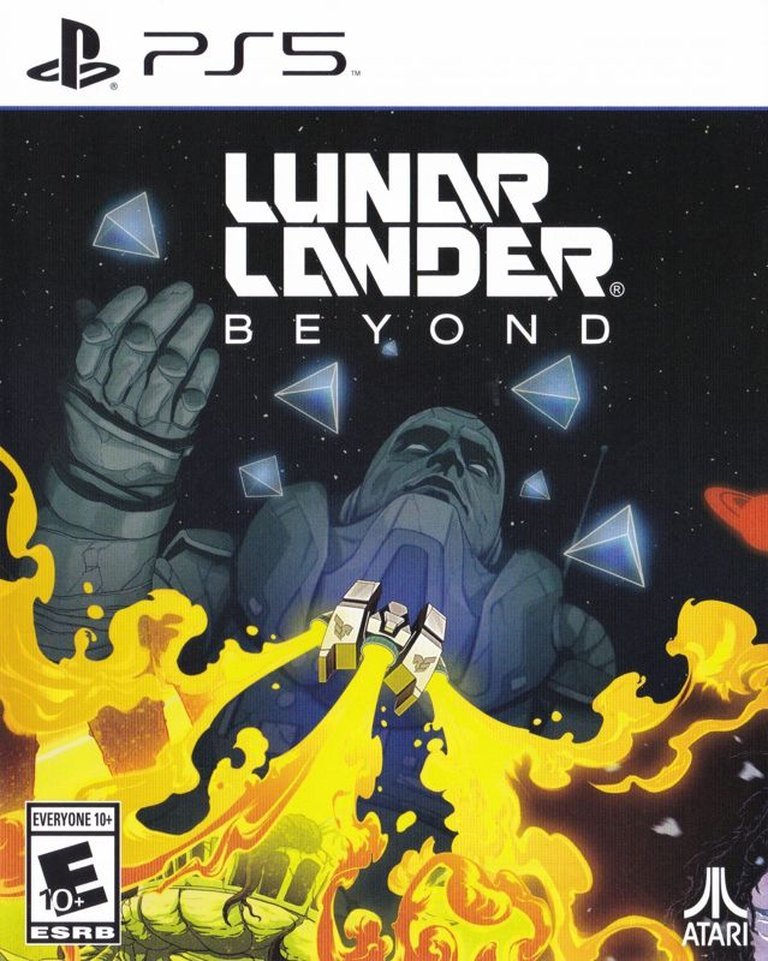
Lunar Lander Beyond is a modern revival of the classic arcade experience developed by Dreams Uncorporated and published by Atari. Set in a vibrant sci-fi universe, players pilot spacecraft through treacherous alien terrains while managing fuel, physics, and environmental hazards to achieve safe landings. The game features a side-view perspective with 2D scrolling visuals, challenging arcade-style gameplay, and a futuristic campaign filled with missions across multiple planetary bodies. Designed as both an homage and evolution of the original formula, it blends nostalgic mechanics with updated graphics and expanded strategic depth.
Gameplay Videos
Where to Buy Lunar Lander Beyond
PC
Lunar Lander Beyond Free Download
Lunar Lander Beyond Guides & Walkthroughs
Lunar Lander Beyond Reviews & Reception
metacritic.com (90/100): Lunar Lander Beyond is definitely beyond what it’s predecessor brought. Everything has been turned up and upside down with this reimagining.
opencritic.com (74/100): Lunar Lander Beyond is a solid recommendation for fans of the lander sim genre.
nintendolife.com (70/100): Lunar Lander Beyond casts itself as a reboot of Atari’s iconic 1979 arcade game, reinterpreting and modernizing the original’s core premise.
ladiesgamers.com : Lunar Lander Beyond goes above and beyond the original title, adding story and gameplay depth that is not present in the original.
godisageek.com (90/100): Lunar Lander: Beyond is a loving reimagining of the Atari classic, with some seriously cool mechanics and a whole lot of variety.
Lunar Lander Beyond: Review
A Captivating but Flawed Cosmic Revival That Honors Its Roots While Reaching for the Stars
Introduction
In the annals of video game history, few titles evoke the primal simplicity and tension of Atari’s 1979 arcade classic Lunar Lander. A game defined by hypnotic vector graphics, punishing physics, and the relentless pull of gravity, it distilled space exploration into a single, nail-biting objective: land safely. Over four decades later, Lunar Lander Beyond (2024) emerges not as a mere remaster but as a bold reimagining—one that grafts narrative depth, roguelike mechanics, and dystopian world-building onto the original’s skeletal framework. Developed by Colombia’s Dreams Uncorporated (Cris Tales) and published by a resurgent Atari, Beyond seeks to honor its predecessor’s legacy while courting modern audiences. Yet, as this exhaustive review reveals, its ambitions occasionally crash against the rocky terrain of design inconsistencies and unforgiving difficulty.
Development History & Context
A Studio’s Vision Meets Atari’s Legacy
Lunar Lander Beyond is the product of a deliberate marriage between nostalgia and innovation. Dreams Uncorporated, known for Cris Tales’ painterly aesthetics and time-bending mechanics, was handpicked by Atari to revive the dormant IP. As director Alvaro Martinez Duarte articulated in a Game Developer deep dive, the team undertook a forensic analysis of the 1979 original, isolating its core tenets: gravity, tension, precision, and the ever-looming specter of resource scarcity (fuel). From there, they embarked on a “what if” exercise: What if the game were designed today, free from 1979’s technological shackles? What if pilots—not just players—bore psychological scars from their harrowing missions?
Technological & Creative Constraints
The developers faced a delicate balancing act: modernize without alienating purists. The original’s vector graphics gave way to lush, hand-drawn 2D environments, while synthwave-inspired music and retro-futuristic UI paid homage to the 1980s sci-fi that inspired the reboot (Blade Runner, Alien). Yet, as Martinez noted, the team refused to neuter the foundational challenge. “The stress and precision of the original weren’t bugs,” he argued. “They were features.” The result is a game that embraces modern trappings—narrative arcs, character progression—while retaining the merciless physics that defined its predecessor.
Narrative & Thematic Deep Dive
Plot & Characters: Capitalism, Chaos, and Cosmic Horror
Beyond introduces Pegasus Aerospace, a dystopian megacorp exploiting pilots to ferry cargo and conduct rescues across a post-Earth solar system. Players assume the role of a newly appointed captain, managing a crew of procedurally generated pilots, each with unique traits (e.g., “Fuel Saver,” “Fast and Furious”). The story unfolds through fully voiced dialogue and stylized cutscenes, weaving a tale of corporate malfeasance, mysterious portals, and existential threats reminiscent of Event Horizon meets Snowpiercer.
Themes & Dialogue
Thematically, Beyond critiques late-stage capitalism—Pegasus’ pilots are overworked, underpaid, and driven to insanity by their Sisyphean tasks. The script oscillates between sardonic humor (an AI companion drips with sarcasm) and bleak introspection, though critics like Third Coast Review noted tonal whiplash: “One moment you’re rescuing civilians; the next, you’re confronting cosmic horrors.” While the voice acting is commendable (particularly the medic “high on his own supply”), the narrative often feels like an elaborate scaffold for the gameplay, rather than an integral component.
Stress and Madness: A Bold Mechanic
The game’s defining innovation is its stress system. Pilots accumulate psychological trauma from crashes, fuel shortages, and near-misses, leading to hallucinations that warp gameplay: eyes and mouths materialize on asteroids, pink elephants drift ominously, and control schemes become unreliable. At peak stress, pilots require therapy (benching them for missions) or shock treatment (a costly quick fix). This mechanic brilliantly literalizes the original’s tension, though outlets like LadiesGamers critiqued its implementation: “More nuisance than reward.”
Gameplay Mechanics & Systems
Core Loop: Precision Amidst Chaos
Beyond retains the original’s thrust-and-rotate controls but expands the formula with four distinct landers:
– Beetle: A sluggish tank, faithful to the 1979 feel.
– Dragonfly: Nimble but fragile, controlled via direct movement.
– Spider: Lightning-fast rotation, demanding expert finesse.
– Arachnid: A late-game hybrid optimized for speed and defense.
Each ship can equip three modules (e.g., Stabilizer for instant halts, Shield for collision immunity), encouraging strategic loadout tweaks. Missions span 30 scenarios across five celestial bodies (Mars, Venus, Etimus), ranging from cargo deliveries to asteroid interception and civilian evacuations.
Progression & Customization
Pilots level up, unlocking randomized traits that modify ship performance. A “Fast and Furious” pilot doubles acceleration, while a “Nervous Wreck” increases stress gains. This roguelike element adds depth, though VGChartz criticized its imbalance: “Traits often trivialize or amplify difficulty unpredictably.”
UI & Difficulty
The retro-futuristic UI excels, blending CRT scanlines with holographic alerts. Conversely, Beyond’s difficulty curve sparks contention. Four settings range from forgiving (Easy) to brutal (Insane, with permadeath). While God is a Geek praised the challenge (“Tense, twitchy gameplay”), Pure Nintendo lambasted it as “unfair,” citing missions demanding pixel-perfect navigation under strict time limits.
World-Building, Art & Sound
Visuals: A Hand-Drawn Cosmos
Dreams Uncorporated’s art direction shines. Each planet—from Mars’ rust-colored canyons to Etimus’ neon-spiked anomalies—bursts with painterly detail. The landers echo Thunderbirds’ retro-futurism, though some critics (The Games Machine) panned environmental clutter: “Amateurish elements detract from the beauty.”
Sound Design & Music
The synthwave OST, peppered with arpeggiated basslines and ethereal pads, channels Tron and Drive. Sound effects—the hiss of thrusters, the creak of straining hulls—immerse players, while voice acting breathes life into Pegasus’ beleaguered crew.
Reception & Legacy
Launch Reception
Beyond garnered a 68% Metascore (PS5), reflecting divisive critiques:
– Praise: Marooners’ Rock (94%) lauded its “timeless” appeal; God is a Geek (90%) celebrated its “variety and tension.”
– Criticism: Finger Guns (40%) decried “sluggish controls”; Metro (50%) deemed the narrative “tonally confused.”
Commercial Performance & Evolution
Despite Atari’s marketing push, sales data remains scarce. However, its legacy as a “Recharged”-style revival is secure, joining Asteroids and Missile Command in Atari’s modern pantheon. Its stress mechanic may influence future simulators, though its divisive difficulty likely restricts its audience.
Conclusion
Lunar Lander Beyond is a fascinating paradox: a game that soars when embracing its retro roots but stumbles when overcomplicating them. Its stress system, pilot management, and gorgeous art direction prove Dreams Uncorporated’s creative prowess, yet the relentless difficulty and narrative padding prevent it from achieving true lift-off. For purists yearning for a nostalgic challenge, Beyond delivers—provided they can endure its brutal learning curve. For others, it remains a compelling but flawed relic of gaming’s past, reanimated for an era that may have outgrown its merciless charms.
Final Verdict: A uneven yet admirable homage that lands gracefully—but not without a few hull breaches along the way.