
- Release Year: 2000
- Platforms: Dreamcast, PlayStation 4, PlayStation 5, PlayStation, PS Vita, Windows
- Publisher: Activision Publishing, Inc., Disney Interactive, Inc.
- Developer: Traveller’s Tales (UK) Ltd.
- Genre: Action
- Perspective: Behind view
- Game Mode: Single-player
- Gameplay: Collecting, Platform, Racing, Shooting
- Setting: Futuristic, Sci-fi
- Average Score: 55/100
Description
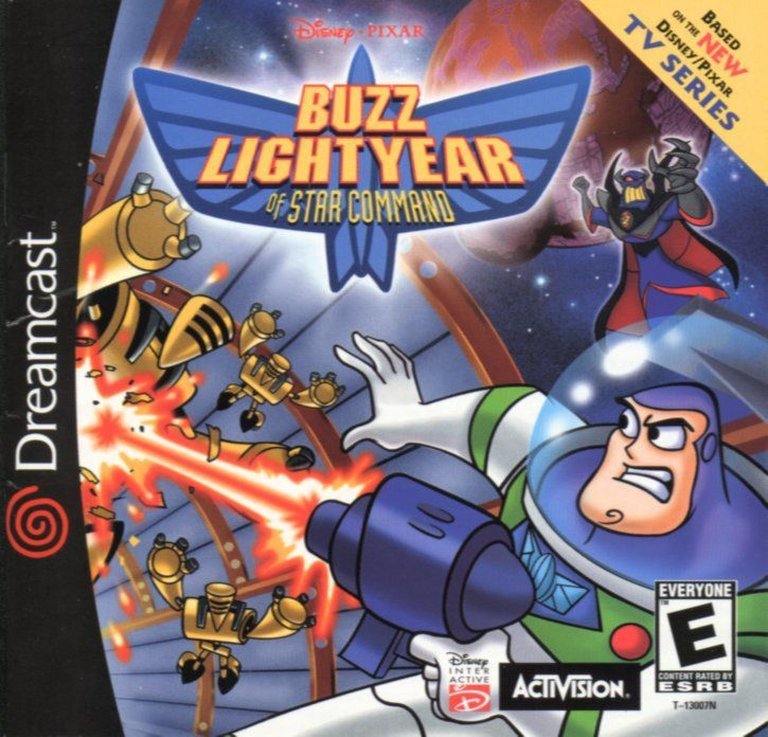
Disney•Pixar Buzz Lightyear of Star Command is an action-packed game set in a sci-fi universe where players take control of the iconic space ranger, Buzz Lightyear. The game features 14 missions across eight different planets, with the primary objective of racing to the end of each level to capture supervillains. Alongside the main goal, players can collect robot parts and achieve the fastest times, adding depth to the gameplay. The game is a spinoff of the popular Toy Story series, blending engaging storytelling with thrilling action.
Gameplay Videos
Disney•Pixar Buzz Lightyear of Star Command Free Download
Disney•Pixar Buzz Lightyear of Star Command Guides & Walkthroughs
Disney•Pixar Buzz Lightyear of Star Command Reviews & Reception
metacritic.com (55/100): The game’s mechanics are just too elementary for any gamer older than thirteen, and even that might be too old for this decidedly kiddie fare.
thegamehoard.com : Disney/Pixar Buzz Lightyear of Star Command certainly looks and plays like an action platformer, but it might actually be best described as a racing game.
Disney•Pixar Buzz Lightyear of Star Command Cheats & Codes
Sega Dreamcast
Enter the unlock sequence quickly.
| Code | Effect |
|---|---|
| Pause the game, hold X + Y | Clears text from the screen |
| A, B, Y, X, Y, B, A, A, A | Unlock everything |
PlayStation
Enter the unlock sequence quickly.
| Code | Effect |
|---|---|
| LBVBB | Access Level 10 |
| MVVBB | Access Level 11 |
| 7BVBB | Access Level 12 |
| 8VVBB | Access Level 13 |
| BBVBB | Access Level 2 |
| CVVBB | Access Level 3 |
| XBVBB | Access Level 4 |
| YVVBB | Access Level 5 |
| GBVBB | Access Level 6 |
| HVVBB | Access Level 7 |
| 3BVBB | Access Level 8 |
| 4VVBB | Access Level 9 |
| Pause the game, hold X + Y | Clears text from the screen |
| X, Circle, Triangle, Square, Triangle, Circle, X, X, X | Unlock everything |
| Hold R2, then press Triangle+Square | Restore health |
| Hold R2, then press Triangle+Circle | Reset timer |
| Hold R2, then hold Circle+X | Get gold triangles |
| Hold R2+Square+Circle, then press Triangle | Hoverboard |
| Hold R2+Square+Circle, then press X | Jet pack |
| Hold R2+Triangle+Circle, then press X | Jet bike |
| Hold R2+Triangle+X | Refill fuel |
PC
| Code | Effect |
|---|---|
| LBVBB | Access Level 10 |
| MVVBB | Access Level 11 |
| 7BVBB | Access Level 12 |
| 8VVBB | Access Level 13 |
| BBVBB | Access Level 2 |
| CVVBB | Access Level 3 |
| XBVBB | Access Level 4 |
| YVVBB | Access Level 5 |
| GBVBB | Access Level 6 |
| HVVBB | Access Level 7 |
| 3BVBB | Access Level 8 |
| 4VVBB | Access Level 9 |
| Pause the game, hold X + Y | Clears text from the screen |
Game Boy Color
| Code | Effect |
|---|---|
| CVVBB | Access Level 2 |
| XBVBB | Access Level 3 |
| YVVBB | Access Level 4 |
| GBVBB | Access Level 5 |
| HVVBB | Access Level 6 |
| 3BVBB | Access Level 7 |
| 4BVBB | Access Level 8 |
| LBVBB | Access Level 9 |
| MVVBB | Access Level 10 |
| 7BVBB | Access Level 11 |
| 8VVBB | Access Level 12 |
| 8, V, V, B, B | Unlock all levels |
Disney•Pixar Buzz Lightyear of Star Command: Review
Introduction
In the pantheon of Disney•Pixar licensed games, Buzz Lightyear of Star Command (2000) occupies a peculiar space: a tie-in to the short-lived Buzz Lightyear of Star Command TV series, itself a spin-off of the Toy Story franchise. Developed by Traveller’s Tales (later famed for the LEGO game series) and published by Activision, this action-platformer aimed to translate Buzz’s galactic heroics into a playable adventure. While it captured the neon-soaked aesthetics of the era and the charm of its source material, the game stumbled under the weight of repetitive design and half-baked mechanics. This review dissects its legacy as a relic of early-2000s licensed games—a flawed but nostalgic artifact for Disney enthusiasts and retro gaming completists.
Development History & Context
Studio Vision & Constraints
Traveller’s Tales, fresh off Toy Story 2: Buzz Lightyear to the Rescue (1999), sought to expand Buzz’s solo escapades with a game aligned to the 2000 TV series. The studio faced tight deadlines and the technological limits of sixth-gen consoles (Dreamcast, PlayStation, Windows). While the cel-shaded visuals aimed to mirror the show’s cartoonish flair, hardware restrictions led to choppy frame rates and simplistic textures.
The Gaming Landscape
Released in October 2000, the game arrived amid a glut of licensed titles (SpongeBob SquarePants, Digimon) capitalizing on IP appeal over innovation. Critics noted its similarity to Toy Story 2’s platforming but criticized its lack of polish compared to contemporaries like Spyro the Dragon. Activision’s marketing leaned heavily on Disney•Pixar’s brand, targeting children but failing to resonate with broader audiences.
Narrative & Thematic Deep Dive
Plot & Characters
The game’s narrative is wafer-thin: Buzz hunts 14 villains across eight planets, racing to intercept them before他们就逃脱. Each mission culminates in a boss battle against foes like Gravitina and Torque, lifted from the show. Clips from the series play between levels, but these feel disjointed, often interrupting gameplay without advancing the story.
Themes & Tone
Like the TV series, the game embraces Buzz’s earnest heroism and sci-fi camp. Themes of teamwork surface via allies like Booster and Mira, who assist in fights, but the writing lacks the wit of Pixar’s films. Buzz’s dialogue, voiced by Patrick Warburton, channels his deadpan bravado, though repetitive quips (“To infinity… and beyond!”) grate over time.
Gameplay Mechanics & Systems
Core Loop & Combat
The gameplay blends racing, platforming, and third-person shooting. Each level tasks players with chasing a villain while dodging obstacles and enemies. Coins collected mid-race purchase weapons (lasers, grenades) and shortcuts (teleporters, hoverboards). Combat hinges on color-coded shields: players must match weapon types to exploit boss weaknesses—a clever but underdeveloped mechanic.
Flaws & Innovations
– Repetition: Missions recycle objectives ad nauseam, with slight variations in terrain.
– Camera Issues: The behind-view perspective often obscures jumps and enemies, a frequent critic complaint (IGN called it a “roller coaster gone mad”).
– Depth for Kids: Younger players appreciated the simple controls and vibrant action, but the lack of difficulty and progression systems left older audiences bored.
World-Building, Art & Sound
Visual Design
The cel-shaded art style mirroring the TV show remains a highlight. Planets like Jo-Ad (Booster’s agrarian homeworld) and Trade World bustle with neon grids and alien markets, though textures resemble “early PS2 shovelware” (Eurogamer). The Dreamcast version boasted sharper visuals, while PlayStation struggles with pop-in.
Sound Design
Keith Leary’s synth-heavy soundtrack evokes ’80s sci-fi, but tracks loop endlessly. Voice clips from Warburton and Bobcat Goldthwait (as XL) add authenticity, though the lack of original dialogue undermines immersion. Sound effects—blasters, explosions—are serviceable but forgettable.
Reception & Legacy
Launch Reception
Critics were lukewarm (56% on MobyGames):
– Praise: Accessible for kids, colorful visuals, and faithful to the show (CVG: “Brainless but brilliant fun”).
– Criticism: Repetitive design, clunky controls, and “pointless” racing segments (GameSpot). The Game Boy Color version, a top-down shooter, fared worse, dubbed “a poor man’s Zelda” (IGN).
Long-Term Impact
The game faded into obscurity, overshadowed by Traveller’s Tales’ later successes. Its 2023 re-release on PS4/PS5 sparked minor interest among retro collectors but no resurgence. While it influenced no major titles, it remains a curiosity in Disney•Pixar’s gaming history—a testament to the era’s licensed game boom.
Conclusion
Disney•Pixar Buzz Lightyear of Star Command is a product of its time: a licensed game that prioritized brand synergy over innovation. Its bright visuals and simple gameplay charm younger players, but repetitive design and technical flaws limit its appeal. For historians, it’s a snapshot of early-2000s Disney gaming; for everyone else, it’s a footnote best left to infinity (and beyond) the bargain bin. Final Verdict: A middling relic with flashes of nostalgia, but hardly essential.