
- Release Year: 2002
- Platforms: Windows
- Publisher: reflexionteam
- Developer: reflexionteam
- Genre: Puzzle
- Perspective: Top-down
- Game Mode: Single-player
- Gameplay: Collectible gathering, Mirror manipulation
Description
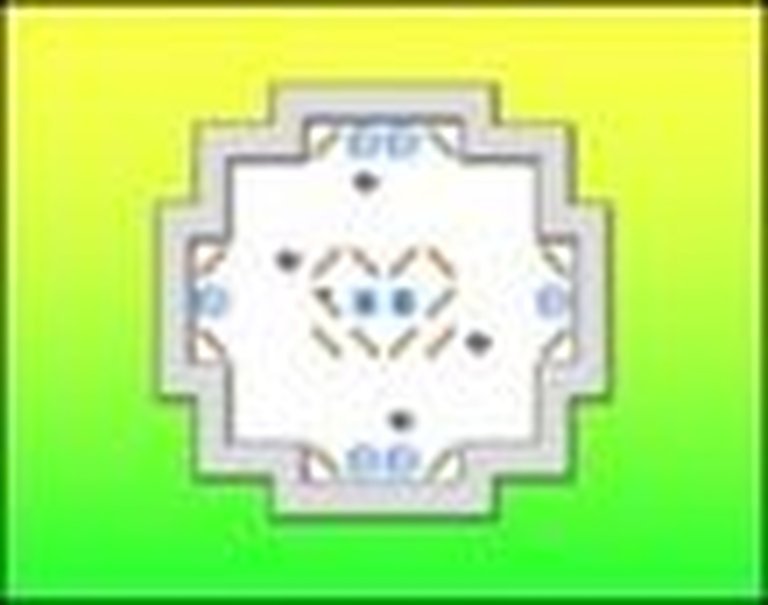
Reflexion is a 2002 puzzle game developed by reflexionteam under Juho Pohjonen, released as freeware for Windows. Players manipulate mirrors in top-down, fixed-screen environments to redirect a ball’s path, collecting all gems before guiding it to the exit. With a simple point-and-select interface and minimalistic design, the game focuses on spatial reasoning challenges across increasingly complex levels.
Where to Buy Reflexion
PC
Reflexion Cheats & Codes
PC
Use a text editor to edit the “reflexion.dat” file in the game folder. Change all the dashes to asterisks.
| Code | Effect |
|---|---|
| Asterisk Modification | Level select – unlocks all levels |
Reflexion: Review
Introduction
In the early 2000s, as blockbuster franchises like Grand Theft Auto and Metroid Prime dominated gaming headlines, Reflexion (2002) emerged as a modest yet compelling puzzle experience. Developed by Finnish creator Juho Pohjonen, this freeware Windows game distilled the essence of logical challenges into a minimalist package. While lacking the cinematic flair of its contemporaries, Reflexion carved a niche through its elegant simplicity, proving that cerebral gameplay could thrive in an era increasingly obsessed with spectacle.
Development History & Context
Reflexion was born from the burgeoning indie scene of the early 2000s, a time when accessible tools like GameMaker empowered solo developers to experiment. Pohjonen, working under the pseudonym reflexionteam, eschewed the era’s push for 3D graphics and cinematic narratives, instead embracing a top-down, grid-based design reminiscent of 1980s classics like Deflektor. Released in 2002—a year marked by the rise of online gaming (e.g., Xbox Live) and expansive RPGs like The Elder Scrolls III: Morrowind—Reflexion stood out as a defiantly analog experience.
Its creation reflects the DIY ethos of early internet-era indies, where constraints bred creativity. Built with limited resources, Reflexion prioritized gameplay purity over technical ambition, a philosophy that would later inspire the indie renaissance of the 2010s.
Narrative & Thematic Deep Dive
Reflexion is a game devoid of explicit narrative—no characters, no dialogue, no plot twists. Instead, its “story” unfolds through the player’s interaction with its mechanics. Each level presents a sterile maze of mirrors, where the goal is to rotate reflective surfaces to guide a ball toward gems and an exit. Thematically, the game is a meditation on cause and effect, recursion, and spatial logic.
The absence of narrative trappings invites players to project their own meaning onto the puzzles. Is the ball a metaphor for persistence? Are the mirrors symbols of self-reflection? Reflexion’s abstraction transforms it into a canvas for introspection, a rarity in an era increasingly dominated by story-driven epics.
Gameplay Mechanics & Systems
The core loop of Reflexion is deceptively simple: click mirrors to rotate them 90 degrees, altering the path of a bouncing ball to collect gems and reach the exit. Early levels ease players into the rhythm, but complexity escalates with obstacles like fixed barriers, timing-based challenges, and multi-step sequences.
The game’s brilliance lies in its purity. There are no power-ups, no lives, no time limits—just the player and the puzzle. This minimalist approach fosters a meditative focus, rewarding patience and precision. However, the rigid grid system occasionally leads to finicky alignments, and the lack of undo functionality can frustrate.
Compared to contemporaries like Ico or Portal, Reflexion lacks their dynamism, but its restraint is its strength. It’s a game unafraid to be just a puzzle, demanding mastery through iteration rather than flashy gimmicks.
World-Building, Art & Sound
Visually, Reflexion is stark and utilitarian. Its top-down view resembles a blueprint, with muted grays and blues punctuated by the vibrant hues of gems and exits. The aesthetic evokes a laboratory—cold, clinical, and devoid of distraction—which aligns perfectly with its cerebral tone.
Sound design is equally minimalist. The clink of rotating mirrors and the soft chime of collected gems are the only audio cues, creating an almost ASMR-like rhythm. The absence of music amplifies the game’s contemplative atmosphere, though some players may find the silence isolating over time.
Reception & Legacy
Reflexion arrived with little fanfare in 2002, overshadowed by AAA behemoths and lacking marketing muscle. Critical coverage was sparse, and its legacy survives primarily in niche archives like MobyGames and Internet Archive. Player impressions, scattered across forums, praise its “clever” design but critique its steep difficulty curve and limited replayability.
Yet Reflexion’s influence is subtle but significant. It foreshadowed the indie puzzle revival of the 2010s, inspiring titles like Monument Valley and Hue that similarly prioritize elegance over excess. While not a commercial success, it remains a cult favorite—a testament to the enduring appeal of “small” games in an industry chasing scale.
Conclusion
Reflexion is neither a masterpiece nor a forgotten relic. It is a quiet triumph of design, a game that challenges players to find profundity in simplicity. Its lack of polish and scope may deter casual players, but for puzzle purists, it offers a rewarding, almost meditative experience.
Final Verdict: Reflexion is a poignant snapshot of early 2000s indie creativity—a game that asks little but demands much, proving that great ideas often thrive in the smallest packages.