
- Release Year: 2008
- Platforms: Windows
- Publisher: Selectsoft Publishing
- Developer: Teyon S.A.
- Genre: Card, Gambling, Strategy, Tactics, Tile game
- Perspective: Top-down
- Game Mode: Single-player
- Gameplay: Cards, Tiles
Description
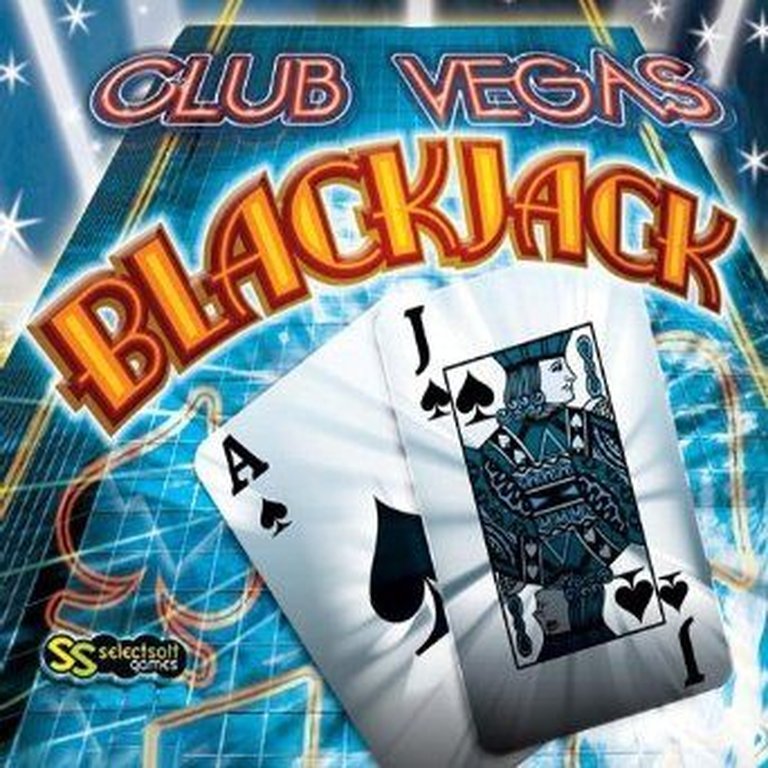
Club Vegas Blackjack is a single-player card game that immerses players in a virtual casino experience with five blackjack variants: Classic, Face-Up, Single Deck, Spanish, and Double Attack. Players can choose minimum bets ranging from $0.25 to $100,000, starting with a $10,000 default stake or resuming previous winnings. Competing against four AI opponents, the game offers mouse-controlled navigation, adjustable window/full-screen modes, and casino-style sound effects for an authentic gambling atmosphere.
Club Vegas Blackjack Guides & Walkthroughs
Club Vegas Blackjack Reviews & Reception
videopoker.com : Southpoint exacted it’s revenge on me today with the 100.017% DDB VP machines. However, I cleaned up quite well on their Blackjack tables.
Club Vegas Blackjack: A Digital Card Table Staple of the Late 2000s Casino Sim Wave
Introduction
In the neon-lit lineage of digital blackjack adaptations, Club Vegas Blackjack (2008) stands as a utilitarian time capsule of late-2000s casual gaming—a product of Poland’s Teyon S.A. during an era when digital casino experiences transitioned from novelty to commodity. Released for Windows via CD-ROM or download, this title promised a solo pilgrimage to the blackjack tables without the glittering distractions of Vegas’s physical halls. While not revolutionary, its mechanical fidelity to blackjack’s core tenets and modest accessibility crystallize a transitional phase in gambling simulations, bridging early 2000s CD-ROM staples and the impending mobile casino boom. This review contends that Club Vegas Blackjack is a functionally sufficient but creatively inert entry—one that prioritizes rulebook adherence over innovation, embodying the “house edge” of its own design ethos.
Development History & Context
Studio Profile & Vision
Developed by Teyon S.A.—a Polish studio now known for Rambo: The Video Game (2014) and Terminator: Resistance (2019)—Club Vegas Blackjack emerged from a catalog steeped in budget-friendly casual titles like Mahjongg Platinum 4 and 101 Dolphin Pets. With a credited team of 12, including programmer Michał Tatka (later a producer on Iron Man VR) and sound designer Patryk Gęgniewicz, Teyon’s Blackjack leveraged iterative polish over ambition. The studio’s directive appeared pragmatic: replicate a Las Vegas-approved ruleset for home users, avoiding the licensing headaches or multiplayer complexity of contemporaries like The Four Kings Casino and Slots.
Technological Constraints & Era Context
Launched in 2008, the game targeted Windows XP/Vista systems with minimal specs—mouse-only input, 2D card assets, and stereo sound. This aligned with the dwindling CD-ROM casual market, where Selectsoft Publishing (the distributor) specialized in low-cost, niche genre titles. The same year saw Xbox 360’s Grand Theft Auto IV redefine open-world immersion, yet Club Vegas Blackjack existed in a parallel ecosystem: one where digital board games, card sims, and $9.99 downloadables thrived among retirees and strategy enthusiasts. It eschewed the live-dealer spectacles of nascent online casinos, opting instead for lean, offline functionality—a design choice reflecting both technological pragmatism and pre-smartphone limitations.
Narrative & Thematic Deep Dive
The Illusion of ‘Vegas’
As a single-player analog of casino blackjack, Club Vegas Blackjack foregoes narrative entirely. Its “thematics” reside solely in nomenclature and UI design (green felts, minimalist chip stacks, sans-serif fonts). The absence of human competitors—four AI players join each table—dilutes any social tension, reducing the experience to a sterile duel between player and algorithm. Unlike Rockstar’s Red Dead Redemption 2 (2018), which embedded blackjack within a narrative of outlaw camaraderie, or Resident Evil 7’s horror-tinged “21” DLC, Teyon’s interpretation lacks atmospheric stakes.
Rule Variations as ‘Lore’
The game’s five variants—Classic, Face-Up, Single Deck, Spanish, and Double Attack—serve as its closest approximation to narrative diversity. Spanish 21 (played with a 48-card deck sans 10s) nods to historical blackjack evolutions traced to 17th-century French “Vingt-et-Un.” Likewise, Double Attack borrows from Atlantic City’s early-2000s innovations, allowing double-downs post-dealer reveal. These modes, each accompanied by dry rules screens, function as archeological layers of blackjack’s real-world evolution—though presented with the enthusiasm of a PDF manual.
Gameplay Mechanics & Systems
Core Loop & Betting Economy
The gameplay adheres rigorously to standard blackjack flow:
1. Choose a variant and bet size (16 options: $0.25 to $100,000).
2. Receive two cards; decide to Hit, Stand, Double Down, or Split.
3. Compete against the dealer’s hand; win 1:1 or 3:2 for naturals.
A starting $10,000 bankroll and “Reset Bank” option negate bankruptcy stakes, contrasting with period arcade titles like Blackjack Academy (1987), which emphasized strategic education. The AI opponents act as passive spectators—non-interactive window dressing—while the dealer follows strict house rules (stand on 17, hit on 16).
Innovations & Flaws
– Customization Depth: Bet granularity and rule variations offer replayability for purists.
– UI Friction: Mouse-only navigation feels sluggish; no keyboard shortcuts or tutorial.
– Odd Omissions: No card counting viability (permanent deck reshuffling) or stat tracking.
Compared to 2006’s Vegas Casino II (PlayStation 2), which featured poker and slots alongside blackjack, Club Vegas Blackjack’s laser focus on a single game succeeds mechanically but lacks holistic casino immersion.
World-Building, Art & Sound
Aesthetic Minimalism
Art directors Jennifer Sunami and Rowan Nakano deliver a barebones presentation:
– Visuals: Static 2D tables with flat card sprites; no dealer avatars or ambient details. Menus adopt a mid-2000s “professional” aesthetic—gradient buttons, Times New Roman headers.
– Sound: Patryk Gęgniewicz’s soundtrack oscillates between forgettable jazz loops and ASMR-esque card shuffles. Win/lose cues evoke early Windows system sounds.
The game’s “Vegas” is a conceptual mirage—no neon, no crowds, no thematic differentiation between variants. While functional, its austerity pales against 1997’s Las Vegas Super Casino or even Atari 2600’s Blackjack (1977), which charmed through lo-fi charisma.
Reception & Legacy
Launch Reception & Cultural Impact
No formal reviews survive on MobyGames or Amazon, reflecting its niche target demographic. Player anecdotes (e.g., Video Poker Forum user MikeA’s 2008 casino trip logs) suggest it catered to strategy learners avoiding real-money stakes. Commercial performance is unrecorded, but its budget pricing and Selectsoft’s catalog suggest modest sales.
Industry Influence
Club Vegas Blackjack’s legacy is negligible compared to milestones like:
– Fairchild’s Videocart-3: Video Blackjack (1976), which pioneered the genre.
– Balatro (2024), which reimagined poker as a roguelike phenomenon.
However, it exemplifies the late-2000s trend of “house-approved” sims that prepared players for online casino booms. Its DNA persists in mobile titles like Blackjack 21 (Spil Games, 2016), which similarly prioritize accessibility over innovation.
Conclusion
Club Vegas Blackjack is neither a critical darling nor a cult gem—it is a utilitarian tool, a digital placeholder for a game eternally rooted in physicality. Its adherence to official rules and bet flexibility will satisfy purists, while its presentation and AI sterility repel those seeking cinematic drama or strategic depth. For historians, it captures a fleeting moment: when blackjack’s digital transition was complete but uninspired, awaiting the VR/alchemy of titles like PokerStars VR. As a museum piece of casual gaming’s CD-ROM twilight, it warrants a footnote—but lacks the aces to compete with history’s legendary tables.
Final Verdict: A mechanically sound but soulless dealer—playable, forgettable, and quintessentially 2008.