
- Release Year: 2021
- Platforms: Windows
- Publisher: Housemade Inc.
- Developer: Housemade Inc.
- Genre: Incremental games, Simulation
- Perspective: Diagonal-down
- Game Mode: Single-player
- Setting: Fantasy
Description
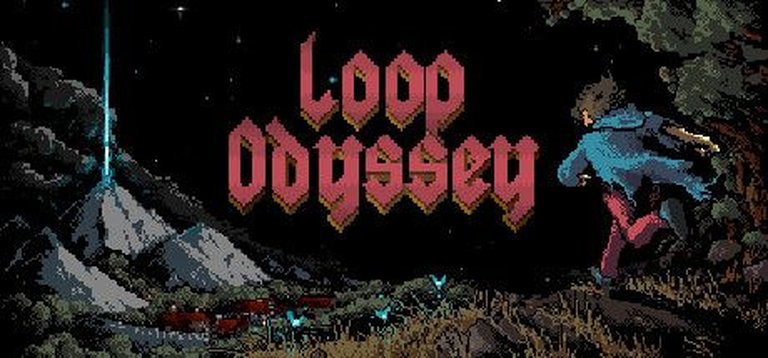
Loop Odyssey is an idle RPG that embraces time loop mechanics, tasking players with strategically planning actions before observing automated loops unfold in a fantasy setting. Designed as a second-screen companion, the game focuses on experimentation and incremental progression, allowing players to refine their approach across cycles while embracing passive gameplay and creative automation.
Gameplay Videos
Loop Odyssey Mods
Loop Odyssey Guides & Walkthroughs
Loop Odyssey Reviews & Reception
opencritic.com : Loop Odyssey is an interesting idea but I just don’t think it’s for me at this stage of my life.
ladiesgamers.com : It was quite disappointing to return hours later to find my character had still made little progress.
Loop Odyssey: Review
Introduction
In an era when time-loop mechanics and idle gaming began converging, Loop Odyssey emerged as a divisive yet audacious experiment. Released in December 2021 by indie studio Housemade Inc., this Windows-exclusive title fused the strategic planning of RPGs with the hands-off progression of incremental games—promising a “self-contained” experience for players who preferred optimization over twitch reflexes. While often overshadowed by contemporaries like Loop Hero, Loop Odyssey carved its identity through uncompromising commitment to automation. This review argues that the game is a flawed but fascinating artifact—a niche masterpiece for idle enthusiasts, yet an impenetrable grind for others—that redefined the boundaries of player agency within the genre.
Development History & Context
Studio Vision & Technological Foundations
Housemade Inc., a solo endeavor by developer Valere Amirault, conceived Loop Odyssey as a love letter to foundational idle titles like A Dark Room and Candy Box. Built using GameMaker Studio, the game prioritized stripped-down interactivity, leveraging the engine’s flexibility for UI-heavy design. Amirault’s vision was clear: eliminate the “repetitive grind” of traditional RPGs by automating execution while deepening strategic planning.
The 2021 Landscape & Identity Crisis
Loop Odyssey debuted amid a renaissance of loop-centric games (Twelve Minutes, The Forgotten City) and idle hybrids. Its closest comparator, Loop Hero (released nine months prior), had popularized loop-based exploration but demanded active engagement, confusing players expecting passive play. Loop Odyssey positioned itself as the antithesis—a “pure” idle experience where progress accrued while minimized. However, this polarized audiences: Steam user reviews praised its philosophy but lamented its pacing, while critics like LadiesGamers noted its “incompatibility” with non-PC-centric lifestyles.
Narrative & Thematic Deep Dive
Plot Structure: A Sparse, Existential Loop
The narrative orbits an amnesiac protagonist trapped in a decaying, fractal-like fantasy realm. With lore fragmented across environmental cues and encounters with 10 NPCs—including a melancholic bard and a cryptic hermit—the story explores futility, memory, and the ethics of eternity. Dialogue branches are minimal but consequential: players can murder NPCs for loot (resetting their status each loop) or engage them for incremental lore reveals.
Themes: Automation as Existential Metaphor
The game’s core tension—planning vs. passivity—mirrors its narrative themes. The loop is both prison and catalyst: success requires embracing repetition to “escape,” yet true progression demands surrendering control. Endings (including reconciling with the loop or destroying it) reflect Buddhist-like acceptance of impermanence, though delivered through minimalist text vignettes that divided players seeking narrative payoff.
Gameplay Mechanics & Systems
The Loop Engine: Planning as Gameplay
Loop Odyssey reduces interaction to three commands: Move (cardinal directions), Interact (cog icon), and Fight (sword icon). Players pre-program sequences (e.g., Move East → Fight Goblin → Collect Fairy), then trigger loops where actions unfold automatically. Mana (500 per loop) dictates duration; each action consumes mana, but costs decrease as “Familiarity” grows via repetition. This creates a meta-puzzle: optimizing paths to minimize mana waste while maximizing resource yield.
Progression & Attributes
Three attributes—modifiable at green shrines—govern growth:
– Spirit (increases max mana via Interact)
– Heart (boosts loop speed via Speak, but raises mana/tick cost)
– Body (enhances damage/healing via Fight)
Level-ups grant attribute points, demanding trade-offs: invest in speed for faster loops (higher attrition) or mana for endurance (slower gains). Notably, combat is entirely automated—players strategize gear/route efficiency rather than tactics—with health depletion ending loops.
UI & Flaws: A Double-Edged Sword
The drag-and-drop command interface is intuitive but lacks granularity. Players noted frustration with pathing inflexibility (e.g., backtracking breaks Familiarity chains) and poor tutorialization—critical mechanics like Fairy mana-replenishing were obscure. Later community guides (e.g., Steam’s Core Mechanics Guide) became essential for decoding systems like tile-specific Familiarity thresholds.
World-Building, Art & Sound
Aesthetic: Pixel Melancholy
The game’s lo-fi pixel art channels PS1-era RPGs, with muted palettes and jagged terrain evoking a world in entropy. Fog-of-war unveils biomes (spore-filled forests, crumbling temples) that, while visually repetitive, reinforce the loop’s claustrophobia. Character sprites are minimally animated but expressive—a ghoul’s slumped posture or a merchant’s idle sway hint at stories left untold.
Atmosphere Through Sound
Ambient tracks blend droning synths with acoustic melancholy (e.g., rain patter, distant chimes), evoking Kentucky Route Zero’s surrealism. Sound design is utilitarian—sword clashes lack weight, but mana-depletion warnings hum urgently—prioritizing hypnotic rhythm over dynamism. This austerity mirrors the gameplay: audio fades into the background, a meditative companion to idle grinding.
Reception & Legacy
Launch Turbulence & Cultural Impact
Critically, Loop Odyssey faced sparse coverage. LadiesGamers dubbed it “a long grind to enjoy in short bursts,” while ScreenRant championed its “predictable demand for attention” as superior to Loop Hero’s hybrid approach. Commercial data is scarce, but Steam metrics suggest modest sales (boosted by a 50-key Reddit giveaway). Player reviews criticized opaque systems (1.0/5 average on MobyGames, albeit from one rating) but praised its “80+ hours of semi-idle gameplay” (per developer posts).
Industry Influence & Retrospective
While not a mainstream breakthrough, Loop Odyssey refined niche conventions. Its mana-as-currency/Familiarity system influenced later incremental titles like Melvor Idle, while its “automation as narrative” approach presaged experiments in A Highland Song’s passive traversal. Yet its legacy remains muted—a cult curiosity for idle purists, omitted from broader genre retrospectives due to accessibility barriers.
Conclusion
Loop Odyssey is a paradox: a game about control that asks players to relinquish it, a narrative about escape that demands surrender. Its triumphs—innovative loop automation, atmospheric world-building—are undermined by poor onboarding and glacial pacing. For devotees of idle RPGs, it stands as a bold deconstruction of grind culture, rewarding patience with profound systemic depth. For others, it’s a screensaver masquerading as a game. Historically, it exemplifies indie gaming’s avant-garde fringe—where flawed ambition eclipses polish. In the pantheon of loop-based games, Loop Odyssey is less a trailblazer than a peculiar artifact: a testament to the beauty and frustration of designing for the void between play and passivity.