
- Release Year: 2005
- Platforms: Windows
- Publisher: eGames, Inc.
- Developer: Magic Lantern, Inc.
- Genre: Card, Mahjongg solitaire, Puzzle, Shanghai, Tile game
- Perspective: 1st-person
- Game Mode: Single-player
- Gameplay: Cards, Tiles
Description
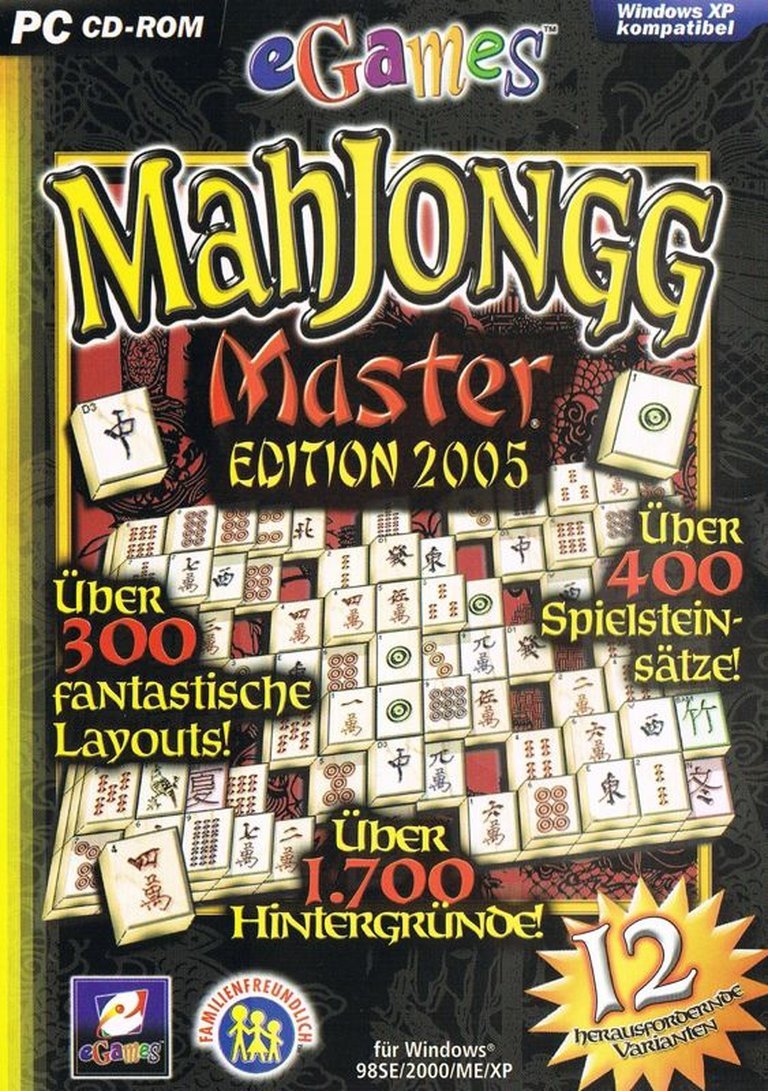
MahJongg Master 6 is a 3D puzzle game released in 2005, offering a modern twist on the classic Mahjongg solitaire experience. Set in a flexible first-person environment with free camera movement, players match tiles across 12 game variations, 300 unique layouts, and 400 intricate tile designs. The game boasts 1,700 diverse backgrounds for visual variety and includes an editor for creating custom layouts, enhancing replayability. Developed by Magic Lantern, Inc. and published by eGames, Inc., it combines traditional card/tile gameplay with immersive 3D presentation as part of the long-running Mahjongg Master series.
Gameplay Videos
MahJongg Master 6 Free Download
MahJongg Master 6: Review
A Pivotal Entry in the Digital Solitaire Renaissance
Introduction
In the mid-2000s, the casual gaming market exploded with titles that combined accessibility with obsessive depth. Enter MahJongg Master 6 (2005), a sixth iteration in Magic Lantern, Inc.’s long-running series that sought to modernize the ancient Chinese tile-matching game for the 3D era. While its premise appears deceptively simple—pairing intricate tiles to clear elaborate layouts—this installment’s technical ambitions and staggering volume of content cemented its legacy as a benchmark for digital MahJongg adaptations. Though overshadowed by AAA releases of its time, MahJongg Master 6 represents a fascinating crossroads: a niche genre clinging to physical tradition while embracing digital innovation.
Development History & Context
Studio Vision & Technological Constraints
Developed by Magic Lantern, Inc. and published by budget-software veterans eGames, MahJongg Master 6 emerged from a studio with a portfolio steeped in casual staples (Ultimate Mini Golf Designer Deluxe Suite, Checkers Ultimate). The team, led by series veteran Mark Manyen (Lead Programming) and designer Paul Schuytema, aimed to evolve beyond the 2D confines of earlier entries (e.g., MahJongg Master 5 [2003]) by leveraging emerging 3D rendering tools.
Released in August 2004 (per archival data) but widely circulated in 2005, the game arrived during a transitional era for PC gaming: CD-ROMs still reigned, but digital distribution platforms like Steam (launched 2003) hinted at an impending revolution. For Magic Lantern, technological constraints shaped key decisions—the 640MB ISO size (via MyAbandonware) suggests optimizations for low-end hardware, while 3D acceleration remained optional to accommodate casual audiences.
The Gaming Landscape
The mid-2000s witnessed a surge in casual puzzle games (Bejeweled, Zuma) and a renaissance of board-game adaptations. MahJongg Master 6 leveraged both trends, competing against contemporaries like Moraff’s Maximum Mahjongg (2000) and Vegas Mahjong (2005). Unlike flash-based rivals, its CD-ROM delivery prioritized expansive, offline-ready content—a strategic choice for players lacking reliable internet access.
Narrative & Thematic Deep Dive
Absence as Narrative
Unlike RPG-infused MahJongg variants (Yakuza series), MahJongg Master 6 lacks overt narrative or characters. Its “themes” emerge indirectly through presentation: 1,700 backgrounds range from zen gardens to cosmic vistas, evoking tranquility and intellectual focus. The absence of plot is deliberate; this is MahJongg as meditative ritual, not storytelling vehicle.
Cultural Homage vs. Abstraction
The game walks a tightrope between honoring MahJongg’s heritage—evident in traditional tile sets featuring Chinese characters and symbols—and abstracting it into digital archetypes. Egyptian-themed tiles and planetarium backdrops reflect Western reinterpretations, divorcing gameplay from cultural specificity. This tension mirrors broader debates about casual games diluting traditional play, yet the editor (allowing custom layouts) empowers players to reclaim authenticity.
Gameplay Mechanics & Systems
Core Loop & Variations
The essentials remain unchanged: match unblocked, identical tiles to dismantle predefined layouts. Master 6’s innovation lies in scale—12 rule variations (from “Classic” to “Rivers” and “Stack Flip”) and 300 layouts ensure mechanical diversity. “Shuffle” and “Reverse” modes dynamically alter strategies, while “Double Solitaire” introduces multiplayer competitiveness rare in solo-focused MahJongg.
Editor Tools & Replayability
The tile-layout editor marks the game’s most forward-thinking feature. Players could design bespoke challenges, predating the modding boom of platforms like Steam Workshop. Though rudimentary by modern standards (lacking direct community sharing), this tool transformed static puzzles into creative outlets.
UI & Accessibility Pitfalls
A 3D free-roaming camera (per MobyGames specs) initially impresses but complicates visibility—rotating views risks obscuring critical tiles. The first-person perspective, while novel, feels incongruous for a top-down puzzle genre. Still, context-sensitive hints and undo options mitigate frustration, prioritizing approachability over punitive difficulty.
World-Building, Art & Sound
Visual Design & Ambiance
With 400 tile sets and 1,700 backgrounds, Master 6’s aesthetic breadth remains unmatched in its series. Each tile set—from lacquered wood to crystalline futuristic designs—offers distinct tactile feedback, while backdrops oscillate between photorealistic landscapes and surreal abstractions. However, early-2000s 3D rendering often clashes with elegance: low-poly environments and compressed textures undermine immersion.
Sound Design’s Dual Role
80 music themes (via NeverDieMedia) span ambient drones to light classical—a sonic buffet catering to prolonged play sessions. Though sonically generic, the adaptive audio ensures shifts in tempo during timed modes, subtly heightening tension. Sound effects, however, feel repetitive; tile clicks and match chimes lack dynamic variation.
Reception & Legacy
Silent Launch, Quiet Impact
No Metacritic or IGN reviews exist; contemporaneous coverage was sparse, aligning with eGames’ budget-label status. Player reviews are equally elusive—MobyGames and MyAbandonware host scant impressions—but archival praise (e.g., a lone 5/5 user rating) suggests niche appreciation for its content depth.
Commercial Context & Abandonware Afterlife
As a commercial CD-ROM, sales data is lost, but the game’s presence on abandonware sites signals enduring cult appeal. Its legacy lies in democratizing MahJongg customization—a blueprint for mobile hits like Mahjong Journey (2016).
While MahJongg Master 7 (2007) iterated mechanically, Master 6’s 3D pivot marked Magic Lantern’s boldest experiment. Its DNA persists in titles blending solitaire rigor with casual flexibility (Monument Valley, Lumines).
Conclusion
A Relic of Ambition
MahJongg Master 6 is neither revolutionary nor flawless. Its 3D ambitions clash with genre conventions, and absent narrative limits emotional resonance. Yet as a time capsule of mid-2000s casual gaming—where CD-ROMs teemed with uncompromising content—it shines. The editor tool, staggering asset library, and rule variations embody a developer striving to elevate tradition without alienating purists.
For historians, it epitomizes a pre-digital-distribution ethos: games as expansive, self-contained worlds. Modern players may find its presentation dated, but its earnest dedication to MahJongg’s soul—patience, pattern recognition, endless permutation—secures its place in puzzle gaming’s evolution. A flawed but fascinating artifact, MahJongg Master 6 deserves recognition as the series’ most ambitious—and paradoxically, most nostalgic—entry.