
- Release Year: 2002
- Platforms: Windows
- Publisher: Brightstar Entertainment Ltd.
- Developer: Kuju Entertainment Ltd.
- Genre: Action, Compilation
- Perspective: 1st-person
- Game Mode: Single-player
- Gameplay: Shooter, Space flight, Vehicular
- Setting: Futuristic, Sci-fi
Description
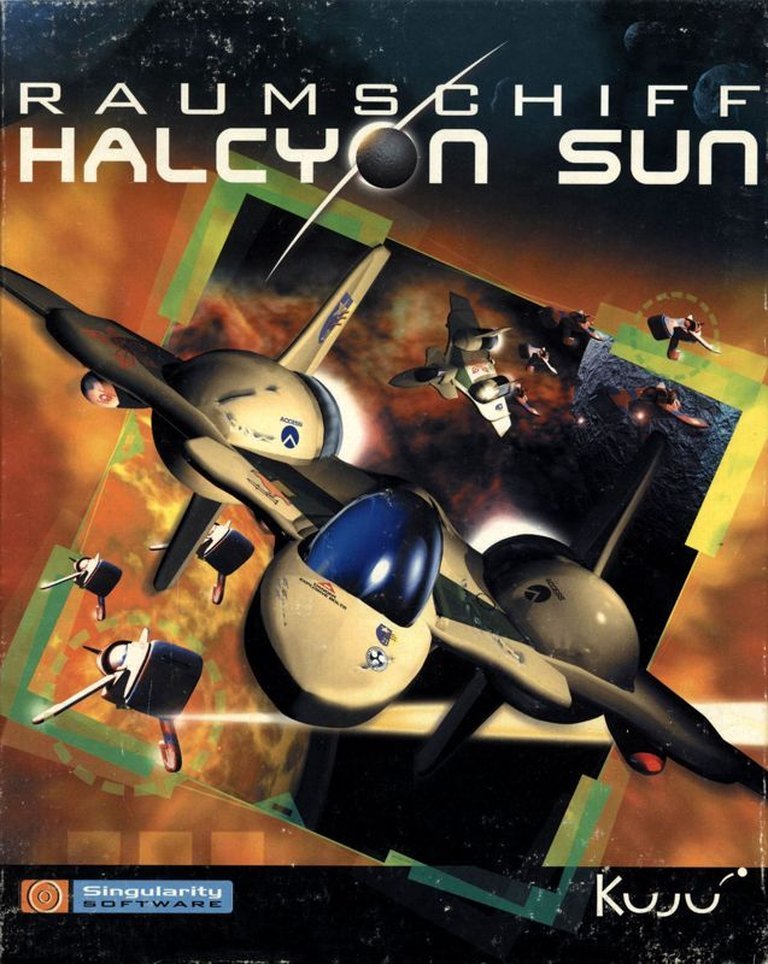
Halcyon Sun is a space dogfighting game that combines arcade-style combat with a rich science fiction narrative, reminiscent of a TV series. Players take on the role of Dru Avery, a squadron commander navigating the complexities of a space war between the Eridani race and the Carolan Commonwealth against the Nolledah Revolutionary Republic. The game features 24 combat missions and three hours of narrative scenes, with dramatic elements and intricate relationships adding depth to the story.
Gameplay Videos
Halcyon Sun Patches & Updates
Halcyon Sun Mods
Halcyon Sun: A Forgotten Experiment in Episodic Space Opera
Introduction
In the early 2000s, as the gaming industry leaned into blockbuster CD-ROM releases, Halcyon Sun dared to pioneer an experimental format: a free, episodic space combat series delivered digitally. Developed by Kuju Entertainment and distributed via the now-defunct Freeloader.com, Halcyon Sun blended arcade dogfighting with the serialized drama of a sci-fi TV show—complete with cliffhangers, credits, and three hours of rendered cutscenes. Though its execution was flawed and its distribution chaotic, the game remains a fascinating artifact of gaming’s early forays into episodic storytelling. This review dissects Halcyon Sun’s ambitious vision, its technical and narrative triumphs, and the lessons it offers about the risks of innovation in a rapidly evolving medium.
Development History & Context
Studio Vision & Technological Constraints
Kuju Entertainment (later rebranded as Headstrong Games) was no stranger to niche projects, having worked on titles like Warhammer 40,000: Fire Warrior. For Halcyon Sun, the team aimed to create an interactive sci-fi series, releasing 12 episodes biweekly starting in November 2000. Each installment combined 45-minute gameplay segments with cinematic interludes, mimicking the structure of a TV drama. However, the game’s technological framework—built for low-spec PCs—limited its scope. Pre-rendered cutscenes were choppy by modern standards, and the space combat leaned on simple DirectX 7-era 3D models.
The Episodic Gamble
At the time, episodic gaming was virtually unheard of. Valve’s Half-Life 2: Episode One wouldn’t debut until 2006. Halcyon Sun’s free-to-download model, funded by Freeloader.com’s ad-supported platform, was revolutionary but poorly managed. Missed release schedules forced players to hack the website to retrieve episodes, and the eventual 2002 CD-ROM reissue failed to reignite interest.
Narrative & Thematic Deep Dive
Plot & Characters
Set during a brutal interstellar war, Halcyon Sun follows Commander Dru Avery of the Carolan Commonwealth, whose uneasy alliance with the Eridani Confederation crumbles amid political sabotage and personal betrayals. The story’s strength lies in its soap-opera twists: Avery’s romantic entanglement with an Eridani officer, the genocide of the Nolledah people, and the introduction of the enigmatic Ralegh aliens.
Themes & Execution
The game explores themes of coalition fragility and wartime ethics, echoing real-world conflicts. However, its storytelling is uneven. Lengthy cutscenes (up to 20 minutes) disrupt pacing, and voice acting—while praised as “surprisingly good” for a budget title—often veers into melodrama. The decision to render key characters invincible to preserve plot continuity also undermines player agency, reducing stakes in combat.
Gameplay Mechanics & Systems
Arcade Simplicity
Halcyon Sun’s space combat prioritizes accessibility over depth. Players cycle between guns and missiles, deploy decoys, and use afterburners across 24 missions. Objectives range from escort duty to base assaults, but mission design is inconsistent—some wrap in minutes, while others demand grueling repetition. A “skip mission” option alleviates frustration but highlights poor balancing.
Structural Flaws
The episodic format’s legacy persists in the CD-ROM release. Every three missions, players endure unskippable credits and must reload the game—a jarring interruption that saps momentum. The lack of ship customization or squadron management further limits replayability.
World-Building, Art & Sound
Visual Design
The game’s low-poly ships and static nebula backdrops reflect early-2000s technical limits, but distinct faction designs (e.g., Eridani vessels with Polish-inspired names) add flavor. Cutscenes, though grainy, showcase ambitious cinematography, with capital ships looming dramatically over battlefields.
Sound & Atmosphere
Sound design is functional but unremarkable. Engine hums and missile blasts lack punch, and the absence of a dynamic soundtrack diminishes tension. Yet the earnest voice acting and TV-style credit sequences lend charm, evoking Battlestar Galactica-lite gravitas.
Reception & Legacy
Critical Response
Reviews at launch averaged 74%, praising its novel format but critiquing repetitive missions and clunky AI. German outlet PC Player called it “a nice game—and completely free!” while ComputerGames.ro lamented the lack of multiplayer. Player reviews highlighted its narrative ambition but bemoaned its janky execution.
Industry Influence
Though commercially obscure, Halcyon Sun presaged trends like Telltale’s episodic adventures and Fortnite’s serialized storytelling. Its failure underscores the challenges of episodic delivery pre-high-speed internet, but its gutsy fusion of gameplay and TV-style drama remains a touchstone for indie devs.
Conclusion
Halcyon Sun is a game of contradictions: a groundbreaking experiment hamstrung by technical limitations, a narrative epic undercut by pacing issues, and a freeware gem lost to poor marketing. Yet its DNA lives on in modern titles that blur the line between games and serialized media. For historians, it’s a cautionary tale about innovation without infrastructure; for players, it’s a nostalgic relic of a time when “episodic gaming” felt bold, not routine. Flawed but fascinating, Halcyon Sun deserves its footnote in gaming history—not as a masterpiece, but as a testament to ambition.
Final Verdict: A diamond in the rough—better remembered for its ideas than its execution.