
- Release Year: 2018
- Platforms: Windows
- Publisher: Dagestan Technology
- Genre: Action
- Perspective: Side view
- Game Mode: Single-player
- Gameplay: Platform
Description
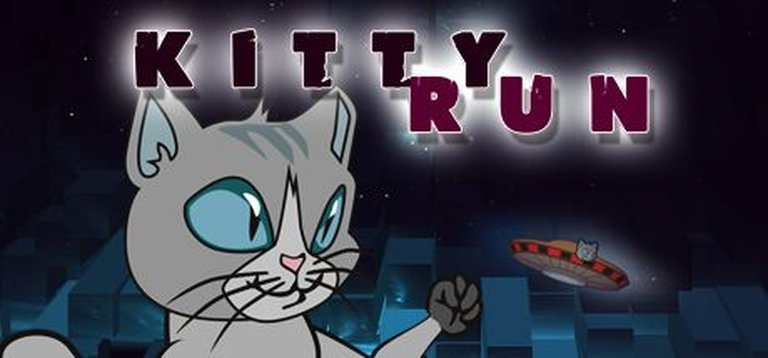
Kitty Run is an auto-run platformer game released in 2018 where players control an anthropomorphic cat navigating through various levels. The game features power-ups like gravity boots and UFOs to assist the player in their journey. With a side-view perspective and 2D scrolling visuals, Kitty Run offers an engaging and whimsical experience.
Where to Buy Kitty Run
PC
Kitty Run Cracks & Fixes
Kitty Run Patches & Updates
Kitty Run Guides & Walkthroughs
Kitty Run: Review
Introduction
In the crowded landscape of indie platformers, Kitty Run (2018) stands out not for its complexity but for its whimsical charm. Developed by Malyarov Andrey and published by Dagestan Technology, this auto-run platformer tasks players with guiding an anthropomorphic cat through obstacle-laden levels. While it lacks the polish of AAA titles, Kitty Run’s simplicity and feline-themed antics carve a niche in the genre. This review dissects its development, mechanics, and legacy to determine whether it’s a hidden gem or a forgettable curiosity.
Development History & Context
Studio & Vision
Kitty Run emerged from the solo efforts of Russian developer Malyarov Andrey, with Dagestan Technology handling publishing. The game’s modest scope reflects the constraints of a small team: a 2D side-scrolling design, basic animation, and a focus on tight controls over narrative depth. Andrey’s vision appears rooted in classic platformers, blending the endless-runner mechanics popularized by mobile games like Temple Run with traditional level-based progression.
Technological Landscape
Released in 2018, the game arrived during a resurgence of retro-inspired indie titles. Built for Windows (and later adapted for mobile via the Godot Engine by Rashwin Barwa), Kitty Run leverages straightforward visuals and mechanics to cater to low-spec hardware, requiring only a Core 2 Duo and 1GB of RAM. This accessibility contrasts with more demanding contemporaries, positioning it as a lightweight option for casual players.
Narrative & Thematic Deep Dive
Plot & Characters
Kitty Run’s narrative is skeletal but serviceable: players control a cat (named “Kitty”) on a mission to rescue its kittens. The thin premise serves as a backdrop for the gameplay, with no dialogue or character development. Themes of perseverance and whimsy dominate—obstacles include UFOs and gravity-defying boots, framing the adventure as a playful romp rather than an epic quest.
Thematic Flaws
The lack of storytelling depth limits emotional engagement. Unlike narrative-driven indie darlings (Hollow Knight, Celeste), Kitty Run relies solely on its mechanics to hook players, leaving its world feeling underbaked.
Gameplay Mechanics & Systems
Core Loop
As an auto-runner, Kitty Run demands precise jumps and quick reflexes. The cat moves automatically, with players pressing keys (or tapping on mobile) to leap over pits, dodge enemies, and collect power-ups like:
– Gravity Boots: Temporarily invert movement controls.
– UFO: Float over obstacles.
– Dragon Companion: Clear hazards ahead.
Controls & Progression
The PC version supports keyboard and mouse, though the mobile iteration’s touch controls feel more intuitive. Progression is linear, with 35 levels of increasing difficulty. However, repetitive obstacles and limited enemy variety undermine long-term appeal.
Innovations & Shortcomings
The power-up system adds novelty, but inconsistent hitboxes and floaty physics frustrate precision platforming. The mobile version’s ad-supported model (with optional purchases) further disrupts immersion, a common pitfall of free-to-play design.
World-Building, Art & Sound
Visual Design
Kitty Run employs a minimalist 2D aesthetic, with bright colors and cartoonish sprites. The cat’s animations are charmingly bouncy, but environments lack detail—forests and alien backdrops feel generic. A prototype browser version by Molly Morris (developed in GDevelop) even simplifies this further, opting for a winter-themed pixel art style.
Sound Design
The soundtrack leans into upbeat, looped melodies that complement the lighthearted tone. While none are memorable, they avoid grating repetition—a small victory for a budget title.
Reception & Legacy
Critical & Commercial Performance
Kitty Run flew under the radar at launch, with no critic reviews on Metacritic or MobyGames. Player feedback is sparse, though mobile users praise its casual appeal despite ads. The PC version’s Steam page lists just nine basic achievements, hinting at a small but dedicated audience.
Industry Influence
While Kitty Run hasn’t reshaped gaming, it exemplifies the indie scene’s democratization. Its existence alongside cat-themed peers like Copy Kitty and Aqua Kitty underscores a niche demand for feline protagonists, even in derivative formats.
Conclusion
Kitty Run is a paradoxical title: charming yet forgettable, accessible yet shallow. Its strength lies in delivering exactly what it promises—a no-frills platformer for cat lovers and casual gamers. While it lacks the depth to stand among genre greats, its whimsical premise and low barrier to entry make it a harmless diversion. For historians, Kitty Run serves as a testament to the indie boom’s breadth; for players, it’s a fleeting amusement best enjoyed in short bursts.
Final Verdict: A purr-fectly adequate time-waster—nothing more, nothing less.