
- Release Year: 2017
- Platforms: Windows
- Publisher: Gunfire Games, LLC
- Developer: Gunfire Games, LLC
- Genre: Action
- Perspective: 1st-person
- Game Mode: Online Co-op, Single-player
- Gameplay: Direct control, Motion control, Shooter, Space flight
Description
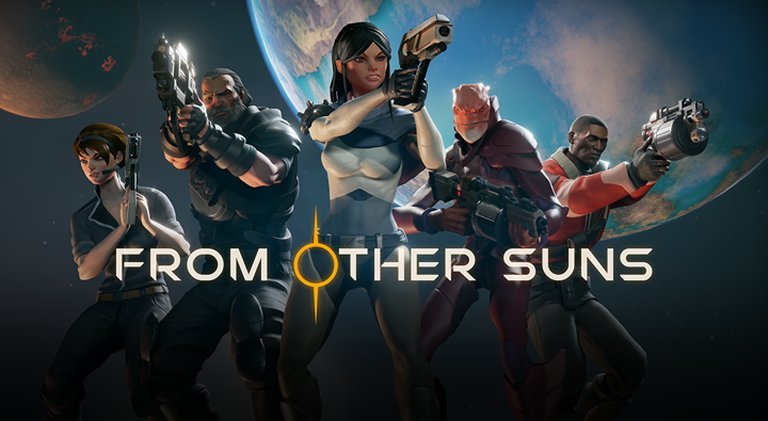
In ‘From Other Suns’, players embark on a perilous co-op VR space adventure after a routine test of an experimental folding drive goes awry. Pursued by an ancient alien menace that threatens humanity, you and your crew must battle ruthless pirates, hostile robots, and cosmic horrors while managing ship resources and upgrading equipment in a desperate race to save Earth. Developed by Gunfire Games for Oculus Touch, the game blends intense first-person shooting, strategic ship management, and roguelike elements across a volatile galaxy.
Gameplay Videos
From Other Suns Guides & Walkthroughs
From Other Suns Reviews & Reception
uploadvr.com : it’s so ambitious and so full of content that it’s hard not to walk away in awe of the accomplishment.
From Other Suns: A Genre-Defying VR Odyssey Through the Stars
Introduction
In the golden age of VR experimentation, From Other Suns emerged in 2017 as a bold fusion of roguelike strategy, first-person shooting, and cooperative spacefaring chaos. Developed by Gunfire Games, the studio behind the acclaimed VR title Chronos, this Oculus Rift exclusive sought to merge the tactical depth of FTL: Faster Than Light with the frenetic energy of Borderlands, all while leveraging VR’s immersive potential. Though its difficulty and niche appeal divided players, From Other Suns remains a testament to VR’s capacity for innovation—a flawed yet ambitious gem that dared to ask: What if surviving the cosmos required equal parts brains and bullets?
Development History & Context
Gunfire Games, founded by veterans of Darksiders and Devil May Cry, aimed to push VR beyond tech demos with From Other Suns. Released in late 2017, the game arrived during a pivotal period for VR, as studios grappled with balancing immersion with substantive gameplay. The team sought to meld emergent storytelling with procedural generation—a gamble given VR’s technical constraints. Designed exclusively for Oculus Touch, the game prioritized intuitive motion controls for ship management and combat, but budgetary and hardware limitations led to pared-back environmental interactivity, a point critics later critiqued.
At its core, From Other Suns was a response to a question: Could VR sustain a multiplayer roguelike with permadeath and deep systemic complexity? Gunfire’s answer was a resounding, if uneven, yes.
Narrative & Thematic Deep Dive
The premise is deceptively simple: After testing an experimental “folding drive,” your crew unwittingly unleashes an ancient alien menace that pursues you across the galaxy. The race to Earth becomes a desperate scramble to outrun annihilation while battling pirates, rogue AI, and cosmic horrors. While the story serves as a skeletal framework, the game’s true narrative emerges through emergent moments—a last-ditch repair during a ship invasion, or betraying a merchant for loot.
Themes of cooperation and sacrifice permeate the design. Crewmembers are both resources (expendable “lives”) and emotional anchors; losing a veteran NPC to a boarding party stings. Dialogue is sparse but functional, with NPC interactions evoking Firefly-esque outlaw camaraderie. The looming alien threat channels Dead Space’s cosmic dread, though the tone skews more pulp adventure than existential horror.
Gameplay Mechanics & Systems
From Other Suns hinges on three pillars: ship management, first-person combat, and procedural generation.
-
Ship Management:
- Players juggle fuel, weapon systems, and crew assignments while navigating a starmap reminiscent of FTL. Each jump risks encounters—pirate raids, derelict stations, or merchant negotiations.
- Strategic depth shines in multiplayer, where players divide roles (captain, engineer, gunner). Solo play, however, overwhelms with micromanagement, as noted by Road to VR’s 75% review: “Too brutal for the casual weekender going solo.”
-
Combat & Progression:
- On-foot missions blend Borderlands-style loot (randomized weapons like ricochet lasers and toxic gas guns) with tense, claustrophobic firefights. The lack of regenerating health and limited ammo elevates stakes, though repetitive mission objectives (e.g., “clear all enemies”) grate over time.
- Permadeath looms large: Ship destruction or crew extinction resets progress, though unlockable ships and weapons (earned via achievements) soften subsequent runs.
-
Multiplayer vs. Solo:
- Co-op transforms the experience. As ResetEra users noted, coordinating repairs mid-battle or sharing loot fosters camaraderie absent in solo play. Yet, uneven difficulty spikes—particularly in late-game “Hive” missions with relentless alien swarms—test patience.
Flaws persist: Ship-to-ship combat lacks FTL’s tactical nuance, and the absence of character progression (beyond loot) left critics like UploadVR wanting: “Death lost a lot of the sting without persistent upgrades.”
World-Building, Art & Sound
From Other Suns opts for a stylized, “cartoony” aesthetic—a pragmatic choice that holds up better than photorealism in VR. Ships feel utilitarian yet lived-in, with flickering holographic interfaces and debris floating in zero-G. Weapon designs dazzle: Plasma rifles crackle with energy, while flame throwers cast eerie shadows in derelict corridors.
Sound design amplifies tension: The creak of bulkheads, hiss of escaping oxygen, and guttural screams of alien “Crabheads” heighten immersion. Yet, the score is forgettable, leaning on generic sci-fi synth beats.
Procedural generation ensures no two runs are identical, though asset repetition (e.g., recurring space station layouts) undermines the illusion of a vast galaxy.
Reception & Legacy
At launch, From Other Suns earned a Metascore of 78 (5 reviews) and a user score of 8.5/10, praised for its co-op innovation and VR ambition. Critics applauded its “marriage of FTL and Borderlands” (Gamer.nl) but noted its “repetitive missions” and “unforgiving solo play” (UploadVR). Commercial success was muted, partly due to the Rift’s limited install base.
Its legacy lies in proving VR’s potential for systemic, replayable experiences—a precursor to later hits like No Man’s Sky VR. Though overshadowed by more accessible titles, From Other Suns remains a cult favorite, its DNA evident in games blending strategy and shooter elements.
Conclusion
From Other Suns is a game of dichotomies: thrilling yet punishing, inventive yet repetitive, transcendent in co-op yet isolating alone. For VR enthusiasts, it’s a time capsule of early-adopter ambition—a flawed masterpiece that dared to fuse genres when others played it safe. While its difficulty and procedural shortcomings prevent universal appeal, its bold vision secures its place in VR history.
Final Verdict: A pioneering but uneven experiment, From Other Suns is best remembered as the Firefly of VR games—gone too soon, but burning bright in the memories of those who crewed its starships.