
- Release Year: 2024
- Platforms: PlayStation 4, PlayStation 5, Windows, Xbox One, Xbox Series
- Publisher: Akupara Games, LLC
- Developer: Akupara Games, LLC
- Genre: Role-playing (RPG)
- Perspective: 1st-person
- Game Mode: Single-player
- Gameplay: Puzzle elements, Word construction
- Setting: Fantasy
- Average Score: 77/100
Description
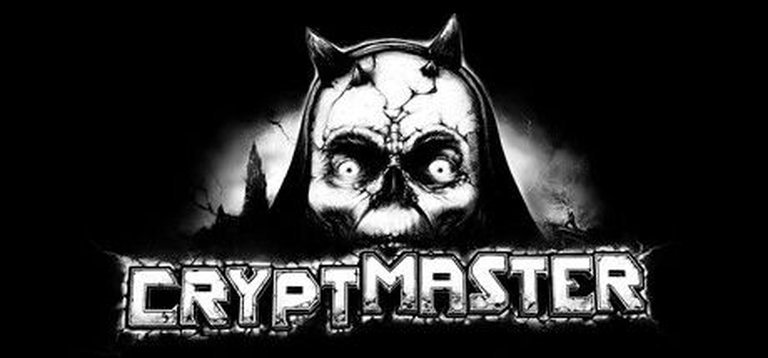
Cryptmaster is a unique word-driven dungeon crawler RPG that blends typing puzzles with fantasy exploration. Set in a monochromatic underworld, players awaken as undead heroes guided by the enigmatic Cryptmaster, using keyboard inputs to solve riddles, battle creatures, and uncover memories. The game combines real-time and turn-based mechanics with innovative word construction challenges, offering a humorous narrative and striking black-and-white visual style that emphasizes linguistic creativity.
Gameplay Videos
Where to Buy Cryptmaster
Cryptmaster Free Download
Cryptmaster Cracks & Fixes
Cryptmaster Mods
Cryptmaster Guides & Walkthroughs
Cryptmaster Reviews & Reception
metacritic.com (77/100): If you like word games and dungeon crawlers, Cryptmaster will likely be one of your favorite games in years.
Cryptmaster: Review
Introduction
In a digital landscape saturated with homogenous RPGs and predictable dungeon crawlers, Cryptmaster emerges as a grotesque love letter to the power of language, necromantic humor, and the tactile joy of typing. Released in May 2024 by Akupara Games, this indie gem from developers Paul Hart and Lee Williams revitalizes the parser-adventure genre, marrying the mechanical depth of grid-based dungeon crawling with the anarchic freedom of text-based play. Cryptmaster positions itself as a darkly comedic odyssey where words are both weapons and wards against oblivion, though its brilliance is occasionally undermined by repetitive design and pacing inconsistencies.
Development History & Context
Cryptmaster was forged by the UK-based duo Hart and Williams, whose collaboration began in 2014 when Williams offered to write for Hart’s projects. Initially conceived as a pirate-themed game focused on manipulating sentences, the concept evolved through iterations that prioritized accessibility and emergent storytelling. Drawing inspiration from Wheel of Fortune, Hangman, and ‘80s fantasy media like Knightmare—whose host Hugo Myatt voices a character here—the pair embraced the dungeon crawler framework to ground their text-heavy mechanics in intuitive spatial exploration.
Built in Unity, Cryptmaster capitalized on modern hardware to support its ambitious voice-recognition system and real-time parser responsiveness, a stark contrast to the technological constraints of ‘90s text adventures. Released amid a resurgence of wordplay-driven indies (Inscryption, Babble Royale), it carved a niche with its gothic-comedic tone and refusal to compromise on linguistic experimentation. The game’s development was marked by painstaking attention to dialogue, with Williams recording over 4,000 lines for the Cryptmaster alone, ensuring organic reactions to players’ verbal whims without relying on AI shortcuts.
Narrative & Thematic Deep Dive
The plot centers on four undead heroes—Joro (warrior), Syn (rogue), Maz (bard), and Nix (wizard)—resurrected by the eponymous Cryptmaster, a necromancer whose bombastic commentary masks a tragic backstory. Tasked with escaping a multi-layered crypt to unleash chaos on the surface world, the party grapples with fragmented memories, revealed incrementally by solving word puzzles. The Cryptmaster, voiced with Vincent Price-esque relish, oscillates between sadistic chaperone and reluctant ally, his motives unraveling in late-game twists that tie him to the slain priest Audo and the eldritch Horned King.
Thematically, Cryptmaster explores identity, autonomy, and the weight of history. Each hero’s locked abilities—rediscovered via Wheel of Fortune-style letter reveals—symbolize their buried humanity, while environmental lore (via journals and spectral NPCs) critiques heroism as a cyclical farce. The narrative thrives on tonal juxtaposition: gruesome undead battles collide with absurdist humor (e.g., typing “FART” to solve a puzzle), and existential dread underpins the Cryptmaster’s Wildean wit. Yet, subplots occasionally feel underexplored, particularly the heroes’ pre-death relationships, leaving emotional resonance reliant on the player’s investment in linguistic detective work.
Gameplay Mechanics & Systems
Cryptmaster’s core loop is a masterclass in wordplay-as-progression:
– Combat: Battles unfold in real-time or turn-based modes, with each ability mapped to typed verbs (e.g., “JAB,” “HEAL”). Enemies display letter-count health bars, and hits strip characters from their names—both foes’ and the party’s. Strategic depth arises from modifier-based resistances (e.g., enemies immune to words containing “B”) and synergies between heroes’ skills.
– Exploration & Puzzles: Navigation uses grid-based movement à la Legend of Grimrock. Chests demand deductive interrogation (e.g., asking the Cryptmaster to “SMELL” or “LICK” contents), while riddle-spouting skulls and NPC side quests reward vocabulary dexterity. Unlocking abilities requires filling blank tiles beneath each hero’s portrait using letters scavenged from victories or puzzles.
– Progression: Characters “level up” by elongating their names with scavenged letters, boosting HP. The card minigame Whatever offers a delightful diversion, challenging players to spell opponents’ names faster via drawn letter tiles.
– Accessibility: Voice-to-text support and adjustable puzzle difficulty cater to diverse players, though controller input lags behind keyboard precision.
Flaws surface in repetition: combat over-relies on late-game damage sponges, and some puzzles suffer from unclear solutions. However, the sheer joy of watching the Cryptmaster riff on profanity or unexpected inputs (e.g., reacting to “TOMATE” as a fruit) injects irreverent vitality.
World-Building, Art & Sound
Cryptmaster’s aesthetic is a chiaroscuro nightmare rendered in high-contrast monochrome, evoking sketched dungeon manuals and Edward Gorey illustrations. Environments—dank crypts, fungal forests, spectral libraries—are richly detailed with cross-hatched textures and dynamic lighting, while optional color filters (sepia, cyan) offer personalized immersion. Enemy designs blend grotesquery and whimsy, from gelatinous blobs named “Jeff” to armor-clad skeletons reciting poetry.
Sound design elevates the atmosphere: Surasshu’s score shifts between haunting choral arrangements and thrashing metal during combat, while ambient drips and distant wails amplify claustrophobia. The Cryptmaster’s voice work is the star—melodramatic, sardonic, and unnervingly intimate, with Williams’ delivery transforming even tutorial explanations into macabre stand-up routines.
Reception & Legacy
Cryptmaster garnered a Metascore of 77, praised for innovation (TouchArcade: “4.5/5—oozes humor, charm”) but critiqued for pacing (RPG Site: “6/10—a bit confused”). It won Independent Games Festival’s “Excellence in Design” and IndieCade’s “Jury Prix,” cementing its status as a cult darling. Commercially, it found modest success, bolstered by a vocal fanbase dissecting lore secrets on Reddit and Steam forums.
Its legacy lies in revitalizing parser mechanics for modern audiences, proving language itself can be a thrilling RPG scaffold. Future content updates promise expanded areas and a Whatever tournament mode, while indie devs cite Cryptmaster as inspiration for hybrid genre experiments.
Conclusion
Cryptmaster is a paradoxical triumph—a game that demands玩家 type “PARADIDDLE” to defeat a skeleton but never forgets to revel in the absurdity of its own premise. It stumbles in late-game repetition and occasionally opaque puzzles, yet its ambition, wit, and audiovisual artistry forge an unforgettable experience. For players weary of conventional RPGs, Cryptmaster is a crypt worth robbing; for the lexicon-obsessed, it’s a mausoleum of delights. In video game history, it will endure as a bold testament to the magic of words—both wielded and whispered in the dark.
Final Verdict: 8/10 – A flawed but visionary dungeon crawl where every keystroke feels like unearthing buried treasure.