
- Release Year: 2024
- Platforms: Macintosh, Windows
- Publisher: Gamera Games
- Developer: Yatsunagi Games
- Genre: Adventure
- Perspective: 1st-person
- Game Mode: Single-player
- Gameplay: Point and select
- Setting: Horror
- Average Score: 80/100
Description
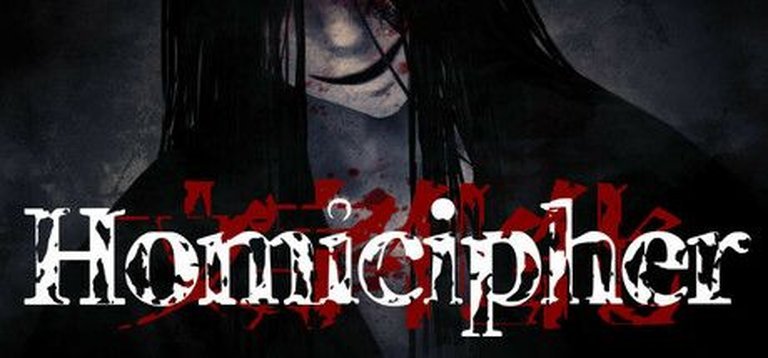
Homicipher is a first-person horror adventure game where players wake up in an alternate world inhabited by mysterious monsters speaking an alien language. As the protagonist, you must decipher their words through gestures, expressions, and context while navigating branching paths, making critical choices, and avoiding instant-death scenarios. With a point-and-click interface, players uncover 17 possible endings—including hidden fake conclusions—and replay clues to fill a dictionary, enhancing comprehension. Designed for replayability, the game blends eerie exploration with linguistic puzzles across five-hour playthroughs.
Gameplay Videos
Where to Buy Homicipher
PC
Homicipher Guides & Walkthroughs
Homicipher Reviews & Reception
bossrush.net : A game about deciphering a language that fits well with its mechanics but suffers in other areas.
metacritic.com (80/100): Homicipher is an experimental visual novel that asks you to keep an open mind for the unknown.
polygon.com : A low-stress horror game where decoding monster language adds a new dimension to exploration.
otomekitten.com : A unique point-and-click ADV horror game where deciphering language is key to survival and romance.
dokidokidigest.com : A horror story in costume and a romance story in name, but ultimately a unique language cipher game.
Homicipher: A Monstrous Love Affair in the Shadows of Linguistic Horror
Introduction
In the crowded landscape of indie horror, Homicipher (2024) stands as a cultishly adored anomaly—an unsettling romance woven into a language-deciphering nightmare. Developed by the enigmatic solo creator Yatsunagi and published by Gamera Games, this “female-targeted horror ADV” dared to weaponize communication itself, transforming translation into survival. Though critically praised for its ambition and eerie atmosphere, Homicipher became equally infamous for the real-world drama surrounding its creator’s burnout under relentless fan demands. This review dissects its triumphs, tragedies, and enduring legacy: a game that seduces players into loving creatures beyond comprehension, only to reveal the fragility of its own creation.
Development History & Context
A Solo Vision Under Siege
Yatsunagi, an obscure Japanese indie developer, conceived Homicipher as a passion project—a blend of horror and romance born from their fascination with linguistic alienation. Initially self-published as a demo in 2023, it exploded in popularity after Gamera Games picked it up, marketing it as a “dating sim for horror men.” But the game’s DIY roots clashed with its viral success.
Speaking on their Note blog, Yatsunagi detailed crushing pressure: “Every piece of content released comes with a slew of demands for the next update” (Automaton West). Despite working a day job, they faced relentless inquiries, bug reports, and entitlement from fans treating the project like a corporate product. By early 2025, Yatsunagi announced an end to updates, canceling plans for a Nintendo Switch port and withdrawing from community engagement—a stark reminder of indie labor’s emotional toll.
Influences and Innovations
Homicipher drew clear inspiration from 7 Days to End with You (2022), another language-puzzle game, but leaned into otome conventions with its cast of monstrous bachelors. Produced in RPG Maker with minimal resources, its aesthetic echoed early-2000s visual novels—static, moody backgrounds and expressive character sprites. Yet its innovation lay in refusing hand-holding; players earned comprehension through trial, error, and corpse piles.
Narrative & Thematic Deep Dive
An Amnesiac in the Abyss
Players awaken as Adami Adashino—a default name customizable in-game—trapped in the “Ghost Apartments,” a liminal labyrinth where doors shift during earthquakes. The premise is deceptively simple: escape by decoding the guttural, noun-heavy language of its inhuman residents. But beneath this lies a twisted inversion of isekai tropes.
[Spoilers]
Adami’s “lost girl” façade unravels across endings: she was a serial killer in her past life, dumping victims in an abandoned building inhabited by Mr. Scarletella, who mistook her offerings as devotion and cursed her (NamuWiki). This duality—monster and prey—mirrors the game’s thesis: fear and attraction blur when communication transcends words.
Monstrous Romance and Moral Ambiguity
The seven romance-adjacent characters—Mr. Crawling, Mr. Silvair, Mr. Gap, and others—defy easy categorization. Mr. Crawling, the eyeless quadruped poster boy, evolves from stalker to protector, standing upright in key moments to assert dominance. Mr. Gap, a deal-making fiend, trades body parts for aid yet displays shocking loyalty. Mr. Scarletella, the antagonist, weaponizes names as soul-stealing traps but covets Adami obsessively.
Their connections to Adami hinge on understanding—not affection meters. Romance blooms through shared glances, head pats, or bloody collaborations. Love here is transactional, feral, and often fatal. As one TV Tropes user noted, “Every friendly character is still a dangerous, inhuman monster.”
Themes: Lost in Translation
Homicipher dissects isolation through its linguistic void. The monsters’ language—”one meaning concentrated in one word, almost no particles” (Steam)—forces players to interpret “kill” as “help,” or confuse gestures of affection with violence. This mechanic literalizes the horror of miscommunication, where a mistranslated smile earns a machete to the neck.
Moreover, the game critiques performative empathy. Adami’s journey isn’t about “taming” monsters but surviving them—sometimes by becoming monstrous herself (e.g., gigantism, healing factor). Survival demands compromise: trust Mr. Gap to saw off your finger for crucial intel, or let Mr. Silvair “study” your mutating body.
Gameplay Mechanics & Systems
Decoding Despair
At its core, Homicipher is a point-and-click ADV with a language cipher system. Players record deduced words in a dictionary, parsed via contextual clues (e.g., Mr. Hood miming “open” near a door). Words unlock new dialogue options, creating a feedback loop of comprehension.
Though praised for originality, the system has flaws:
– Non-Linear Learning: Words like “pain” or “love” surface inconsistently, forcing reliance on UI annotations.
– Save Slot Limitations: Three save files with independent dictionaries hinder experimentation (Otome Kitten).
– Superficial Choices: Many “decisions” are binary (smile/frown) with minimal narrative weight.
Branching Paths and Brutal Ends
With 34 endings—from romantic conclusions to grisly dismemberments—Homicipher incentivizes replays. A clever “Chapters” system lets players revisit pivotal scenes, but the lack of a route flowchart muddies completionism. Anti-frustration features shine: death respawns players at the prior decision point, sparing tedious repetition.
However, QTE-driven “combat” (clicking to dodge or stab) feels underbaked. As Doki Doki Digest noted, “It lacks depth outside its cipher mechanic.”
World-Building, Art & Sound
The Ghost Apartments: An Eldritch Labyrinth
The setting is a character itself—a decaying apartment complex where reality buckles. Rooms reconfigure post-earthquakes, hallways bleed into voids, and doors lead to paradoxes (a bridal suite inhabited by The Bride, a headless specter). Environmental storytelling drips with dread: bloodstained walls hint at prior victims, while Mr. Hugeface’s looming silhouette evokes Shadow of the Colossus.
Visual Dichotomy: Ugly-Cute Horrors
Yatsunagi’s art balances grotesquery with allure. Characters like Mr. Chopped (a sentient head) or Mr. Stitch (a frankensteined corpse) are rendered in stark, anime-adjacent detail—unsettling yet oddly charming. Boss Rush lauded their designs as “monstrous yet fascinating… a horror game’s version of love interests.”
The sparse UI keeps focus on deciphering text, though the absence of CGs or galleries frustrated completionists (Otome Kitten).
Sound Design: Silence as a Weapon
Music is minimal but impactful. The haunting vocal track “Gray Rain” underscores the title screen, while gameplay oscillates between silence and jarring SFX (blood squelches, creaking doors). The lack of voice acting amplifies loneliness, forcing players to “voice” characters internally—a masterstroke in immersion, albeit divisive.
Reception & Legacy
Critical Divide
Homicipher earned polarized reviews. Critics praised its bold fusion of horror and romance (Boss Rush: “Innovative, endearing, horrifying”), but scorned its thin lore and repetitive gameplay (Polygon: “Wears too many hats”). Steam users adored its quirky cast but lamented bugs and pacing issues. Metacritic settled at 80/100—”experimental, but flawed.”
Commercial success was undeniable: 100,000+ copies sold, merch collaborations, and a still-pending Switch port (Automaton West).
Controversies and Burnout
Yatsunagi’s departure from the project cast a pall. Fans harassed them with demands, culminating in a public withdrawal and cancellation of planned DLC. Compounding this, past tweets resurfaced—Yatsunagi joking about violence—fueling online witch hunts (NamuWiki). The saga became a cautionary tale about indie dev/fan dynamics.
Industry Impact
Though not a blockbuster, Homicipher inspired a wave of language-centric horror games. Its dictionary mechanic reemerged in titles like Lorelei and the Laser Eyes (2025), while the “monster romance” niche exploded post-release (e.g., Goblin Matchmaker). Academics even cited it in discourse on ludolinguistics—proving communication is the ultimate boss fight.
Conclusion
Homicipher is a paradoxical relic: a game about understanding others that became unintentionally defined by the creator’s alienation. Its triumphs—atmospheric dread, linguistic ingenuity, and morally gray romance—clash against underbaked mechanics and unfulfilled potential. Yet like its monstrous suitors, Homicipher lingers in memory, imperfect yet irresistible. For those brave enough to decode its horrors, it offers a poignant lesson: love and language are labyrinths, and sometimes, getting lost is the point.
Final Verdict:
A flawed but visionary experiment—4/5 stars. A must-play for horror-otome hybrids, but its legacy is as much a warning as a triumph.