
- Release Year: 2017
- Platforms: Windows
- Publisher: Enyx Studios
- Developer: Enyx Studios
- Genre: Adventure
- Perspective: 1st-person
- Game Mode: Single-player
- Setting: Horror
- Average Score: 36/100
- VR Support: Yes
Description
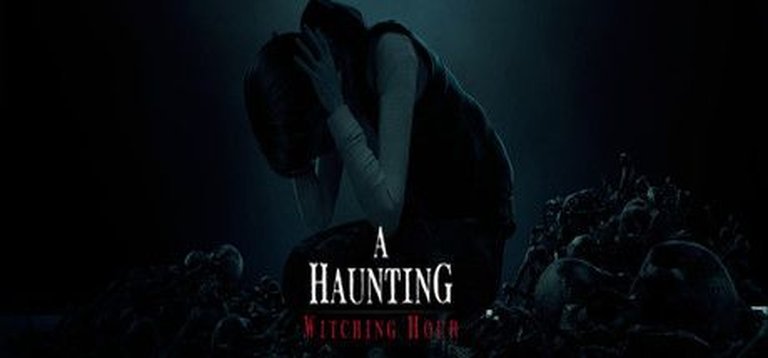
A Haunting: Witching Hour is a first-person horror adventure game released in 2017, developed and published by Enyx Studios. The game immerses players in the dark and mysterious town of Shady Hollow, where they uncover the chilling legend of the Hollow Creek Witch. Players explore an abandoned orphanage and delve into a rich narrative that unfolds in episodes, each revealing more about the town’s sinister past and the desperate struggle for survival.
A Haunting: Witching Hour Guides & Walkthroughs
A Haunting: Witching Hour Reviews & Reception
steambase.io (36/100): A Haunting : Witching Hour has earned a Player Score of 36 / 100, calculated from 11 total reviews which give it a rating of Mostly Negative.
A Haunting: Witching Hour: A Cautionary Tale of Ambition and Unfulfilled Promise
Introduction
In the crowded landscape of indie horror games, A Haunting: Witching Hour (2017) stands as a spectral footnote—a title brimming with narrative ambition but shackled by technical limitations and unrealized potential. Developed by the obscure Enyx Studios, this episodic, VR-capable horror adventure promised an immersive dive into generational curses and small-town terror. Yet, its journey from Early Access to cancellation in 2022 epitomizes the risks of overpromising in the indie gaming space. This review dissects its fractured legacy, analyzing how a compelling concept collapsed under the weight of execution flaws and unfulfilled promises.
Development History & Context
A Studio’s Vision and Technological Ambition
Enyx Studios, a little-known developer with no prior notable releases, positioned A Haunting: Witching Hour as a passion project blending episodic storytelling with VR immersion. Released on October 30, 2017, via Steam Early Access, the game arrived during a peak interest in VR horror, capitalizing on titles like Resident Evil 7 and The Forest. However, Enyx’s ambition outstripped its technical prowess. Built on Unity, the game aimed to support both VR and traditional playstyles, but this dual focus strained its development.
The Early Access Curse
The game’s Early Access model was pitched as a framework for episodic content, with planned DLC expansions to continue the story. Yet, only Episode 1 saw release, leaving players with an incomplete narrative. By May 2022, Enyx Studios quietly announced the game’s cancellation, citing unresolvable development challenges. This failure mirrored broader issues in Early Access horror titles, where underfunded studios often struggle to deliver on lofty promises.
Narrative & Thematic Deep Dive
A Multi-Generational Horror Saga
A Haunting: Witching Hour weaves a tale spanning centuries, anchored by the cursed Beaumont family and the vengeful Hollow Creek Witch, Elizabeth Ainsley. The lore begins in 1695 with Ainsley’s wrongful accusation of witchcraft by her lover, Reverend James Beaumont—a betrayal that unleashes a supernatural plague on Shady Hollow. The curse resurfaces in the 1970s with the disappearance of Sally Beaumont and the subsequent death of her parents, followed by her brother John’s descent into murderous madness.
Episode 1 focuses on two teenagers, Emily and Ray, who investigate the abandoned Shady Hollow Orphanage in 2015, uncovering John’s ties to the witch. The narrative’s strength lies in its layered tragedies, evoking themes of inherited guilt and the cyclical nature of violence. However, the storytelling is marred by clunky dialogue and a disjointed structure, with key plot points relayed through exposition-heavy documents rather than organic discovery.
Themes of Betrayal and Haunted Legacy
The game’s core theme—the inescapability of familial sin—echoes Gothic horror traditions. Elizabeth’s curse operates as a metaphor for unresolved trauma, haunting each generation of Beaumonts. Yet, these ideas are underdeveloped, reduced to predictable horror tropes (e.g., “creepy orphanages,” “possessed killers”) without deeper psychological exploration.
Gameplay Mechanics & Systems
A Broken Promise of Immersion
The game’s defining feature was its VR compatibility, touted as a revolution in horror immersion. Unfortunately, players reported crippling technical issues: VR controls were poorly calibrated, with Oculus Rift users noting distorted perspectives and unresponsive movement. Non-VR gameplay fared no better, plagued by stiff character animations, clunky interaction prompts, and a frustrating UI that obscured key items.
Psychic Mechanics and Missed Opportunities
A unique mechanic allowed players to “see the past” by touching objects—a concept borrowed from The Vanishing of Ethan Carter. However, this system was shallow, often triggering repetitive flashbacks with minimal gameplay impact. Combat, where present, was described as “jarringly inept,” with enemies glitching through walls and attacks lacking weight.
The Episodic Model’s Collapse
The intended episodic structure—a selling point at launch—became its downfall. With only one episode released, the game’s cliffhangers felt hollow, leaving players with unresolved threads and a protagonist, Eddie, whose psychic abilities never fully manifested in gameplay.
World-Building, Art & Sound
Shady Hollow: A Town Without Soul
The setting of Shady Hollow brims with atmospheric potential: fog-drenched forests, dilapidated orphanages, and abandoned mines whisper of untold horrors. Yet, the environments are rendered with bland textures and repetitive assets, undermining the eerie ambiance. VR exacerbates these flaws, with low-poly models and flat lighting breaking immersion.
Sound Design: A Lone Bright Spot
The game’s spatial audio was praised for its subtle creepiness—a cacophony of whispers, distant footsteps, and disembodied cries that heightened tension. However, these moments were overshadowed by inconsistent voice acting and abrupt sonic jumpscares that felt cheap rather than earned.
Reception & Legacy
A Flop at Launch
A Haunting: Witching Hour garnered a “Mostly Negative” Steam rating (36/100), with players lambasting its bugs, unfinished state, and deceptive marketing. Critics were equally absent—Metacritic lists no professional reviews—a testament to its obscurity.
A Cautionary Legacy
The game’s cancellation cemented its reputation as a cautionary tale. While its narrative ambition influenced later indie horrors like The Dark Pictures Anthology, its failures underscored the dangers of overreliance on Early Access and VR gimmicks without polished execution.
Conclusion
A Haunting: Witching Hour is a ghost of what might have been—a game whose rich lore and thematic potential were suffocated by technical ineptitude and developer overreach. Its place in history is less as a horror masterpiece and more as a lesson: ambition must be tempered with execution, and player trust is fragile. For completionists and historians, it remains a morbidly fascinating relic. For everyone else, it’s a witching hour best left unobserved.
Final Verdict: A flawed, unfinished experiment—worth studying, not playing.