
- Release Year: 2019
- Platforms: Macintosh, Windows
- Publisher: 8floor Ltd.
- Developer: Somer Games
- Genre: Strategy, Tactics
- Perspective: 1st-person
- Game Mode: Single-player
- Gameplay: Cards, Tiles
- Setting: Fantasy
- Average Score: 73/100
Description
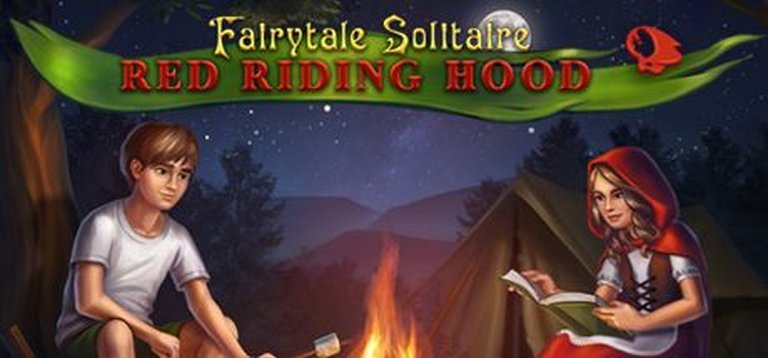
Fairytale Solitaire: Red Riding Hood is a captivating card game that immerses players in the enchanting world of the classic fairy tale. Players navigate through beautifully designed levels, each inspired by scenes from the story of Little Red Riding Hood, while solving solitaire puzzles. The game combines strategic gameplay with a whimsical fantasy setting, offering a relaxing yet engaging experience for solitaire enthusiasts.
Gameplay Videos
Where to Buy Fairytale Solitaire: Red Riding Hood
PC
Fairytale Solitaire: Red Riding Hood Reviews & Reception
steambase.io (73/100): Fairytale Solitaire: Red Riding Hood has achieved a Steambase Player Score of 73 / 100.
Fairytale Solitaire: Red Riding Hood: Review
Introduction
In a digital gaming landscape dominated by high-octane action and sprawling open worlds, Fairytale Solitaire: Red Riding Hood (2019) carves out a serene niche as a charming reinterpretation of both a classic folktale and a timeless card game. Developed by Somer Games and published by 8floor, this casual solitaire title weaves together accessible mechanics, whimsical visuals, and light narrative threads to create an experience that feels nostalgic yet freshly engaging. While not revolutionary, the game’s fusion of solitaire gameplay with fairy tale aesthetics offers a comforting retreat for players seeking relaxation—a thesis underscored by its “Mostly Positive” Steam reception. This review dissects its design, legacy, and cultural footprint.
Development History & Context
Studio Vision & Technological Constraints
Somer Games, a studio with a portfolio heavy on casual puzzle and solitaire titles (e.g., Solitaire Legend of the Pirates 3), aimed to leverage the enduring appeal of fairy tales to create a low-stakes, family-friendly experience. Released in July 2019, the game targeted an audience familiar with digital card games like Microsoft Solitaire Collection but hungry for thematic depth. The team, led by producer Elizaveta Krasenko and sound designer Maxim Ermolaev (credited on over 100 games), prioritized simplicity, ensuring compatibility with older systems—evidenced by its modest requirements (1.5 GHz CPU, 512 MB RAM).
The 2019 Gaming Landscape
The late 2010s saw a surge in indie and casual games buoyed by platforms like Steam and mobile app stores. Fairytale Solitaire arrived amidst a wave of fairy tale-inspired titles, such as Dark Parables: The Red Riding Hood Sisters, but distinguished itself by focusing on solitaire’s tranquil rhythms rather than hidden-object complexity. Its release as a budget title ($4.99) aligned with the era’s demand for affordable, bite-sized entertainment.
Narrative & Thematic Deep Dive
Plot & Characters
The game reimagines the Brothers Grimm’s Little Red Riding Hood as a light-hearted adventure. Players assist the titular heroine and her companions—a cast of children and anthropomorphic animals—in overcoming obstacles like a cunning witch and negotiating with wolves. The narrative is delivered through minimal dialogue and scenario text, serving more as a backdrop than a driving force. While lacking in depth, it successfully evokes the storybook charm of its source material.
Themes & Tone
Themes of courage, collaboration, and resourcefulness underpin the experience. The wolves, traditionally antagonists, are reframed as potential allies through “trade agreements,” softening the tale’s darker edges. This sanitized approach aligns with the game’s family-friendly ethos, though it sacrifices narrative tension for accessibility.
Gameplay Mechanics & Systems
Core Loop & Progression
The game’s foundation is standard solitaire: players clear cards by forming ascending or descending sequences. Innovations include:
– Golden Cards: Collectible tokens that unlock bonus content.
– Jokers & Combos: Power-ups remove cards faster, while combos (chained clears) boost coin earnings.
– Trophies & Challenges: Over 15 achievements reward mastery, such as completing layouts under time constraints.
UI & Feedback
The interface is intuitive, with drag-and-drop controls and clear visual cues for valid moves. However, the lack of undo functionality frustrates precision-oriented players. Progression—unlocking 12 card-back designs and themed decks—feels rewarding but shallow, as upgrades are cosmetic rather than mechanical.
Flaws & Limitations
Repetition sets in quickly due to static difficulty curves and limited variant modes. The absence of multiplayer or daily challenges—common in modern solitaire games—reduces long-term engagement.
World-Building, Art & Sound
Visual Design
Artist Anna Pokhodenko and art director Victor Proskurin craft a vibrant, storybook aesthetic. Each level is adorned with hand-drawn backdrops of enchanted forests and quaint villages, while cards feature ornamental suits (hearts as roses, diamonds as gems). The art’s simplicity complements the gameplay’s meditative pace.
Soundscape
Maxim Ermolaev’s soundtrack blends folksy melodies with ambient woodland sounds, enhancing immersion without overpowering the experience. Subtle audio cues—a chime for combos, a rustle for card moves—provide satisfying feedback.
Reception & Legacy
Critical & Commercial Performance
With a 73% positive Steam rating (15 reviews), the game resonated with casual players praising its “relaxing” pace and “cute” visuals. Critics largely ignored it, reflecting its niche appeal. Sales data is scarce, but its inclusion in bundles (e.g., 100 Games Bundle Vol. 2) suggests moderate success.
Industry Influence
While not groundbreaking, Fairytale Solitaire exemplifies the viability of narrative-driven casual games. It paved the way for similar titles like Fables Mosaic: Little Red Riding Hood (2020), reinforcing fairy tales as evergreen tropes in the genre.
Conclusion
Fairytale Solitaire: Red Riding Hood is a competent, if unambitious, entry in the solitaire canon. Its strength lies in marrying soothing gameplay with fairy tale whimsy, offering a polished experience for casual audiences. However, its lack of mechanical innovation and repetitive structure limit its broader impact. As a cozy diversion, it succeeds; as a landmark title, it falls short. For solitaire enthusiasts and fairy tale aficionados, it’s a delightful curio—one that occupies a quiet but comfortable corner of gaming history.
Final Verdict: A charming, if fleeting, reinterpretation of classic motifs—best suited for players seeking solace in simplicity.