
- Release Year: 1996
- Platforms: Antstream, DOS, Linux, Macintosh, PlayStation 3, PlayStation, PS Vita, PSP, Windows
- Publisher: Console Classics, Funbox Media Ltd., Gremlin Interactive Limited, Interplay Entertainment Corp., Jordan Freeman Group, LLC, Sony Computer Entertainment America Inc., ZOO Digital Publishing Ltd.
- Developer: Gremlin Interactive Limited
- Genre: Action, Shooter
- Perspective: Diagonal-down
- Game Mode: Hotseat, Single-player
- Gameplay: Mission-based, Puzzle-solving, Shooter
- Setting: Post-apocalyptic
- Average Score: 42/100
Description
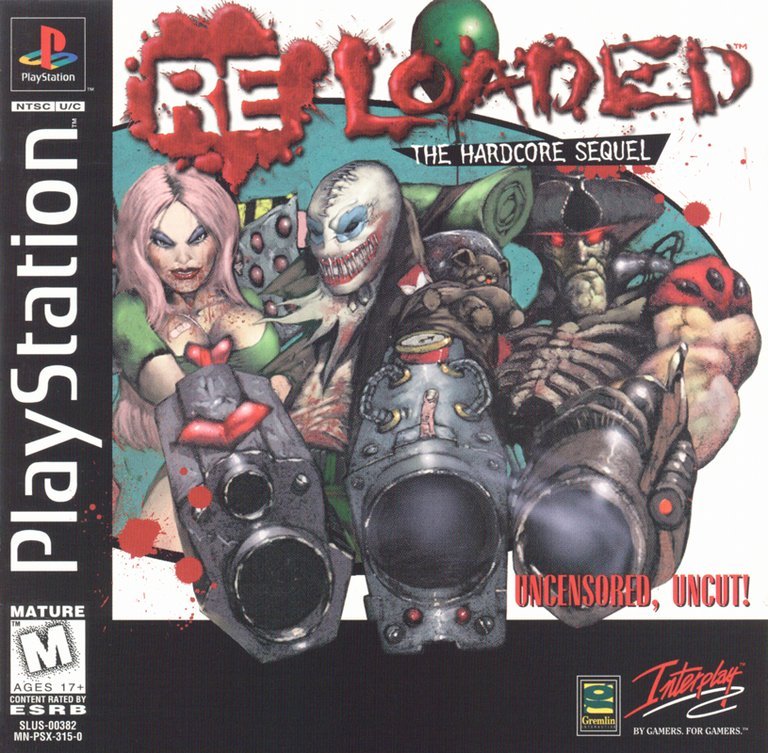
Re-Loaded is a violent top-down shooter sequel to 1995’s Loaded, featuring improved graphics and bizarre characters like Sister Magpie and Butch. Set across 12 mission-based worlds, players blast through enemies using weapons ranging from plasma cannons to ultra bombs in this chaotic arcade-style action game. The title retains its predecessor’s gritty aesthetic and mature themes while expanding combat mechanics.
Gameplay Videos
Where to Buy Re-Loaded
Re-Loaded Free Download
Re-Loaded Patches & Updates
Re-Loaded Reviews & Reception
en.wikipedia.org (52.0/100): Critical approval for the Loaded formula had considerably soured by the time the Saturn port of the original was released, and had worsened further by the time the sequel arrived.
thumbculture.co.uk (30.0/100): Long periods of wanderlust and shooting enemies that are in your face faster than a drunk hillbilly in a bar who didn’t hear what you just said about his wife.
mobygames.com (52.0/100): Average score: 52% (based on 25 ratings)
honestgamers.com (40.0/100): Quite literally, stay away from Reloaded at all costs.
gamespot.com (37.0/100): Quite literally, stay away from Reloaded at all costs.
Re-Loaded Cheats & Codes
PlayStation
Enter codes as specified during gameplay or at menus.
| Code | Effect |
|---|---|
| Hold L1 + L2 for 10 seconds while paused, then press Down, X, Down, X, Down, X | Display Coordinates |
| Hold L1 + L2 for 10 seconds while paused, then press Triangle, Left, Left, Left, Circle, Triangle, Down | Extra Ammo (unlocks Ammo refill option in pause menu) |
| Hold L1 + L2 for 10 seconds while paused, then press Down, Right, Left, Triangle, Right, Down | Restore Health (unlocks Health option in pause menu) |
| Hold L1 + L2 for 10 seconds while paused, then press Left, Triangle, X, Right, Circle, Triangle, Down | Level Skip |
| At character select screen: L1, Circle, R1, Down, Down, R1, Circle, L1, L1 | Play as Fwank |
| Hold L1 + L2 for 10 seconds while paused, then press Left, Up, X, Circle | Weapon Power-Up (unlocks Power option in pause menu) |
PC
Type codes at specified screens.
| Code | Effect |
|---|---|
| ilovemyteddy (at character selection screen) | Play as Fwank |
| iwanttowin (at game options screen) | Level Select |
| rlgod (during gameplay) | God Mode |
| rlsefisgod (while paused) | Enable cheat menu (level skip, ammo, bombs, power-ups, health) |
Re-Loaded: Review
Introduction
In December 1996, amid the PlayStation’s meteoric rise, Gremlin Interactive unleashed Re-Loaded, a hyperviolent sequel to 1995’s cult hit Loaded. Marketed as “The Hardcore Sequel,” it doubled down on gore, dark humor, and chaotic isometric shooting while inheriting its predecessor’s divisive legacy. Despite flashes of a grungy, anarchic charm, Re-Loaded stumbled under the weight of rushed design and technological limitations—becoming a cautionary tale of squandered potential. This review argues that while the game epitomizes mid-’90s edgelord aesthetics with gusto, its technical flaws and repetitive structure relegate it to a footnote in shooter history, saved only by niche appeal among retro enthusiasts and completionists of the Loaded saga.
Development History & Context
The Studio and Vision
Developed by Sheffield-based Gremlin Interactive (later acquired by Infogrames in 1999), Re-Loaded arrived less than a year after Loaded, capitalizing on its predecessor’s shock-value success. The team, led by programmer Paul Hiley and composer Neil Biggin, aimed to refine the formula with larger levels, dynamic terrain deformation, and a darker narrative. However, the rushed timeline—evident in reused assets and an unchanged UI—reflected Gremlin’s commercial pressures amid PlayStation’s competitive late-’90s ecosystem.
Technological Constraints
Re-Loaded pushed the original engine to its limits, leveraging the PlayStation’s 33.8 MHz CPU and 2 MB RAM for pseudo-3D rendered environments. While improvements included outdoor areas and destructible terrain (a reaction to criticism of Loaded’s claustrophobic corridors), the hardware struggled with frame rates and sprite detail. A planned Sega Saturn port was canceled due to technical hurdles, though demos surfaced on compilations like Saturn Power.
The Gaming Landscape
Released alongside genre titans like Resident Evil and Tomb Raider, Re-Loaded faced a market increasingly prioritizing 3D innovation. Critics dismissed its top-down perspective as archaic, with Edge noting that Loaded’s “transparencies and lighting effects” were no longer novel by 1996. Its ultraviolence also drew scrutiny: banned in Germany by the BPjS in 1997, it joined an infamous index of “harmful media.”
Narrative & Thematic Deep Dive
Plot and Characters
Re-Loaded continues the story of Loaded’s escapees—psychotic antiheroes like the cyborg pirate Cap’n Hands and mutated behemoth Mamma—now hunting F.U.B. (Fat Ugly Bastard). After his body’s destruction, F.U.B.’s brain is transplanted into artist Manuel Auto, reborn as C.H.E.B. (Charming Handsome Erudite Bastard), who seeks to terraform planets into “Works of Art and Genius.” The narrative revels in absurdity: C.H.E.B.’s moon-sized body becomes a final boss, while protagonists spout cynical one-liners amid carnage.
Themes and Tone
The game wallows in a satirical, nihilistic ethos. Characters like Sister Magpie (a homicidal android nun) and The Consumer (a cannibalistic femme fatale) embody a grotesque critique of heroism, blurring morality with cartoonish brutality. Dialogue leans into gallows humor—Fwank, a lobotomized clown, mispronounces threats with a lisp—but the writing often feels juvenile, mistaking shock for wit. Underlying themes of artistic megalomania and consumerist decay are buried beneath relentless bloodshed.
Gameplay Mechanics & Systems
Core Loop and Combat
Players choose one of six characters, each with unique weapons (e.g., Mamma’s Plasma Gun vs. The Consumer’s Neutron Spheres) and traverse 12 mission-based levels filled with enemies, keys, and switches. Objectives range from rescuing hostages to obliterating generators, but progression devolves into repetitive kill-a-thons. Combat suffers from sluggish controls, especially when firing—a deliberate “snail’s pace” penalty that The Video Game Critic lambasted as “punishing.”
Innovations and Flaws
Re-Loaded introduces co-op (local split-screen) and terrain destruction, allowing players to blast holes in walls. Unfortunately, these features falter in execution. Two-player mode salvages the experience with chaotic synergy, but poor collision detection (“invisible walls” plagued the DOS port) and confusing objectives (e.g., vague “Kill Him!” prompts) frustrate. The isometric perspective complicates navigation, worsened by an underwhelming automap.
Progression and UI
Character stats—speed, armor, firepower—encourage replayability, but balancing issues render Fwank (an unlockable secret character) overpowered. The UI mimics Loaded wholesale, with clunky menus and a minimalist HUD. Upgrades like “Homing Teddies” (explosive teddy bears) tease personality but lack strategic depth.
World-Building, Art & Sound
Setting and Atmosphere
Levels unfold on Kee-Butt-5, a desert planet transformed into C.H.E.B.’s biomechanical nightmare. Industrial labyrinths, alien temples, and cyberpunk slums vary the backdrops, but low-resolution textures and blocky sprites obscure details. Lighting effects—a hallmark of Gremlin’s engine—cast neon glows over carnage, creating a grimy, oppressive mood reminiscent of Vertigo Comics’ edgier titles.
Visual Direction
Critics savaged the visuals: GameSpot called characters “pathetic pixelated blobs,” while PC Joker lamented the “grainy Pixelbrei” (pixel mush). However, imaginative creature designs—mutated guards, robotic drones—retain a kitschy charm. Cutscenes, rendered in crude CGI, lean into B-movie camp, but lack coherence.
Sound Design
Neil Biggin’s soundtrack blends techno and industrial beats, amplifying frenetic gunfights. Standout tracks like Blue Plasma Laser offset repetitive loops, while Darren Lambourne’s sound effects—squelching gibs, weapon reverberations—sell the brutality. Notably absent are Loaded’s licensed tracks (e.g., Pop Will Eat Itself), replaced with original compositions that lack the same punch.
Reception & Legacy
Launch Reception
Re-Loaded flopped critically. Reviews averaged 52% (MobyGames), with GameSpot (3.7/10) branding it a “pathetic excuse for a game” and IGN (4/10) calling it “third-rate.” Praise was rare: GamePro (80%) lauded puzzles and co-op, while MAN!AC (77%) admired its “stylistic” mayhem. The DOS port fared worse, criticized for unstable framerates and input lag.
Commercial Performance
Sales data remains scarce, but Re-Loaded undersold Loaded, hastening Gremlin’s decline. By 1999, Infogrames absorbed the studio, hibernating the franchise until digital re-releases.
Enduring Influence
The game’s legacy is paradoxical: forgotten by mainstream critics, yet preserved through niche nostalgia. Digital editions (PSN, Steam) introduced it to new audiences, though modern reviews (Thumb Culture, 2023) still decry “boredom and annoyance.” Its DNA surfaces in indie homages like Bloodbath Kavkaz (2015), but Re-Loaded remains a cautionary tale of rushed sequels—one that Edge summarized as “[un]remarkable in every way.”
Conclusion
Re-Loaded is a time capsule of mid-’90s excess—a bombastic, flawed shooter that mistook gore for innovation. While earnest in its commitment to ultraviolence (exemplified by Loaded’s deranged antiheroes), its technical shortcomings, repetitive design, and juvenile tone eroded potential. For completionists, its co-op mode and frenzied aesthetics offer fleeting enjoyment, but as a sequel, it crystallizes the perils of prioritizing speed over ambition. In video game history, Re-Loaded endures not as a pioneer, but as a bloody stumble in the transition from 2D to 3D—a relic best remembered for its audacity, not its execution.
Final Verdict: A cult curio for the morbidly curious, but far from essential.