
- Release Year: 2001
- Platforms: GameCube, PlayStation 2, Windows, Xbox
- Publisher: Ignition Entertainment Ltd. USA, MTO Co., Ltd., Sold Out Sales & Marketing Ltd., Virgin Interactive Entertainment (Europe) Ltd., Xicat Interactive, Inc.
- Developer: Kuju Entertainment Ltd.
- Genre: Driving, Racing, Simulation
- Perspective: Behind view
- Game Mode: Co-op, Single-player
- Gameplay: Licensed, Multiplayer
- Setting: Championship Racing, City – London, Custom Circuit, One-on-One Racing, Speedway, Stunt driving
- Average Score: 60/100
Description
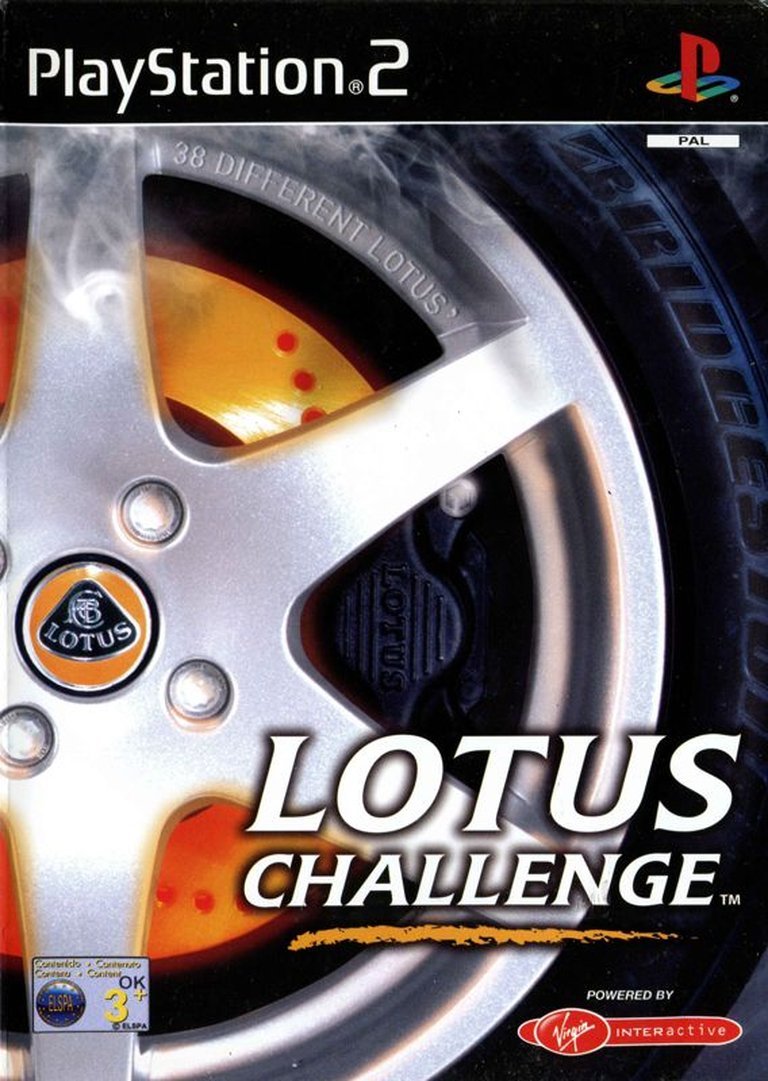
Lotus Challenge is a racing simulation game released in 2001, featuring a vast collection of Lotus cars spanning from the Formula One era to modern sports cars. Players can compete in various modes, including ‘Challenge’ and ‘Championship,’ across 20 circuits worldwide, from city streets to custom tracks. The game offers a mix of realistic racing, stunt driving, and unique challenges, with options for single and multiplayer experiences.
Gameplay Videos
Where to Buy Lotus Challenge
PC
Lotus Challenge Free Download
Lotus Challenge Cracks & Fixes
Lotus Challenge Patches & Updates
Lotus Challenge Reviews & Reception
metacritic.com (80/100): It is also a game that will have you clocking in more than a few hours to beat.
metacritic.com (79/100): Very deep and is worth every penny of its price if you take the time to get to know it.
metacritic.com (72/100): The problem here is that little about Lotus Challenge really stands out.
metacritic.com (60/100): Easily the game’s worst trait is its sound.
metacritic.com (60/100): There’s a clever smattering of Challenge modes, various original and well-handled Stunts for you to master.
metacritic.com (40/100): The game’s strange mix of sim and arcade gameplay will please no one.
metacritic.com (30/100): The thrill of driving classic Lotus cars is obliterated by its unresponsive handling.
gamefaqs.gamespot.com (68/100): A Surpsingly Solid Little Racer
Lotus Challenge Cheats & Codes
PlayStation 2
Enter the code as your driver name.
| Code | Effect |
|---|---|
| CRAIGSAYS | Unlocks all cars and tracks |
Lotus Challenge: Review
A flawed love letter to British automotive legacy that straddles simulation and spectacle
Introduction
In the shadow of early-2000s racing titans like Gran Turismo 3 and Project Gotham Racing, Lotus Challenge (2001) emerges as an ambitious yet uneven tribute to one of motorsport’s most storied marques. Developed by Kuju Entertainment and licensed by Group Lotus, the game aimed to blend authentic British engineering with arcade-infused spectacle. While its vision of a “driving playground” brimming with stunt challenges and historic vehicles was commendable, Lotus Challenge ultimately buckled under technical constraints and fractured design. This review unpacks its legacy as a fascinating artifact of its era—a game that dared to innovate but faltered in execution.
Development History & Context
Studio Vision and Challenges
Kuju Entertainment, later known for Battalion Wars and Rail Simulator, sought to create a holistic celebration of Lotus’ 54-year history. The project began in 2000 under Virgin Interactive, with ambitions to marry simulation-grade physics (endorsed by Lotus test drivers) with Hollywood-style stunt missions. However, the game’s development was tumultuous:
- Publisher Shifts: Originally titled Lotus Extreme Challenge, the game saw Interplay briefly attached for a North American release before Xicat Interactive took over in 2003, rebranding it Motor Trend Presents Lotus Challenge for Xbox.
- Technological Limitations: Targeting the PlayStation 2 and later Xbox/GameCube, Kuju struggled to balance detail and performance. The team prioritized car models and physics but sacrificed track complexity and fluidity, leading to framerate hitches.
- Licensing Constraints: As the first Lotus-licensed game of the millennium, the developers faced pressure to include 42 vehicles spanning F1 legends (e.g., the 1962 Type 25) and modern roadsters like the Elise. This exhaustive catalog strained QA resources, particularly in polishing handling nuances.
Released in November 2001 for PS2 (and ported to Xbox/GameCube by 2004), Lotus Challenge entered a market dominated by Gran Turismo 3’s realism and Burnout’s arcade chaos, leaving it struggling to carve a niche.
Narrative & Thematic Deep Dive
A Thin Veil of Storytelling
Lotus Challenge’s “Challenge Mode” frames gameplay around two selectable drivers—Jack and Zoe—members of the fictional Lotus Challenge Team. Their campaigns mix World Series racing with oddball missions:
- Cinematic Flair: Players perform stunt jumps for movie shoots, evade paparazzi in oncoming traffic, and even race a pregnant woman to the hospital. These scenarios inject personality but lack narrative cohesion, relying on brief cutscenes that fail to develop character arcs.
- Thematic Contrast: The game oscillates between reverence for Lotus’ engineering heritage (via unlockable historical profiles) and absurdist spectacle (e.g., car soccer). This tonal inconsistency undermines its attempt to balance authenticity with whimsy.
Ultimately, the narrative feels like a missed opportunity to humanize Lotus’ legacy, relegating its protagonists to hollow avatars.
Gameplay Mechanics & Systems
Innovation Marred by Execution
At its core, Lotus Challenge is a hybrid racer with four modes:
- Challenge Mode: A story-driven gauntlet of races, stunts, and timed deliveries.
- Championship Mode: Seven tiered leagues unlocking classic and modern cars.
- Single Race: Quick-play customization with adjustable laps/conditions.
- Collection Mode: A garage showcasing unlocked vehicles and tracks.
Strengths:
– Analog Stick Innovation: Kuju pioneered a “semicircle” steering method, allowing precise control akin to a wheel by holding the stick upright and making micro-adjustments. This system was divisive but praised by critics like GameZone for its uniqueness.
– Damage Modeling: Cars sustained cosmetic and mechanical wear, with misaligned wheels affecting handling—a rarity for early-2000s racers.
Flaws:
– Sluggish Physics: Despite Lotus’ input, cars felt weightless and unresponsive, particularly on GameCube. PlayStation 2 reviews noted a “lack of dynamism” (4Players.de).
– Rubberband AI: Opponents magically closed gaps, creating frustration in Championship Mode.
– Unbalanced Difficulty: Stunt missions (e.g., jumping buses) demanded pinpoint accuracy without adequate checkpointing.
World-Building, Art & Sound
Aesthetic Ambition vs. Technical Reality
Lotus Challenge’s 20 tracks spanned global locales, from London’s Trafalgar Square to Tokyo’s Rainbow Bridge, with dynamic weather (rain, fog, snow) and day-night cycles. However, execution lagged behind ambition:
- Visuals: While car models were meticulously detailed, environments suffered from low-resolution textures and pop-in. The Xbox version improved lighting but couldn’t escape a “bland” aesthetic (MAN!AC).
- Sound Design: The soundtrack, composed by British electronica duo Hybrid, blended drum-and-bass beats with adrenaline-pumping rhythms. Yet, immersion broke with comically poor engine sounds—the F1 cars were likened to “lawnmowers burning nitrous oxide” (G4 TV).
Reception & Legacy
Mixed Reviews and Fading Influence
Critics praised the game’s creativity but skewered its technical shortcomings:
- Critical Consensus: Averaging 59% on Metacritic (Xbox), reviews highlighted the “unconventional Testfahrer-Karriere” (4Players.de) but panned “unresponsive handling” (Electronic Gaming Monthly).
- Commercial Fate: Sold ~130,000 PS2 copies—modest for the era.
- Legacy: Though forgotten by mainstream audiences, Lotus Challenge remains a cult curiosity for Lotus enthusiasts and retro racing collectors. Its stunt-focused DNA faintly echoes in Forza Horizon’s Playground Games, but its innovations were never iterated upon.
Conclusion
Lotus Challenge is a game of contradictions: a sim racing tribute hamstrung by arcade gimmickry, a visual showcase undermined by technical flaws, and a love letter to Lotus that forgets to humanize its legacy. While its Challenge Mode and analog stick controls hinted at brilliance, the final product feels like a prototype for a better game. For die-hard Lotus fans, it’s a nostalgic time capsule. For everyone else, it’s a relic of an era when ambition often outpaced execution.
Final Verdict: A middling but fascinating experiment—worth studying, not necessarily playing.