
- Release Year: 2002
- Platforms: Windows
- Publisher: Terra Game eGames, Inc.
- Developer: Tavex
- Genre: Sports
- Perspective: 1st-person
- Game Mode: Hotseat, LAN, Online PVP
- Gameplay: AI opponent, Match play, Pool, Practice mode, Snooker
- Setting: Indoor
- Average Score: 72/100
Description
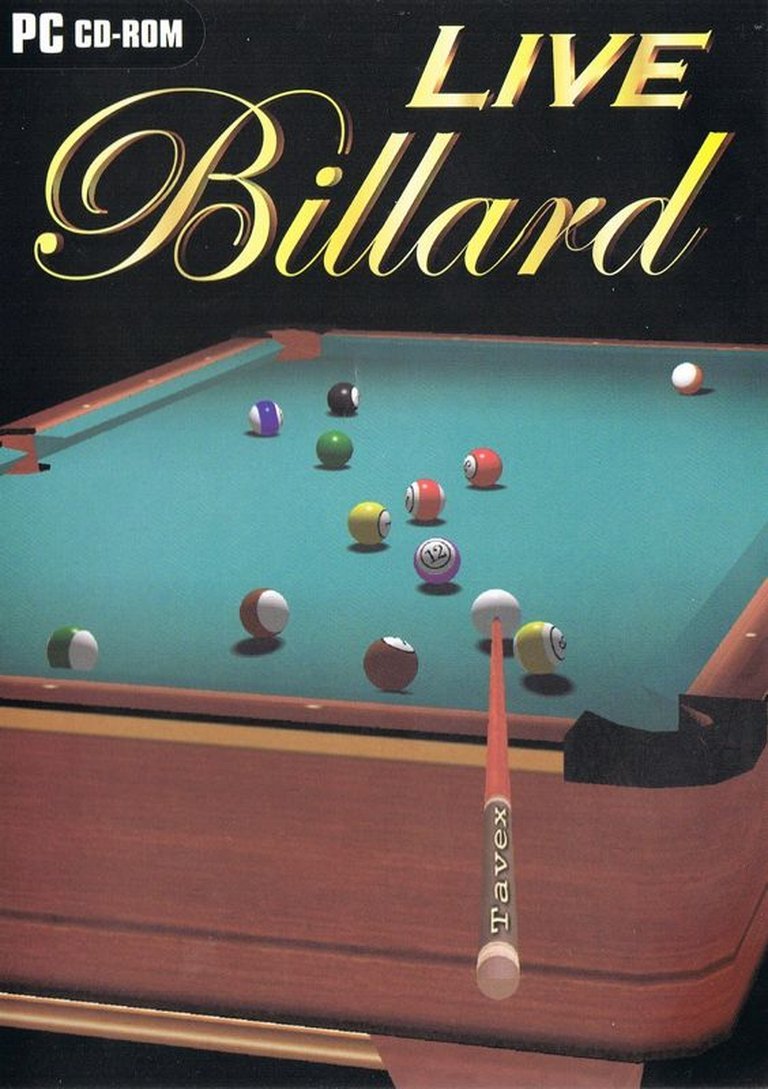
Live Billiards is a 2002 pool simulation game for Windows, offering six game modes including 3-Ball, 8-Ball, and Pyramid. Players can compete solo against AI opponents with nine difficulty levels or challenge others via hot-seat or LAN multiplayer. The game features customizable tables with adjustable cloth colors, mouse or keyboard controls, and flexible display settings like windowed or full-screen modes, catering to both casual and competitive players.
Live Billiards Free Download
Live Billiards Patches & Updates
Live Billiards Reviews & Reception
gamesreviews2010.com (75/100): Overall, Break Nine is a solid billiards game that offers a variety of game modes and challenging gameplay.
metacritic.com (70/100): The gameplay finally matches the graphics, and the result is what basketball fans want and need in a PS2 game.
Live Billiards: Revisiting a Niche Pioneer in Digital Cue Sports
Introduction
In the pantheon of early 2000s sports simulations, Live Billiards (2002) occupies a quiet but revealing corner. Developed by Ukrainian studio Tavex and published by Terra Game and eGames, Live Billiards emerged during a transitional era for digital recreations of real-world sports—a time when physics engines were maturing, and online multiplayer was still a novelty rather than a given. While overshadowed by flashier contemporaries like NBA Live or Virtual Pool, Live Billiards carved out a functional, if unambitious, niche for billiards purists. This review argues that Live Billiards succeeded as a technically competent simulation of its sport but ultimately faltered in innovation, reflecting both the possibilities and limitations of indie sports games in an industry increasingly dominated by AAA spectacle.
Development History & Context
Live Billiards was born from Tavex’s focused expertise in grassroots sports simulations. The studio, led by creative director Vladimir Vinetsky and programmer Serg Butenko, had previously dabbled in golf (SimGolf) and pool (Live Pool), establishing a template for accessible, mechanics-driven sports titles. Released initially under a subscription model in 2001 (with solo play as a free download), the game’s business model was a curious relic of early online gaming experimentation—predating mainstream services like Xbox Live by years. However, this approach quickly proved unsustainable, and by 2002, Live Billiards adopted a traditional paid download structure via platforms like eGames.
Technologically, the game was constrained by the modest hardware of its era. Built for Windows PCs, it prioritized straightforward performance over visual flair, a necessity given the prevalence of dial-up internet and underpowered home systems. This pragmatism mirrored trends in contemporary sports titles like NBA Live 2002 (2001), which grappled with balancing graphical fidelity and fluid gameplay. While NBA Live migrated to consoles to harness their growing power, Live Billiards remained a PC-centric experience, leveraging the platform’s precise mouse controls—a crucial advantage for a game demanding pixel-perfect aim.
Gameplay Mechanics & Systems
At its core, Live Billiards is a no-frills dedication to cue sports authenticity. The game’s primary strength lies in its six distinct modes: 3-Ball, 8-Ball, 9-Ball, Straight Pool, 14+1, and Pyramid. Each adheres rigorously to real-world rules, offering adjustable match lengths and customizable tables (cloth color, table type). The nine-tiered AI difficulty system remains a standout feature, scaling from novice blunders to calculated bank shots that demand strategic positioning—a stark contrast to the often exploitable AI in contemporaries like Break Nine: World Billiards Tournament (2002).
Control options—mouse or keyboard—cater to different playstyles, though the mouse’s precision is indispensable for advanced spins. The physics engine, while rudimentary compared to modern simulations like Pool Nation, effectively models ball momentum and collisions, avoiding the “floaty” feel of earlier titles like Video Pool (1973). Yet Live Billiards stumbles in its lack of advanced shot tools: no top-down camera, limited spin indicators, and no replay system—omissions that frustrate strategic analysis.
Multiplayer is functional but barebones. Hot-seat and LAN play emphasize local camaraderie, while the abandoned subscription-based online mode hinted at untapped potential. Sadly, the absence of cross-platform or matchmaking features rendered its multiplayer a footnote compared to emerging online hubs.
World-Building, Art & Sound
Live Billiards is a study in utilitarian design. The first-person perspective immerses players at table level, mimicking the real-world stance of a pool shark. Visual customization is minimal but practical: resolution settings, windowed/full-screen modes, and adjustable detail levels ensure smooth performance on period hardware. Artist Tanya Fedoseeva’s contributions shine in the clean, if basic, table textures and ball designs—functional but devoid of atmospheric flair. Tables lack wear, ambient lighting, or environmental details, focusing purely on gameplay clarity.
Sound design is similarly Spartan. The crisp clack of collisions and subtle roll of balls across felt are satisfyingly accurate, but the absence of crowd noise, ambient tavern chatter, or even a soundtrack renders matches sterile. This minimalism aligns with simulation purity but undercuts the social vibe central to real-world pool halls—a missed opportunity to evoke the sport’s cultural grit.
Reception & Legacy
Upon release, Live Billiards garnered little critical attention—a fate common to niche sports sims in an era dominated by flashier franchises. MobyGames records no formal reviews, and player feedback remains sparse, suggesting a quiet launch. Its legacy is equally modest: a direct sequel (Live Billiards 2, 2005) refined its systems but failed to ignite broader interest. However, the game’s focus on accessibility and rule variety influenced later titles like Pool Nation VR (2016), which expanded on its foundational physics and AI concepts.
Historically, Live Billiards epitomized the early 2000s shift toward democratizing sports simulations. By eschewing AAA budgets for focused mechanics, it provided an entry point for casual players—echoing broader trends noted in the AZBilliards.com article Examining the Development of Video Games for Pool and Billiards, which highlighted how digital adaptations lowered barriers to entry for cue sports. Yet, its reluctance to innovate beyond core gameplay left it outpaced by titles embracing emergent tech like online leagues and 3D visuals.
Conclusion
Live Billiards is neither a masterwork nor a misfire. It is, instead, a competently crafted time capsule—a reflection of indie developers’ ability to replicate real-world sports mechanics within tight technical constraints. Its precise controls, diverse modes, and scalable AI still hold nostalgic charm for billiards enthusiasts, but its lack of ambition in presentation, multiplayer, and features relegates it to a footnote in sports gaming history. In an industry increasingly defined by spectacle, Live Billiards reminds us that simulation purity has value—even when it doesn’t quite sink the eight ball.
Final Verdict: A functional, if forgettable, tribute to cue sports—best appreciated as a historical curiosity rather than a timeless classic.