
- Release Year: 2003
- Platforms: Windows
- Publisher: Beijing Unistar Software Co., Ltd.
- Developer: Winking WindThunder
- Genre: Role-playing, RPG
- Perspective: 3rd-person (Other)
- Game Mode: Single-player
- Gameplay: Tactical positioning, Turn-based
- Setting: Fantasy
- Average Score: 50/100
Description
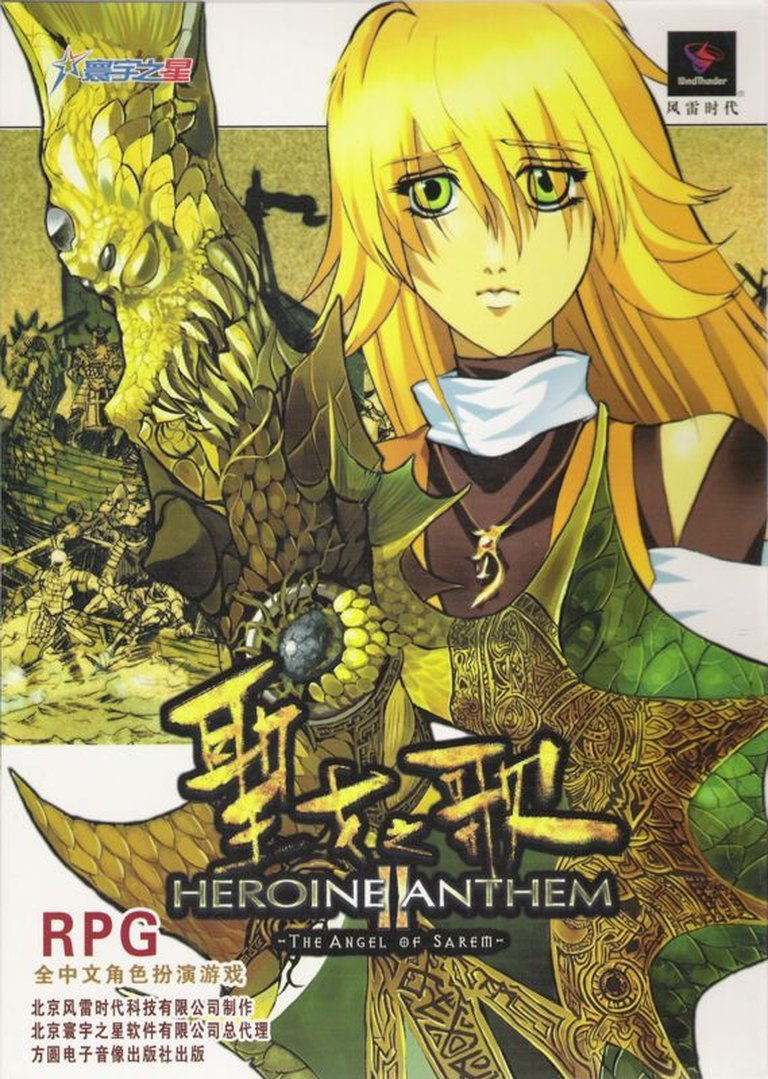
Shengnü zhi Ge: Heroine Anthem II – The Angel of Sarem is a turn-based RPG set in a fantasy world inspired by Japanese anime. The game follows Edda, a young woman from a peaceful village who is swept into an adventure after a storm transports her to a secret land of fish people. Joined by a lobster named Bedin and her childhood friend Hulen, Edda embarks on a quest to defeat a sinister force threatening humanity. The game features visible enemies on the screen and tactical character positioning during battles.
Gameplay Videos
Shengnü zhi Ge: Heroine Anthem II – The Angel of Sarem Reviews & Reception
retro-replay.com : delivers a turn-based combat system that feels both familiar and fresh.
Shengnü zhi Ge: Heroine Anthem II – The Angel of Sarem: Review
Introduction
In 2003, as Japanese RPGs like Final Fantasy X dominated global markets, a small Taiwanese studio dared to redefine expectations for Chinese-developed role-playing games. Shengnü zhi Ge: Heroine Anthem II – The Angel of Sarem emerged as a rare gem—a fantasy epic unshackled from historical tropes, blending anime-inspired artistry with tactical combat. While its regional obscurity limited its impact, the game remains a fascinating artifact of early-2000s ambition, marrying Eastern storytelling with mechanics ahead of its time. This review explores how Heroine Anthem II straddled innovation and limitation, crafting a flawed yet visually arresting odyssey that deserves reconsideration.
Development History & Context
Studio Vision and Challenges
Developed by Winking WindThunder and published by Beijing Unistar Software Co., Ltd., Heroine Anthem II arrived during a transformative era for Chinese game development. At a time when most domestically produced RPGs leaned on historical or wuxia themes, the studio defied convention by crafting an original fantasy universe—a risky move in a market saturated with Dynasty Warriors-style narratives. The team’s reverence for Japanese anime and classics like Final Fantasy and Suikoden seeped into every pixel, from its oversized character sprites to its orchestral score.
Technical Constraints
Built for Windows PCs, the game leveraged hand-painted backgrounds and pre-rendered animations to compensate for the hardware limitations of the early 2000s. While titles like Neverwinter Nights experimented with 3D environments, Winking WindThunder doubled down on 2D artistry, prioritizing expressive character designs over polygonal complexity. The use of Bink Video for cutscenes—a common middleware solution at the time—allowed for fluid storytelling despite budget constraints.
Narrative & Thematic Deep Dive
Plot and Characters
Heroine Anthem II follows Edda, a village girl thrust into a world of oceanic mysteries after a tempest strands her in the hidden realm of the fish people. Alongside her companions—Bedin, a treasure-hunting lobster mage, and Hulen, her warrior childhood friend—Edda confronts a looming existential threat. The narrative hinges on themes of self-discovery and unity, juxtaposing Edda’s innocence against Bedin’s wit and Hulen’s brute strength.
Themes and Dialogue
The game explores the collision of cultures—land-dwellers versus aquatic civilizations—and the ethical weight of safeguarding fragile equilibriums. Dialogue oscillates between earnest melodrama and whimsy (Bedin’s crustacean quips are a highlight), though text-heavy exposition occasionally bogs down pacing. Side quests, such as rescuing villagers or deciphering ancient curses, enrich the world without feeling like filler, underscoring the studio’s commitment to depth.
Gameplay Mechanics & Systems
Combat and Progression
Breaking from RPG traditions, Heroine Anthem II eliminates random encounters, opting for visible overworld foes that players can engage tactically. Battles unfold on a grid-based system where positioning—flanking, shielding allies—determines success. Edda’s talent trees allow players to mold her into a healer or offensive mage, while Hulen and Bedin specialize in physical combat and elemental magic, respectively. Skill unlocks via exploration incentivize thoroughness, though the progression system lacks the depth of contemporaries like Divinity: Original Sin.
Exploration and UI
The game’s hand-painted zones—sunken ruins, ethereal coral cathedrals—reward curiosity with hidden lore tablets and side quests. However, the UI feels dated, with clunky menu navigation and minimal tooltips. Puzzle-solving segments, such as manipulating environmental hazards, add welcome variety but suffer from inconsistent clarity.
World-Building, Art & Sound
Visual Design
Heroine Anthem II’s anime aesthetic is its crown jewel. Characters brim with personality—Edda’s flowing animations convey vulnerability, while Bedin’s crustacean design is equal parts absurd and endearing. Backgrounds evoke Studio Ghibli-esque wonder, particularly in bioluminescent underwater cities where light refracts through pixelated seawater.
Soundtrack and Atmosphere
A sweeping orchestral score underscores key moments, contrasting serene village pianos with battle-themed crescendos. Ambient sound—lapping waves, distant monster roars—grounds the fantasy in tactile detail. While voice acting is sparse, the judicious use of vocal samples during emotional beats adds gravitas.
Reception & Legacy
Initial Reception
The game garnered minimal international attention, reflected in its niche MobyGames score of 2.5/5 (based on just two user ratings). Retrospective analyses, like Retro Replay’s glowing review, praise its artistry and tactical depth but lament its uneven pacing and lack of localization.
Cultural Impact
Though overshadowed by Japanese titans, Heroine Anthem II paved the way for later Chinese RPGs like Gujian 3 and the Heroine Anthem Zero subseries. Its rejection of historical tropes demonstrated the viability of original fantasy in a risk-averse industry—a legacy often overlooked but quietly revolutionary.
Conclusion
Shengnü zhi Ge: Heroine Anthem II – The Angel of Sarem is a paradox: a visually stunning, mechanically ambitious RPG hamstrung by regional obscurity and clunky execution. Its tactical combat and lush world-building hint at what could have been a genre staple, yet its absence from Western markets relegated it to cult status. For historians, it’s a vital case study in early-2000s Chinese game development; for players, it remains a flawed but heartfelt ode to fantasy storytelling. While not a masterpiece, it’s a worthy artifact of an industry in flux—a bridge between Eastern creativity and global RPG evolution.