
- Release Year: 2015
- Platforms: Linux, Macintosh, PlayStation 4, Windows, Xbox 360, Xbox One
- Publisher: Team17 Digital Limited
- Developer: Mouldy Toof Studios
- Genre: Simulation, Strategy
- Perspective: Diagonal-down
- Game Mode: Single-player
- Gameplay: Base building, Crafting, Prison Planning, Prison Survival, Sandbox, Stealth, Timing
- Setting: Open World, Prison
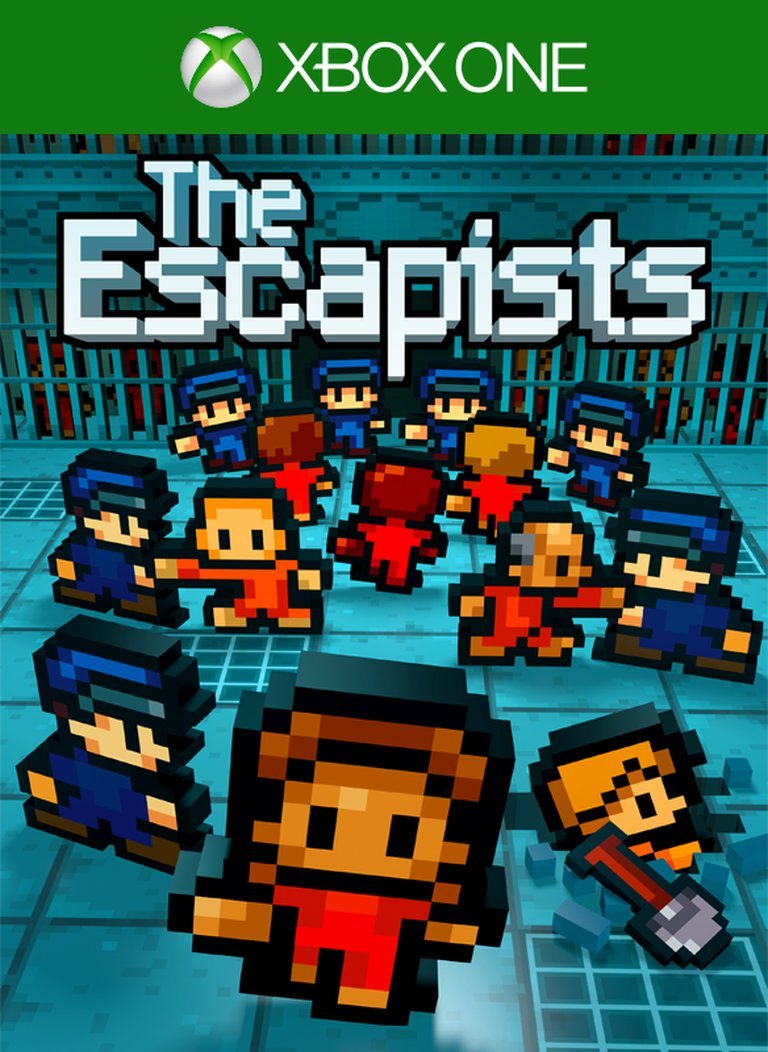
Description
The Escapists is a strategic simulation game where players assume the role of an inmate plotting escapes from increasingly secure prisons. Set within facilities with strict daily routines, players must covertly gather resources, craft tools, and fulfill favors while avoiding guards’ suspicion. Gameplay blends role-playing elements with sandbox experimentation, offering multiple escape methods like tunneling, disguises, or inciting riots. Stealth and timing are critical, as rule-breaking raises heat levels and risks solitary confinement or confiscated contraband. Later prisons feature heightened security and complex layouts, with PC versions supporting custom prison creation and modding.
Gameplay Videos
Where to Buy The Escapists
PC
The Escapists Free Download
The Escapists Cracks & Fixes
The Escapists Mods
The Escapists Guides & Walkthroughs
The Escapists: Review
Introduction
In the pantheon of video games that blend strategy, simulation, and a dash of old-school charm, The Escapists stands as a unique and enduring title. Developed by Mouldy Toof Studios and published by Team17 Digital Limited, this game offers players the chance to experience the thrill of escaping from a series of increasingly secure prisons. With its pixelated art style, deep crafting mechanics, and a blend of stealth and planning, The Escapists has carved out a niche for itself in the gaming landscape. This review will delve into the game’s development history, narrative depth, gameplay mechanics, world-building, reception, and legacy, ultimately arguing that The Escapists is a testament to the power of simplicity and player agency in game design.
Development History & Context
Studio and Creators’ Vision
Mouldy Toof Studios, a small independent developer based in the UK, was the creative force behind The Escapists. The studio’s founder, Chris Davis, envisioned a game that would capture the essence of classic prison escape films and literature, translating them into a digital experience. The development team, consisting of just over forty individuals, worked tirelessly to bring this vision to life. Their goal was to create a game that was both challenging and rewarding, where players would feel a sense of accomplishment upon successfully escaping from each prison.
Technological Constraints and Gaming Landscape
The Escapists was developed using Multimedia Fusion / Clickteam Fusion 2.5, a game development engine known for its accessibility and ease of use. This choice allowed the small team at Mouldy Toof Studios to focus on gameplay mechanics and design rather than grappling with complex programming challenges. The game’s pixelated art style was a deliberate nod to retro gaming, harkening back to an era when graphics were simple but gameplay was king.
At the time of its release in February 2015, the gaming landscape was dominated by high-budget, visually stunning titles. The Escapists stood out as a refreshing alternative, offering a unique blend of strategy and simulation that appealed to both casual and hardcore gamers. The game’s early access period on Steam allowed the developers to gather feedback and make iterative improvements, ensuring that the final product was polished and well-received.
Narrative & Thematic Deep Dive
Plot and Characters
The Escapists does not boast a complex narrative or a cast of deeply developed characters. Instead, it relies on a simple premise: the player is an inmate in a series of prisons, each with its own unique layout and security measures. The ultimate goal is to escape from each prison, with the difficulty increasing as the player progresses. The lack of a traditional storyline allows the game to focus on gameplay mechanics and player agency, making each escape a personal challenge rather than a scripted event.
The characters in The Escapists are largely interchangeable, serving as tools for the player to interact with rather than fully realized individuals. Fellow inmates can be bribed, blackmailed, or befriended to gain access to resources or distractions, while guards represent the primary obstacle to escape. This minimalist approach to character development is a deliberate choice, emphasizing the game’s strategic and simulation elements over narrative depth.
Dialogue and Themes
Dialogue in The Escapists is sparse and functional, serving to convey information or advance the player’s goals. The game’s themes revolve around freedom, perseverance, and the thrill of outsmarting a system designed to keep you contained. The prisons themselves are metaphors for the challenges and obstacles that players must overcome, both within the game and in real life. The game’s pixelated art style and retro-inspired design contribute to a sense of nostalgia, evoking memories of classic games and films that dealt with similar themes.
Gameplay Mechanics & Systems
Core Gameplay Loops
The core gameplay loop in The Escapists revolves around the daily routine of prison life. Players must adhere to a strict schedule of roll calls, meals, exercise, and job assignments while secretly gathering resources, planning escape routes, and avoiding suspicion. This duality between conformity and subversion is a central mechanic, requiring players to balance their actions carefully to avoid detection.
Combat and Character Progression
Combat in The Escapists is minimal and often avoidable. Players can engage in fights using improvised melee weapons or fists, but excessive violence can lead to lockdowns and solitary confinement. The game encourages stealth and planning over brute force, making combat a last resort rather than a primary strategy. Character progression is tied to the player’s ability to gather resources, craft tools, and execute successful escape plans. Each prison presents new challenges and obstacles, requiring players to adapt and innovate.
User Interface and Innovative Systems
The user interface in The Escapists is clean and intuitive, with a minimalist design that complements the game’s pixelated art style. The crafting system is a standout feature, allowing players to create essential escape equipment from a variety of ingredients. This system encourages experimentation and creativity, as players must often improvise solutions to the challenges they face. The game’s modding community has also contributed to its longevity, with players creating and sharing custom prisons through online platforms like the Steam Workshop.
Flawed Systems
While The Escapists is largely praised for its innovative gameplay mechanics, it is not without its flaws. Some players have criticized the game’s steep learning curve and the lack of a comprehensive tutorial. The game’s social interactions are also somewhat limited, with fellow inmates and guards often feeling like obstacles rather than fully realized characters. Additionally, the game’s reliance on trial and error can be frustrating for some players, leading to a sense of repetition and failure.
World-Building, Art & Sound
Setting and Atmosphere
The Escapists is set in a series of prisons, each with its own unique layout and security measures. The game’s pixelated art style contributes to a sense of nostalgia, evoking memories of classic games and films. The prisons themselves are meticulously designed, with attention to detail that makes each facility feel distinct and challenging. The game’s atmosphere is one of tension and anticipation, as players must constantly be on guard for guards and fellow inmates who might thwart their escape plans.
Visual Direction
The visual direction in The Escapists is a deliberate nod to retro gaming, with a pixelated art style that harkens back to an era when graphics were simple but gameplay was king. This choice allows the game to focus on its core mechanics and design, rather than relying on cutting-edge visuals to impress players. The game’s color palette is muted and subdued, contributing to a sense of realism and immersion. The character designs are simple but effective, with distinctive silhouettes that make it easy to identify different inmates and guards.
Sound Design
The sound design in The Escapists is understated but effective, with a soundtrack that complements the game’s retro-inspired aesthetic. The sound effects are minimal but impactful, with the clanking of metal doors and the distant echo of guards’ footsteps contributing to a sense of tension and anticipation. The game’s use of silence is also noteworthy, with moments of quiet often serving to heighten the player’s awareness and alertness. The sound design works in tandem with the visual direction to create a cohesive and immersive experience.
Reception & Legacy
Critical and Commercial Reception
Upon its release in February 2015, The Escapists received generally positive reviews from critics and players alike. The game’s unique blend of strategy, simulation, and retro-inspired design was praised for its innovation and depth. Critics noted the game’s challenging gameplay mechanics, the satisfaction of successfully executing an escape plan, and the game’s replayability. However, some critics also pointed out the game’s steep learning curve and the lack of a comprehensive tutorial, which could be frustrating for new players.
Commercially, The Escapists was a modest success, selling well on multiple platforms and receiving several awards and nominations. The game’s early access period on Steam allowed the developers to gather feedback and make iterative improvements, ensuring that the final product was polished and well-received. The game’s modding community has also contributed to its longevity, with players creating and sharing custom prisons through online platforms like the Steam Workshop.
Influence on Subsequent Games and the Industry
The Escapists has had a significant influence on subsequent games and the industry as a whole. Its unique blend of strategy, simulation, and retro-inspired design has inspired a wave of indie developers to explore similar themes and mechanics. The game’s success has also demonstrated the viability of the early access model, allowing developers to gather feedback and make iterative improvements before releasing a final product. The game’s modding community has also set a standard for player engagement and creativity, with players contributing to the game’s longevity and replayability.
Conclusion
In conclusion, The Escapists is a testament to the power of simplicity and player agency in game design. Its unique blend of strategy, simulation, and retro-inspired design has carved out a niche for itself in the gaming landscape, appealing to both casual and hardcore gamers. The game’s challenging gameplay mechanics, the satisfaction of successfully executing an escape plan, and its replayability have earned it a place in video game history. Despite its flaws, The Escapists stands as a remarkable achievement, a game that has inspired a generation of developers and players alike. Its legacy will continue to be felt for years to come, a shining example of what can be achieved with a clear vision, a dedicated team, and a passion for innovation.