
- Release Year: 2011
- Platforms: Linux, Macintosh, Windows
- Publisher: Love Conquers All Games
- Developer: Love Conquers All Games
- Genre: Adventure, Visual novel
- Perspective: 1st-person
- Game Mode: Single-player
- Gameplay: Point and select, Romance
- Setting: Contemporary, North America
- Adult Content: Yes
Description
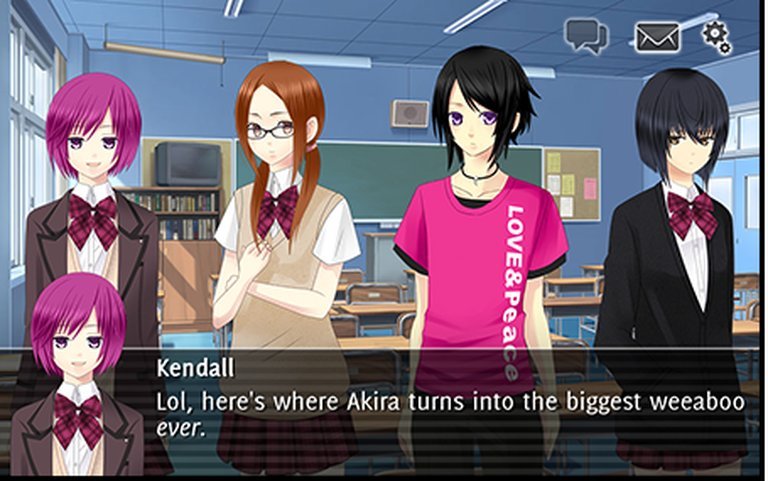
In ‘don’t take it personally, babe, it just ain’t your story,’ players experience a visual novel set in a contemporary North American high school, where they assume the role of a teacher navigating complex relationships with students. The game explores themes of privacy, romance, and digital communication as players monitor students’ social media interactions while uncovering personal struggles. Blending anime-style art with a 1st-person perspective, this spiritual sequel to ‘Digital: A Love Story’ challenges players to balance professionalism and empathy in a narrative-driven, point-and-select interface.
Gameplay Videos
don’t take it personally, babe, it just ain’t your story Guides & Walkthroughs
don’t take it personally, babe, it just ain’t your story: Review
A decade-defining cult classic that dared to ask what happens when adults hold a mirror to Gen Z’s digital soul—and shattered it in the process.
Introduction
Christine Love’s 2011 visual novel don’t take it personally, babe, it just ain’t your story isn’t merely a game; it’s a time capsule of digital adolescence and a scalpel dissecting generational divides. Released as a spiritual successor to the retro-net aesthetic of Digital: A Love Story, this indie artifact redefined narrative gaming’s capacity to confront queer identity, social media voyeurism, and the ethics of surveillance—all through the deceptively simple lens of a high school teacher reading his students’ private messages. Its legacy persists not in AAA imitation but in the DNA of every indie visual novel that dares to weaponize intimacy.
Development History & Context
The Visionaries Behind the Curtain
Developed and published by Love Conquers All Games (a one-woman powerhouse helmed by Christine Love), DTIP emerged from Canada’s burgeoning queer indie scene. Love, already celebrated for Digital: A Love Story’s lo-fi BBS-era romance, pivoted sharply here—abandoning retro nostalgia for a razor-focused examination of contemporary digital life. Released on April 4, 2011, for Windows (later Linux and Mac), the game exploited the visual novel format’s minimal technical requirements to prioritize narrative ambition over graphical flair—a necessity for a project built on a shoestring budget.
The Cultural Crucible
2011 marked the zenith of Facebook’s cultural dominance and the early tremors of smartphone ubiquity. Social media’s promise of connection clashed with its erosion of privacy—a tension DTIP weaponizes. While mainstream games chased graphical arms races (Skyrim, Uncharted 3), Love’s work crystallized a counter-movement: narrative-driven indie games (Gone Home, Depression Quest) that treated interactivity as a vessel for empathy, not explosions.
Narrative & Thematic Deep Dive
Plot as Powder Keg
Players assume the role of John Rook, a 30-something English teacher at a Canadian high school. After the school implements a new social media platform, Rook gains access to students’ private chats—a narrative device transforming the player into a reluctant voyeur. The story unfolds across vignettes where Rook’s growing unease mirrors the player’s own ethical dilemma: Observe these intimate exchanges, or close the window?
Characters as Archetypes (and Subversions)
The students—queer, questioning, clashing with conservative parents—embody Gen Z’s collision with digital dual identities:
– Sara: A trans girl navigating unsupportive parents while documenting her transition via vlogs.
– Tyler: A brooding programmer masking queer yearnings behind performative misanthropy.
– Najwa: A Muslim student whose public modesty belies clandestine flirtations in private chats.
Unlike traditional visual novels, DTIP refuses romantic entanglement between Rook and students. Instead, relationships are mediated through screens—text boxes pulsating with raw vulnerability—forcing players to confront their complicity as digital eavesdroppers.
Themes That Cut Bone-Deep
- Digital Voyeurism as Violence: Every chat log read implicates the player in Rook’s ethical breach.
- Generational Alienation: Rook’s futile attempts to “protect” his students mirror adult anxiety over losing control of youth culture.
- Queer Self-Discovery as Rebellion: The game’s LGBTQ+ cast weaponizes online anonymity to explore identities suppressed offline—a radical act in 2011’s gaming landscape.
Gameplay Mechanics & Systems
The Interface as Confessional Booth
DTIP weaponizes the visual novel format with surgical precision:
– Fixed/Flip-Screen Perspective: Immobilizes players in Rook’s desk chair, mirroring his trapped passivity.
– Point-and-Select UI: Clicking through chat logs feels invasive—a deliberate discomfort mechanic.
– Branching Silence: Major “choices” involve not reading certain messages, rejecting gaming’s usual power fantasy.
The Flaw in the Code
The lack of traditional gameplay loops (no stats, no fail states) alienates mechanics-first players. Yet this austerity serves the narrative: When the only verbs are read and ignore, engagement becomes moral introspection, not achievement.
World-Building, Art & Sound
Visual Language of Surveillance
- Anime/Manga Aesthetic: Tokudaya’s character art radiates youthful idealism, juxtaposed against Stephanie Moss’s melancholic CGs of characters hunched over phones and laptops.
- Background Art by Gakai Sai: Empty classrooms and fluorescent-lit hallways evoke institutional loneliness—a cage for digital natives.
Sound Design as Digital Ghosting
Rengoku Teien’s minimalist soundtrack—lo-fi synths, ambient glitches—mirrors the hollow sensation of scrolling through infinite feeds. Key moments deploy silence, sharpening the screech of keyboard taps or notification pings as psychological triggers.
Reception & Legacy
Critical Divide
Upon release, DTIP polarized critics. Mainstream outlets dismissed its “static” gameplay, while indie circles hailed it as a narrative landmark. No Metascore exists, but its cult status grew via word-of-mouth—especially among LGBTQ+ gamers starved for authentic representation.
The Ripple Effect
- Queer Indie Renaissance: DTIP laid groundwork for titles like Butterfly Soup and Dream Daddy, normalizing queer narratives in gaming.
- Ethics as Mechanic: Its “uncomfortable interactivity” influenced NieR: Automata’s existential endings and Hypnospace Outlaw’s surveillance capitalism critique.
- Academic Darling: Cited in Gender Studies and Digital Humanities curricula, its dissection of online identity remains tragically relevant amidst TikTok activism and deepfake scandals.
Conclusion
dont take it personally, babe is not a “fun” game. It’s a fraught, necessary artifact—a digital ghost story where the hauntings are real, and the monsters are us. Thirteen years later, its warnings about privacy erosion and generational disconnect resonate louder than ever. Christine Love didn’t just predict the future; she held up a cracked smartphone screen and made us stare at our reflection. In the pantheon of gaming milestones, this is a quiet revolution—one that redefined how stories hurt us, and why they must.
Final Verdict: A masterclass in narrative subversion that transcends its technical limits. Essential playing for anyone who believes games can—and should—make us uneasy.