
- Release Year: 2016
- Platforms: Fire OS, Linux, Macintosh, Windows, Xbox One
- Publisher: OUYA Global Pte. Ltd., Tiny Horse Games, LLC
- Developer: Tiny Horse Games, LLC
- Genre: Action
- Perspective: Side view
- Game Mode: Single-player
- Gameplay: Direct control, Platformer, Shooter
- Average Score: 60/100
Description
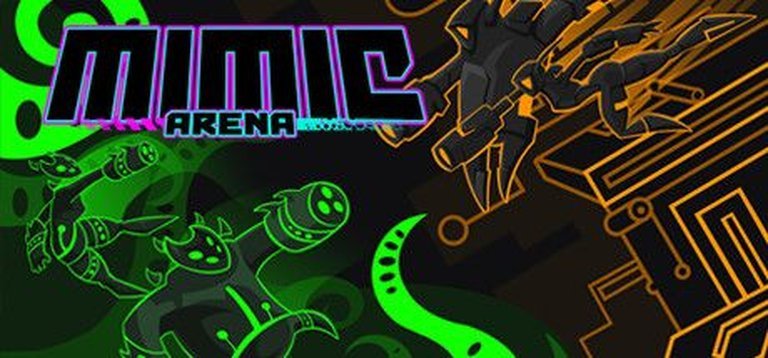
Mimic Arena is a high-energy local couch multiplayer platform shooter where up to four players battle in a techno bullet hell arena. Players must master jumping and shooting mechanics while leveraging past actions recorded as ‘Mimics’—clones that replay their movements to provide supporting fire, distractions, or coordinated attacks. With fast-paced gameplay, wall-jumping evasion, and an arsenal of weapons that blanket the battlefield in chaos, the game rewards quick reflexes and strategic use of these clones for both new players and veterans.
Where to Buy Mimic Arena
PC
Mimic Arena Guides & Walkthroughs
Mimic Arena Reviews & Reception
metacritic.com (60/100): It isn’t a game many will play for hours on end but if you’ve got the extra controllers it’s a great way to battle your friends like it’s the ’90s again.
Mimic Arena: Review
Introduction
In the pantheon of local multiplayer games, few titles stand out as uniquely as Mimic Arena. Developed and published by Tiny Horse Games, this side-scrolling shooter burst onto the scene in 2016, offering a fresh twist on the classic arena shooter formula. With its innovative mimic mechanic, vibrant visuals, and high-energy gameplay, Mimic Arena carved out a niche for itself in a crowded market. This review will delve into the game’s development history, narrative depth, gameplay mechanics, world-building, reception, and legacy, ultimately providing a definitive verdict on its place in video game history.
Development History & Context
The Studio
Tiny Horse Games, the brainchild of Tyler Edwards, is a relatively small indie studio that has made a significant impact with Mimic Arena. Edwards, who served as the game’s designer and programmer, brought a unique vision to the table, drawing inspiration from classic shooters and platformers. The studio’s modest size allowed for a high degree of creative control and a focused development process.
The Creators’ Vision
The core concept of Mimic Arena revolves around the idea of players fighting alongside their past selves, recorded as mimics. This mechanic was intended to add a layer of strategy and unpredictability to the gameplay, making each match a dynamic and ever-changing experience. Edwards and his team aimed to create a game that was both accessible to casual players and deep enough to keep competitive gamers engaged.
Technological Constraints
Released in 2016, Mimic Arena benefited from the advancements in game development tools and engines of the time. The game was built using the Unity engine, which provided a robust framework for developing 2D games with complex mechanics. The studio’s use of Unity allowed them to focus on gameplay innovation rather than technical hurdles.
The Gaming Landscape
The mid-2010s saw a resurgence in local multiplayer games, with titles like Rocket League and Overcooked gaining popularity. Mimic Arena entered this landscape with a unique selling proposition: its mimic mechanic. The game’s high-energy, quick-reflex gameplay was designed to appeal to both casual and competitive players, making it a standout title in a crowded field.
Narrative & Thematic Deep Dive
Plot
Mimic Arena does not have a traditional narrative. Instead, it focuses on the core gameplay loop of players battling each other in various arenas. The game’s lore is hinted at through character designs and environmental details, but it is largely left to the player’s imagination. This lack of a linear story allows the game to prioritize gameplay mechanics and replayability.
Characters
The game features four playable characters, each distinguished by their color and gender. These characters are nameless, further emphasizing the game’s focus on gameplay over narrative. The mimics, which are clones of the players’ past actions, serve as both allies and obstacles, adding a layer of complexity to the gameplay.
Dialogue
There is minimal dialogue in Mimic Arena, with most communication occurring through in-game actions and visual cues. This minimalist approach to dialogue allows the game to maintain a fast-paced, high-energy atmosphere.
Themes
The primary theme of Mimic Arena is the interplay between past and present. The mimic mechanic represents the player’s past actions coming back to haunt or assist them, creating a dynamic and unpredictable gameplay experience. This theme is reinforced through the game’s fast-paced, high-energy gameplay, which requires players to adapt quickly to changing circumstances.
Gameplay Mechanics & Systems
Core Gameplay Loops
Mimic Arena features three main game modes: Death Match, Survival, and Infiltration. Each mode offers a unique twist on the core gameplay loop of players battling each other in various arenas. The mimic mechanic is central to all three modes, with mimics serving as both allies and obstacles.
Combat
Combat in Mimic Arena is fast-paced and requires quick reflexes. Players must master the arts of jumping and shooting to stand a chance against their opponents. The game features a variety of weapons, each with its own unique properties. For example, the reflective disk travels like a boomerang and reflects projectiles, while the Phase Beam pierces through terrain and cover.
Character Progression
There is no traditional character progression in Mimic Arena. Instead, players must adapt their strategies and tactics to the changing circumstances of each match. The mimic mechanic adds a layer of unpredictability, as players must contend with their past actions coming back to haunt them.
UI
The user interface in Mimic Arena is clean and intuitive, with all necessary information displayed clearly on the screen. The HUD includes health bars, weapon indicators, and score counters, allowing players to keep track of their progress and performance.
Innovative or Flawed Systems
The mimic mechanic is the game’s most innovative and defining feature. It adds a layer of strategy and unpredictability to the gameplay, making each match a unique experience. However, the lack of online multiplayer and AI bots is a significant flaw, limiting the game’s replayability and accessibility.
World-Building, Art & Sound
Setting
The game’s arenas are minimalistic and geometric, resembling printed circuit boards. Neon colors dominate the visuals, creating a vibrant and energetic atmosphere. This aesthetic choice complements the game’s fast-paced, high-energy gameplay.
Atmosphere
The atmosphere in Mimic Arena is one of chaos and excitement. The game’s arenas are filled with constant movement and action, with players and mimics darting around the screen. The neon colors and dynamic lighting add to this sense of energy and urgency.
Visual Direction
The visual direction in Mimic Arena is bold and distinctive. The game’s use of neon colors and geometric shapes creates a unique and memorable aesthetic. This visual style is consistent throughout the game, from the arenas to the character designs.
Sound Design
The sound design in Mimic Arena is equally impressive. The game’s soundtrack features high-energy electronic music that complements the fast-paced gameplay. Sound effects are crisp and impactful, adding to the game’s sense of urgency and excitement.
Reception & Legacy
Critical and Commercial Reception
Mimic Arena received mixed reviews upon its release. Critics praised the game’s innovative mimic mechanic and high-energy gameplay but noted its lack of online multiplayer and AI bots as significant flaws. The game’s commercial performance was modest, with a dedicated but relatively small player base.
Evolution of Reputation
Over the years, Mimic Arena has gained a cult following among local multiplayer enthusiasts. Its unique mechanics and high-energy gameplay have earned it a place in the pantheon of classic couch co-op games. The game’s reputation has evolved from a niche title to a beloved classic, appreciated for its innovation and replayability.
Influence on Subsequent Games
Mimic Arena has influenced a number of subsequent games, particularly in the local multiplayer genre. Its mimic mechanic has been emulated in various forms, with developers drawing inspiration from its unique blend of strategy and unpredictability. The game’s high-energy, fast-paced gameplay has also left a mark on the industry, inspiring a new generation of arena shooters.
Conclusion
Mimic Arena is a unique and innovative title that stands out in the crowded field of local multiplayer games. Its mimic mechanic, high-energy gameplay, and vibrant visuals make it a memorable and enjoyable experience. While its lack of online multiplayer and AI bots are significant flaws, the game’s strengths more than make up for these shortcomings. Mimic Arena has earned its place in video game history as a classic couch co-op title, appreciated for its innovation and replayability. For those looking for a fast-paced, high-energy multiplayer experience, Mimic Arena is a must-play.