
- Release Year: 2024
- Platforms: Nintendo Switch, PlayStation 4, PlayStation 5, Windows, Xbox One, Xbox Series
- Publisher: Eastasiasoft Limited, Sagitta Studios
- Developer: Sagitta Studios
- Genre: Educational, Puzzle
- Perspective: Diagonal-down
- Game Mode: Single-player
- Average Score: 56/100
Description
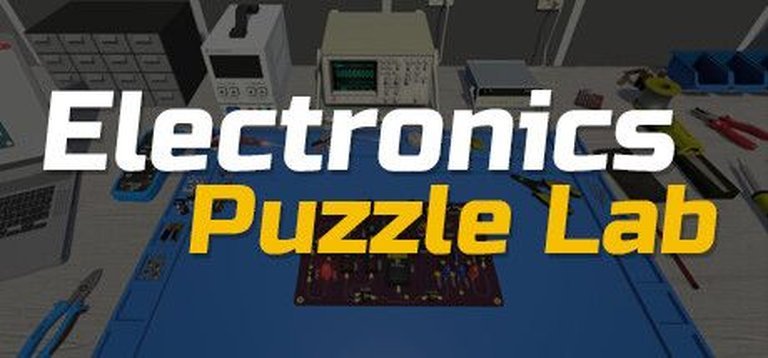
Electronics Puzzle Lab is an educational puzzle game that immerses players in the world of electronics. Set in a fixed, flip-screen perspective, players navigate through various levels, solving puzzles that teach the fundamentals of electronic circuits and components. The game is designed to be both entertaining and informative, making it an ideal tool for learning about science and technology in a fun and engaging way.
Gameplay Videos
Where to Buy Electronics Puzzle Lab
PC
Electronics Puzzle Lab Patches & Updates
Electronics Puzzle Lab Guides & Walkthroughs
Electronics Puzzle Lab Reviews & Reception
metacritic.com (40/100): Electronics Puzzle Lab hopes to inspire players into taking an interest in electronics. After playing it, the opposite may be more likely.
thexboxhub.com (40/100): Electronics Puzzle Lab however, would have me thinking it was a piece of cake. The reality is so much further from the truth however.
steambase.io (88/100): Electronics Puzzle Lab has earned a Player Score of 88 / 100.
gertlushgaming.co.uk : Awaken your inner engineer with the brainteasing circuitry of Electronics Puzzle Lab!
Electronics Puzzle Lab: Review
Introduction
In an era where educational games straddle the line between accessibility and depth, Electronics Puzzle Lab (2024) arrives as a curious experiment. Developed by Sagitta Studios and published by Eastasiasoft, this casual puzzle game promises to merge electronics and logic into bite-sized challenges. But does it spark a genuine interest in circuitry, or does it short-circuit under the weight of its own simplicity? This review argues that while Electronics Puzzle Lab succeeds as a low-stakes introduction to basic electronics, its repetitive design and lack of depth ultimately limit its impact.
Development History & Context
Studio Vision & Constraints
Sagitta Studios, known for niche educational titles like O.W.L Projekt, aimed to create an approachable gateway into electronics. Built using Unity, the game targets casual players and novices, intentionally avoiding the complexity of professional simulators like PC Building Simulator. Released in February 2024 across PlayStation, Xbox, Nintendo Switch, and PC, it entered a market saturated with puzzle games but starved of authentic STEM-focused experiences.
Technological & Design Limitations
The game’s minimalist design reflects its budget constraints. With a file size under 1GB and no voice acting, it prioritizes functionality over flair. However, this pragmatism also led to oversights, such as lacking colorblind support and limited camera zoom—a critical flaw noted by players on Steam and critics like TheXboxHub.
Narrative & Thematic Deep Dive
Plot & Purpose
Electronics Puzzle Lab forgoes traditional narrative in favor of pure pedagogy. Players assume the role of an unnamed technician solving circuit puzzles in a sterile lab environment. The “story” is the gradual introduction of components, from basic switches to logic gates, framed as a series of challenges to “awaken the engineer within you.”
Thematic Execution
The game’s theme—demystifying electronics—is its strongest asset. By simplifying concepts like OR gates and capacitors, it lowers the barrier to entry. However, this approach verges on oversimplification. As TheXboxHub criticizes, the puzzles often feel more like abstract logic exercises than authentic circuit-building, lacking real-world applications.
Gameplay Mechanics & Systems
Core Loop & Puzzle Design
The gameplay revolves around manipulating circuits to power LEDs while avoiding “fails” (activating blue LEDs). Early levels involve flipping switches, while later stages introduce jumpers, timers, and logic gates. Each puzzle grades players on speed, though the strict 10-second benchmarks for top ranks feel unrealistic in complex stages.
Innovations & Flaws
- Innovations: The real-time electricity flow visualization is a standout feature, helping players trace connections. The component glossary (unlocked progressively) adds educational value.
- Flaws: Repetition plagues the 100-level campaign. Puzzles reuse components without escalating complexity, leading to burnout. The UI, while clean, suffers from unskippable animations and a finicky cursor, as noted in Steam forums.
Technical Issues
Players report bugs like unresponsive menus and inconsistent timer pauses. The lack of a “no-timer” mode frustrates those seeking a relaxed experience.
World-Building, Art & Sound
Visual Design
The lab’s isometric 3D aesthetic is functional but uninspired. Neon-lit circuit boards pop against muted workbenches, though the fixed camera and limited zoom (criticized by TheXboxHub) hinder clarity.
Atmosphere & Sound
A subdued synth soundtrack complements the game’s relaxed vibe. Sound effects—clicks, buzzes, and LED chimes—are satisfying but repetitive. The absence of ambient lab noises (e.g., humming machines) misses an opportunity for immersion.
Reception & Legacy
Critical Response
- Positive: Steam users praise its accessibility (87% “Very Positive”), calling it a “chillout game” for casual learning.
- Negative: Critics pan its shallow systems. TheXboxHub awarded 2/5, citing “poor application of electronics” and a “slog” of repetitive puzzles.
Commercial Impact & Influence
Priced under $5 during sales, the game found a niche audience but failed to make waves. Its legacy lies in demonstrating demand for approachable STEM games—though future titles may learn from its oversimplification pitfalls.
Conclusion
Electronics Puzzle Lab is a paradoxical creation: a well-intentioned educational tool hamstrung by its own modesty. While it lowers barriers to electronics with intuitive puzzles and clean design, its lack of depth, technical flaws, and repetitive structure prevent it from becoming a genre standout. For curious novices, it’s a fleeting diversion; for seasoned players, it’s a missed opportunity. In the pantheon of puzzle games, Electronics Puzzle Lab is a functional resistor—necessary but forgettable.
Final Verdict: A flawed but harmless primer for electronics newcomers, best enjoyed in short bursts.