
- Release Year: 2014
- Platforms: Android, iPad, iPhone, Nintendo Switch, PlayStation 4, Windows Apps, Windows Phone, Windows, Xbox Cloud Gaming, Xbox One
- Publisher: Clickteam SARL, Scottgames, LLC
- Developer: Scottgames, LLC
- Genre: Puzzle, Survival horror
- Perspective: 1st-person
- Game Mode: Single-player
- Gameplay: Camera monitoring, Point-and-click, Power management, Survival horror
- Setting: Contemporary, Early 90’s industrial
- Average Score: 79/100
Description
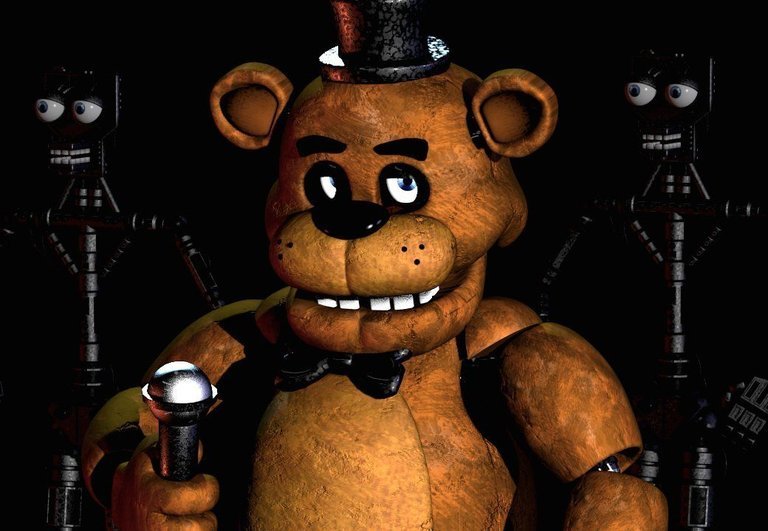
Five Nights at Freddy’s is a first-person survival horror game where players assume the role of night-shift security guard Mike Schmidt at Freddy Fazbear’s Pizza—a family restaurant by day haunted by murderous animatronic creatures by night. Set in a single security office, players must monitor surveillance cameras, conserve limited power for lights and doors, and survive five nights (plus bonus challenges) while avoiding being stuffed into a deadly animatronic suit. The animatronics grow increasingly aggressive each night, creating a tense atmosphere of resource management and psychological horror.
Gameplay Videos
Where to Buy Five Nights at Freddy’s
PC
Five Nights at Freddy’s Cracks & Fixes
Five Nights at Freddy’s Mods
Five Nights at Freddy’s Guides & Walkthroughs
Five Nights at Freddy’s Reviews & Reception
metacritic.com (78/100): Entertaining, engaging and enveloping; once Five Nights at Freddy’s clasps its paws around you, it will be hard to let go.
en.wikipedia.org : Reviewers praised the atmosphere, sound design, and gameplay mechanics, although some found the jump scares repetitive and the game to have little replay value.
mobygames.com (67/100): Five Nights at Freddy’s is an indie horror game developed by Scott Cawthon. Cawthon’s works prior to Five Nights at Freddy’s were nothing special, but this time he managed to capture a magic most horror games struggle to obtain.
Five Nights at Freddy’s Cheats & Codes
PC
Enter codes while in-game.
| Code | Effect |
|---|---|
| C+D+(numpad+) | Skip the current night |
PC (Main Menu)
Enter codes at the main menu.
| Code | Effect |
|---|---|
| C+D+1 | Unlock Night 6 and gain 1 star |
| C+D+2 | Unlock Night 7 (Custom Night) and gain 2 stars |
Mobile/Console (Survival Kit DLC)
Purchase Survival Kit DLC for $4.99; cheats are always available on Nintendo Switch version.
| Code | Effect |
|---|---|
| Unlimited Power | Disables battery; no power conservation needed |
| Fast Nights | Speeds up the clock, making each night pass twice as fast |
| Radar Map | Displays the position of each animatronic on the camera map |
Five Nights at Freddy’s 2 (PC)
Enter codes while in-game.
| Code | Effect |
|---|---|
| Click Freddy’s nose + C+D+(numpad+) | Skip the current night |
Five Nights at Freddy’s 2 (PC Main Menu)
Enter codes at the main menu.
| Code | Effect |
|---|---|
| C+D+1 | Unlock Night 6 and gain 1 star |
| C+D+2 | Unlock Night 7 (Custom Night) and gain 2 stars |
Five Nights at Freddy’s 2 (Mobile/Console Survival Kit DLC)
Purchase Survival Kit DLC; cheats are always available on Nintendo Switch version.
| Code | Effect |
|---|---|
| Unlimited Power | Disables battery; no power conservation needed |
| Fast Nights | Speeds up the clock, making each night pass twice as fast |
| Radar Map | Displays the position of each animatronic on the camera map |
Five Nights at Freddy’s: Review
Introduction
In 2014, a seemingly simple indie horror game emerged from the shadows to redefine the genre. Five Nights at Freddy’s (FNaF), created by Scott Cawthon, transformed a modest budget and minimalist design into a cultural phenomenon. Set in the dilapidated Freddy Fazbear’s Pizza, the game leverages psychological tension over visceral gore, trapping players in a claustrophobic nightmare where survival hinges on strategy and nerve. This review argues that FNaF’s brilliance lies in its ability to weaponize mundanity, turning a mundane security job into a masterclass in dread, while spawning a franchise that reshaped indie horror and narrative-driven gameplay.
Development History & Context
The Creator’s Vision
Scott Cawthon, a previously obscure developer known for Christian-themed games, pivoted to horror after criticism of his family-friendly Chipper & Sons Lumber Co. (2013). Reviewers noted its characters’ unintentionally eerie, animatronic-like movements, which Cawthon reinterpreted as a strength. Channeling frustration into creativity, he developed FNaF in just six months using Clickteam Fusion 2.5, a tool often dismissed for its limitations. These constraints became assets: static camera feeds and jerky animatronic animations amplified the game’s unnerving atmosphere.
Technological and Industry Landscape
Released in August 2014, FNaF entered a market dominated by AAA action-horror titles like The Evil Within and Alien: Isolation. Yet its stripped-down mechanics—relying on surveillance cameras and resource management—stood in stark contrast. Priced at $4.99 and initially distributed via Desura and Steam Greenlight, its low cost and viral Let’s Play coverage (notably by YouTubers like Markiplier) propelled it into mainstream consciousness. The game’s mobile ports further democratized access, cementing its status as a grassroots sensation.
Narrative & Thematic Deep Dive
A Cryptic Tragedy
FNaF’s plot is delivered through fragmented voicemails and environmental clues. Players assume the role of Mike Schmidt, a night guard tasked with surviving five nights at Freddy Fazbear’s Pizza, a defunct family restaurant haunted by murderous animatronics. The story hints at darker lore: the “Missing Children Incident,” where five kids were lured to their deaths by a killer in a Spring Bonnie suit (later revealed to be co-founder William Afton), their souls possessing the robots. Themes of corporate negligence, unresolved trauma, and the corruption of childhood innocence permeate the narrative.
Symbolism and Subtext
The animatronics—Freddy Fazbear, Bonnie, Chica, Foxy, and the ghostly Golden Freddy—serve as monstrous reflections of abandoned joy. Their twitchy movements and lifeless eyes evoke uncanny valley discomfort, while the player’s impotence (no weapons, only doors and cameras) mirrors real-world vulnerability. The game’s infamous “Bite of ‘87” backstory—an incident where an animatronic mauled a person—critiques the dangers of unchecked automation and nostalgia.
Gameplay Mechanics & Systems
The Anxiety of Limited Control
FNaF’s core loop revolves around resource management: players must juggle camera surveillance, door locks, and hallway lights while conserving limited power. Each action drains electricity, creating a desperate trade-off between awareness and survival. The animatronics’ AI grows increasingly aggressive each night, with Foxy sprinting down hallways if neglected and Golden Freddy appearing randomly for instant kills.
Innovation and Flaws
The game’s simplicity is its strength, but later nights rely heavily on RNG, leading to frustration. The lack of save points and repetitive jumpscares drew criticism, yet these elements also heightened the tension. The UI—a grainy monitor feed, flickering lights, and distorted audio cues—immerses players in the role of a powerless observer, making every creak and static burst a harbinger of doom.
World-Building, Art & Sound
Aesthetic of Decay
Freddy Fazbear’s Pizza is a masterclass in environmental storytelling. Peeling posters, flickering neon signs, and grimy camera feeds evoke a once-vibrant space now rotting from neglect. The animatronics’ designs blend Chuck E. Cheese-inspired kitsch with grotesquery—Bonnie’s missing face, Chica’s jagged teeth—to unsettling effect.
Sound as a Weapon
Sound designer Scott Cawthon (using a mix of stock effects and original tones) weaponizes silence. Distant footsteps, metallic clangs, and Freddy’s eerie music box escalate paranoia. The lack of a soundtrack amplifies isolation, while sudden jumpscare screams—peaking at 100dB—trigger visceral panic. Notably, audio cues like Foxy’s pirate chant or Chica’s kitchen noise become vital survival tools.
Reception & Legacy
Critical and Commercial Impact
FNaF earned a 74% average critic score (MobyGames) and sold over 1 million copies in its first year. Reviews praised its ingenuity, though some dismissed it as a “jumpscare simulator.” Player reactions were polarized: Steam reviews oscillated between admiration for its creativity and frustration with its difficulty.
Cultural Phenomenon
The game birthed a cult following, inspiring fan theories, novels, and a film adaptation (2023). Its “show, don’t tell” storytelling influenced indie horrors like Hello Neighbor and Bendy and the Ink Machine. YouTube Let’s Plays turned FNaF into a communal experience, with MatPat’s Game Theory videos dissecting its lore for millions. The franchise’s $1.8 billion merchandise empire and 10+ sequels underscore its enduring appeal.
Conclusion
Five Nights at Freddy’s is a watershed moment in gaming history. By transforming technical limitations into atmospheric triumphs, Scott Cawthon crafted a game that horror auteurs like Hideo Kojima have praised for its “pure, primal fear.” Its legacy—a sprawling multimedia saga, a redefined genre, and a blueprint for indie success—proves that innovation often thrives in constraint. For all its simplicity, FNaF remains a landmark title, reminding us that true horror isn’t in the monster’s appearance, but in the dread of what we cannot see.