
- Release Year: 2024
- Platforms: Linux, Macintosh, Nintendo Switch, Windows
- Publisher: Nova-box SARL
- Developer: Nova-box SARL
- Genre: Adventure
- Perspective: 1st-person
- Game Mode: Single-player
- Gameplay: Visual novel
- Setting: Detective, Mystery
Description
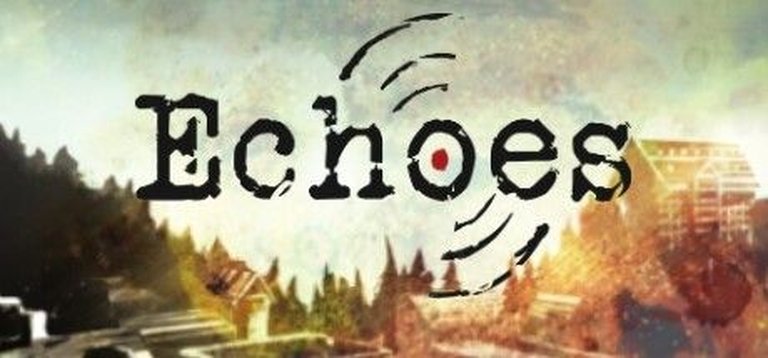
Echoes is a first-person visual novel adventure game set in a mysterious world where players take on the role of a detective unraveling a captivating narrative. With fixed/flip-screen visuals and point-and-click mechanics, the game combines an engaging detective/mystery storyline with evolving art styles that change as the story progresses. Released in 2024 for Windows and other platforms, Echoes offers subtle player choices, hidden clues, and dialogue-driven gameplay that immerses players in its fantastical atmosphere.
Where to Buy Echoes
PC
Echoes Free Download
Echoes Guides & Walkthroughs
Echoes Reviews & Reception
thereviewgeek.com : While Echoes of Wisdom is a fun, adorable, and creative title many will love, this game won’t appeal to most.
adventuregamehotspot.com : Compelling visual novel thriller bounces back with enhanced graphics and sound but same limited gameplay.
Echoes Cheats & Codes
Nintendo Switch
Enter codes at the main menu.
| Code | Effect |
|---|---|
| max rupee | Max rupees |
| max rupee off | Disable max rupees |
| max oxygen | Max oxygen |
| max oxygen off | Disable max oxygen |
| max item | Max items |
| max item off | Disable max items |
| max hp | Max HP |
| max hp off | Disable max HP |
| max sword energy | Max sword energy |
| max sword energy off | Disable max sword energy |
| Inf Jump | Infinite jump |
| Infinite / Max Hearts | Infinite or max hearts |
| Invincible | Invincibility |
| Moon Jump | Moon jump |
| High jump | High jump |
| Faster Swim Speed | Faster swim speed |
| Faster carry speed | Faster carry speed |
| Increase Movement Speed | Increase movement speed |
| Shopping Free with 0 | Shopping is free with 0 rupees |
| Smoothies are free | Smoothies are free |
| Inf Mighty Crystals | Infinite mighty crystals |
| Infinite Echos | Infinite echoes |
| Max level Tri | Max level Tri |
| Breath underwater On | Breathe underwater |
| Costumes | Unlock costumes |
| Have all Accessories | Have all accessories |
| 99 Any item on use/receive | 99 of any item on use/receive |
| Items wont decrease | Items won’t decrease |
| Unlock All Echoes | Unlock all echoes |
| Show all unlockables on map | Show all unlockables on map |
| Inf Sword Energy | Infinite sword energy |
| Inf HP | Infinite HP |
Echoes of Wisdom: Review
Introduction
In the pantheon of video game legends, The Legend of Zelda stands as a monumental pillar, a series synonymous with innovation, rich lore, and unforgettable adventures. The Legend of Zelda: Echoes of Wisdom (2024) marks a historic turning point: the first mainline entry where Princess Zelda herself takes center stage. Developed by Nintendo EPD and Grezzo, and directed by Tomomi Sano — the franchise’s first female director — Echoes of Wisdom is both a love letter to the series’ 2D roots and a bold reimagining of its mechanics. This review explores how the game balances reverence for tradition with inventive gameplay, establishing itself as a pivotal chapter in Zelda’s ever-evolving saga.
Development History & Context
Echoes of Wisdom emerged from an unexpected origin: Grezzo’s work on the Link’s Awakening (2019) remake. After completing that project, the team began brainstorming a new 2D Zelda title, initially conceptualized as an expansion of Link’s Awakening’s dungeon editor. However, as director Satoshi Terada revealed in Nintendo’s Ask the Developer series, the idea evolved into an original adventure that prioritized player creativity.
Vision and Constraints:
Producer Eiji Aonuma sought to break from convention, stating, “We wanted players to come up with their own ways to solve puzzles”. This ethos led to the “echo” mechanic, where Zelda creates duplicates of objects and enemies. Early in development, Link was the intended protagonist, but Aonuma realized players might default to traditional combat. Shifting to Zelda — long requested by fans — justified the echo system’s reliance on logic over brute force.
Technological and Creative Landscape:
Built on the Switch’s hardware, Echoes of Wisdom refined the Link’s Awakening engine, blending toy-like diorama visuals with dynamic lighting. Despite technical hurdles like frame-rate dips during intense sequences, Grezzo’s partnership with Nintendo prioritized artistic cohesion. The game arrived in a post-Breath of the Wild era, where open-world innovation overshadowed 2D entries. Echoes reclaimed the top-down perspective’s charm while proving Nintendo’s commitment to diversifying gameplay styles.
Narrative & Thematic Deep Dive
Set in the “Downfall” timeline after Tri Force Heroes and before the original Legend of Zelda, Echoes of Wisdom follows Zelda as she investigates rifts swallowing Hyrule’s citizens — including Link. Framed for the chaos, she partners with the fairy-like Tri and wields the Tri Rod, a device allowing her to summon “echoes” of objects and foes.
Plot and Characters:
The story pits Zelda against Null, a primordial entity seeking the Triforce (referred to as “Prime Energy”). Unlike Ganon’s brute tyranny, Null embodies existential nihilism, resenting creation itself. Zelda’s journey explores themes of legacy and wisdom, contrasting with Link’s archetypal courage. Supporting characters — like the eccentric Stamp Guy and the emotionally resonant Lueberry — enrich Hyrule’s tapestry, their subplots addressing cooperation and identity.
Thematic Resonance:
Echoes interrogates Zelda’s role as the “priestess of wisdom.” Her reliance on echoes mirrors the player’s creative agency, emphasizing intellect over violence. The narrative’s cyclical structure — including echoes of Skyward Sword’s prologue — suggests this could be the foundational “legend” referenced in later games. Ultimately, the story champions resilience, arguing that wisdom lies not in power, but in understanding and connection.
Gameplay Mechanics & Systems
Echoes of Wisdom revolutionizes Zelda’s 2D formula through its core mechanic: the Tri Rod.
Echo System:
Zelda can create echoes of nearly anything — from beds (used as bridges) to monsters (allied in combat). Each echo consumes “Tri” energy (displayed as triangles behind Tri), encouraging strategic deployment. The system’s flexibility shines in puzzles: Water blocks dam rivers, crates scale cliffs, and ignited flames solve environmental challenges. However, the echo-selection UI — a horizontal scroll of icons — drew criticism for clunkiness mid-combat.
Combat and Progression:
Unlike Link, Zelda rarely fights directly. Her “Swordfighter Form” transforms her briefly into a Link-like warrior, but it’s time-limited and fueled by energy orbs from the Still World (a parallel dimension housing rifts). This design reinforces her role as a tactician, though some fans lamented the missed opportunity for Zelda-specific magic abilities.
Exploration and UI:
Hyrule’s semi-open world encourages organic discovery, with “Waypoints” enabling fast travel. Side quests — such as helping regional leaders post-main quest — add depth, while cooking smoothies and outfit customization offer RPG-lite elements. Performance issues, notably resolution drops during spin attacks, occasionally mar the experience, echoing Link’s Awakening’s technical flaws.
World-Building, Art & Sound
Grezzo’s art direction pays homage to Link’s Awakening’s diorama aesthetic while evolving it.
Visual Design:
Each chapter’s art style shifts subtly, reflecting Zelda’s emotional state. Early grayscale scenes give way to Sin City-esque noir in Chapter 4, culminating in vibrant hand-painted colors for the finale. This progression mirrors Zelda’s transformation from fugitive to hero. Environments — ruined A Link to the Past dungeons, Gerudo deserts, and Zora waterways — fuse nostalgia with fresh detail.
Sound Design:
The soundtrack reimagines classics like Zelda’s Lullaby with haunting piano melodies. Minimalistic soundscapes emphasize diegetic noises (rustling grass, echoing footsteps), immersing players in Hyrule’s melancholy. While non-voiced dialogue risks detachment, emotive character grunts and Tri’s playful chirps add personality.
Atmosphere:
The Still World’s frozen, monochromatic landscapes contrast Hyrule’s vibrancy, reinforcing Null’s threat. Enemy designs — including revived classics like ReDeads — balance charm and menace, while dungeons escalate cleverly from forest temples to cosmic voids.
Reception & Legacy
Echoes of Wisdom earned acclaim for creativity, though not without caveats.
Critical Response:
– Metacritic: 85/100
– IGN: 9/10 (“A bold blend of old and new”)
– GameSpot: 9/10 (“Echoes of Wisdom ranks with the series’ best”)
Praise centered on the echo system’s ingenuity and Zelda’s characterization. Criticisms targeted performance drops, echo-selection friction, and underutilized Swordfighter Form.
Commercial Success:
The game sold 200,121 physical copies in Japan its first week and surpassed 4 million units globally by March 2025.
Industry Impact:
Echoes highlighted Nintendo’s timeline strategy, officially placing itself post-Tri Force Heroes on the “Hero is Defeated” branch. This move — alongside Breath of the Wild’s timeline ambiguity — suggests a bifurcated future: 3D games exploring new lore, while 2D entries deepen classic continuity. Director Sano’s leadership also set a precedent for female creatives steering AAA franchises.
Conclusion
The Legend of Zelda: Echoes of Wisdom is a triumph of reinvention. By centering Zelda, it subverts 38 years of tradition, proving that wisdom can be as compelling as courage. Its echo mechanic redefines puzzle-solving, even if UI and technical flaws occasionally disrupt immersion. While not without imperfections, the game’s audacity cements its legacy: a proof-of-concept that the series can honor its past while embracing new perspectives. As Nintendo eyes a future split between 3D innovation and 2D tradition, Echoes of Wisdom stands as a masterclass in balancing both.
Final Verdict: A gem in Zelda’s crown — imperfect yet indispensable, pioneering yet nostalgic. Its echoes will reverberate through Hyrule for generations.