
- Release Year: 2009
- Platforms: Windows
- Publisher: 1C Company, Battlefront.com, Inc., Fulqrum Publishing s.r.o.
- Developer: Battlefront.com, Inc.
- Genre: Compilation
- Perspective: Top-down
- Game Mode: LAN, Online PVP, Single-player
- Gameplay: Historical warfare, Real-time tactics
- Setting: Africa, World War II
Description
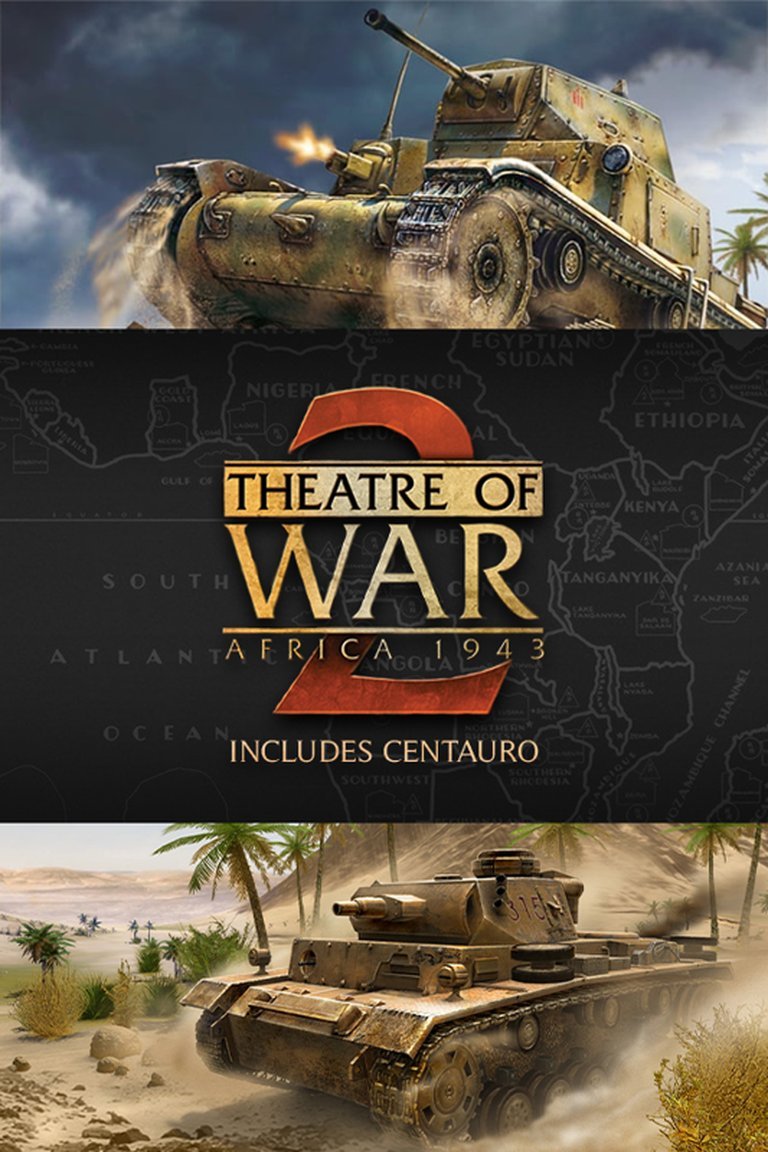
Theatre of War 2: Africa 1943 + Theatre of War: Centauro Bundle is a tactical World War II strategy compilation featuring the North African campaign of 1943. Players engage in historically accurate battles across Libya and Tunisia, commanding forces from Rommel’s Afrika Korps or Allied armies led by Montgomery and Eisenhower. The bundle includes the base game Theatre of War 2: Africa 1943 and its Centauro DLC expansion, which focuses on the Italian 131st Armored Division with 10 new missions, desert/mountain maps, and authentic military vehicles like the Semovente M40 tank destroyer and Carro Armato M13/40 medium tank. The game emphasizes realistic battlefield simulations including ambushes, counterattacks, and defensive operations.
Gameplay Videos
Theatre of War 2: Africa 1943 + Theatre of War: Centauro Bundle Cracks & Fixes
Theatre of War 2: Africa 1943 + Theatre of War: Centauro Bundle Guides & Walkthroughs
Theatre of War 2: Africa 1943 + Theatre of War: Centauro Bundle: Review
Introduction
In the pantheon of tactical strategy games, few titles stand as tall as the Theatre of War series. The Theatre of War 2: Africa 1943 + Theatre of War: Centauro Bundle is a testament to the series’ enduring legacy, offering an unparalleled depth of historical accuracy and tactical complexity. This review will delve into the intricate layers of this bundle, examining its development history, narrative depth, gameplay mechanics, world-building, and enduring legacy. By the end, it will be clear why this bundle is a must-have for any strategy enthusiast.
Development History & Context
The Studio and Creators’ Vision
The Theatre of War series is the brainchild of 1C Company and Fulqrum Publishing, two studios known for their meticulous attention to historical detail and tactical gameplay. The creators’ vision was to provide players with the most realistic and immersive World War II simulation possible. This vision was realized through extensive research and a commitment to historical accuracy, ensuring that every unit, vehicle, and mission was faithfully recreated.
Technological Constraints and Gaming Landscape
Released in 2009, Theatre of War 2: Africa 1943 and its Centauro expansion were developed during a time when real-time strategy games were at the height of their popularity. The technological constraints of the era meant that the developers had to optimize their game for mid-range PCs, ensuring that the game could run smoothly on a wide range of hardware. Despite these constraints, the developers managed to create a visually stunning and technically impressive game.
The gaming landscape of 2009 was dominated by titles like Company of Heroes and Supreme Commander, both of which offered deep strategic gameplay and high production values. Theatre of War 2: Africa 1943 and Centauro stood out by focusing on historical accuracy and tactical depth, carving out a niche for themselves in a crowded market.
Narrative & Thematic Deep Dive
Plot and Characters
Theatre of War 2: Africa 1943 covers the events of 1943 in Tunisia, North Africa. The game follows the German Afrika Korps, led by the legendary Erwin Rommel, as they prepare for their last full-scale military campaign against the Allied forces. The narrative is rich with historical detail, drawing from real-life battles and strategies.
The Centauro expansion further enriches the narrative by focusing on the 131st Armored Division Centauro, an Italian armored division that played a significant role in the North African campaign. The expansion includes missions from rearguard actions near El Ageyla in Libya to the battles in Tunisia, providing a comprehensive look at the Italian Army’s involvement in the conflict.
Dialogue and Themes
The dialogue in Theatre of War 2: Africa 1943 and Centauro is sparse but effective, serving to enhance the immersive experience rather than detract from it. The themes explored in the game are those of strategy, sacrifice, and the brutal realities of war. The game does not shy away from the horrors of combat, presenting a stark and unflinching portrayal of warfare.
Gameplay Mechanics & Systems
Core Gameplay Loops
Theatre of War 2: Africa 1943 and Centauro are real-time strategy games at their core, but they offer a level of tactical depth that sets them apart from other titles in the genre. The gameplay loops revolve around unit management, resource allocation, and strategic planning. Players must carefully balance their resources, ensuring that they have enough supplies to sustain their troops while also maintaining a strong offensive capability.
Combat and Character Progression
Combat in Theatre of War 2: Africa 1943 and Centauro is intense and unforgiving. The game features a complex damage system that takes into account the type of weapon, the angle of attack, and the armor of the target. This level of detail ensures that every engagement is unique and challenging.
Character progression is handled through experience points, which are earned by completing missions and achieving objectives. As characters gain experience, they unlock new abilities and upgrades, allowing players to customize their units to suit their playstyle.
User Interface
The user interface in Theatre of War 2: Africa 1943 and Centauro is intuitive and easy to navigate. The minimap provides a clear overview of the battlefield, while the unit selection interface allows for quick and efficient command of troops. The game also features a mission editor, allowing players to create their own scenarios and share them with the community.
Innovative and Flawed Systems
One of the most innovative systems in Theatre of War 2: Africa 1943 and Centauro is the advanced visual spotting system, which accounts for observation angles and smoke screens. This system adds a layer of realism to the gameplay, forcing players to consider the visibility of their units and the effectiveness of their cover.
However, the game is not without its flaws. The AI can be unpredictable at times, and the pathfinding can be problematic, leading to units getting stuck or moving in unintended directions. These issues can be frustrating but do not detract from the overall experience.
World-Building, Art & Sound
Setting and Atmosphere
The setting of Theatre of War 2: Africa 1943 and Centauro is the North African desert, a harsh and unforgiving landscape that serves as the backdrop for some of the most intense battles of World War II. The game’s art direction is stunning, with detailed models and textures that bring the desert to life. The atmosphere is further enhanced by the game’s sound design, which features realistic sound effects and a hauntingly beautiful soundtrack.
Visual Direction
The visual direction of Theatre of War 2: Africa 1943 and Centauro is a testament to the developers’ commitment to historical accuracy. The game features over 50 different vehicle types and 30 unique buildings, all of which are meticulously recreated. The attention to detail extends to the soldiers, who are modeled with a high degree of realism and animation.
Sound Design
The sound design in Theatre of War 2: Africa 1943 and Centauro is exceptional. The game features a wide range of sound effects, from the roar of engines to the crack of gunfire. The soundtrack is equally impressive, with a mix of orchestral and electronic music that complements the game’s atmosphere perfectly.
Reception & Legacy
Critical and Commercial Reception
Upon its release, Theatre of War 2: Africa 1943 and Centauro received critical acclaim for their historical accuracy, tactical depth, and immersive gameplay. The game was praised for its attention to detail and the realism of its combat mechanics. However, it was also criticized for its steep learning curve and the unpredictability of its AI.
Commercially, the game was a success, selling well and garnering a dedicated fanbase. The game’s reputation has only grown over the years, with many considering it to be one of the best tactical strategy games of its time.
Influence on Subsequent Games and the Industry
Theatre of War 2: Africa 1943 and Centauro have had a significant influence on subsequent games in the genre. Their commitment to historical accuracy and tactical depth has set a standard that other games strive to meet. The game’s legacy can be seen in titles like Steel Division and Men of War, both of which owe a debt to the Theatre of War series.
Conclusion
Theatre of War 2: Africa 1943 + Theatre of War: Centauro Bundle is a masterclass in tactical strategy gaming. Its commitment to historical accuracy, deep gameplay mechanics, and immersive world-building make it a standout title in the genre. Despite its flaws, the game’s strengths far outweigh its weaknesses, making it a must-have for any strategy enthusiast. Its legacy continues to inspire and influence the industry, ensuring that its place in video game history is secure.