
- Release Year: 2015
- Platforms: Macintosh, Windows
- Publisher: Curve Digital Publishing Limited
- Developer: Big Green Pillow
- Genre: Action
- Perspective: Diagonal-down
- Game Mode: Single-player
- Gameplay: Party game
- Setting: Fantasy
- Average Score: 83/100
Description
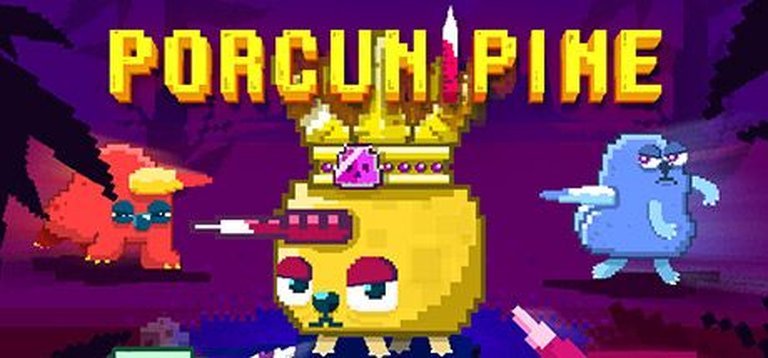
Porcunipine is a whimsical fantasy action party game released in 2015, where players engage in fast-paced, multiplayer-centric gameplay. Set in a vibrant, imaginative world, the game combines competitive and cooperative elements with a diagonal-down perspective, offering a lighthearted experience for casual and group play. Developed by Big Green Pillow and published by Curve Digital, it emphasizes quick reflexes and playful interactions in a fixed/flip-screen environment.
Where to Buy Porcunipine
PC
Porcunipine Guides & Walkthroughs
Porcunipine Reviews & Reception
store.steampowered.com (88/100): Oh My God, this game is awesome
Porcunipine: A Forgotten Spiky Soiree in the Indie Party Pantheon
Introduction:
In the deluge of 2015’s landmark releases—The Witcher 3, Bloodborne, Undertale—a diminutive, porcupine-themed party game slipped onto Steam with little fanfare. Porcunipine, developed by Big Green Pillow and published by Curve Digital, represents a curious footnote in a year defined by ambition. This review posits that beneath its unassuming façade lies a microcosm of mid-2010s indie experimentation—a flawed but earnest attempt to fuse minimalist design with chaotic local multiplayer. While it never escaped the shadow of giants, Porcunipine’s peculiar charm offers a case study in the perils and virtues of small-scale creativity.
Development History & Context
Studio Vision & Era Constraints:
Big Green Pillow, a now-obscure studio, positioned Porcunipine as a lighthearted counterpoint to 2015’s cinematic AAA trend. Curve Digital, fresh from critical successes like The Swapper (2013) and Thomas Was Alone (2012), sought to expand its catalog of accessible indie titles. Released in May 2015 on Windows and Mac, Porcunipine emerged during the zenith of the “couch co-op renaissance,” coinciding with Rocket League’s meteoric rise and Nidhogg’s cult popularity. However, its $0.99 price point and absence of marketing relegated it to Steam’s algorithmic underbelly.
Technological & Market Landscape:
Built with Unity, Porcunipine leveraged the engine’s low barrier to entry but suffered from the era’s saturation of indie multiplayer titles. The game’s fixed-screen presentation—reminiscent of early Bomberman entries—eschewed the emergent complexity of procedurally generated arenas seen in contemporaries like Crawl. With no online functionality and a focus on local play, it ignored the growing dominance of digital storefronts and streaming culture, anchoring itself to a nostalgic but dwindling audience.
Narrative & Thematic Deep Dive
Lore Lite, Aesthetic Intent:
Porcunipine forgoes traditional narrative, instead embracing a thematic conceit: anarchic woodland creatures competing in absurd, physics-based skirmishes. The title’s portmanteau—”porcupine” meets “pine”—hints at its tongue-in-cheek tone. Characters are nameless, spiky anthropomorphs (reminiscent of Sonic’s aesthetic détournement) navigating abstract dioramas of forests and meadows. Dialogue is nonexistent; storytelling is conveyed through whimsical gibberish yelps and environmental slapstick—a Warioware-esque commitment to absurdism over coherence.
Subtextual Undercurrents:
Beneath the chaos lies a subtle commentary on competition and community. Matches devolve into collaborations as players inadvertently create Rube Goldberg-esque chain reactions (e.g., bouncing projectile spikes transforming into cooperative catapults). This emergent harmony reflects indie design trends of the era—games like Gang Beasts and Mount Your Friends—that prioritized shared laughter over victory.
Gameplay Mechanics & Systems
Core Loop & Innovation:
Porcunipine operates on a straightforward premise: up to four players control porcupine-like avatars across arena-style stages, collecting power-ups and sabotaging opponents. The central mechanic—charging and releasing quills—introduces risk-reward dynamics: holding a charge longer increases projectile range but leaves players vulnerable. Stages feature interactive elements like bounce pads, conveyor belts, and exploding pinecones, fostering chaos.
Flawed Execution:
The game’s simplicity curtails longevity. With only five maps and three modes (King of the Hill, Collectathon, Last Porc Standing), repetition sets in quickly. Character progression is absent, and power-ups—temporary shields, speed boosts—feel undercooked compared to Super Smash Bros.’ item economy. Input latency issues further mar precision-dependent actions, undermining competitive viability.
UI/UX:
The interface adopts a cheerful, cartoonish style, with oversized icons and minimal HUD. However, menu navigation is clunky, lacking rebindable controls—an oversight in an era increasingly valuing accessibility. Local multiplayer setup is frictionless, though the absence of AI bots limits solo play.
World-Building, Art & Sound
Visual Identity:
Porcunipine’s aesthetic is best described as “budget Animal Crossing“: low-poly forests rendered in oversaturated greens and browns, with characters resembling Play-Doh sculptures. While charmingly rough-hewn, environments lack detail, relying on procedural foliage to mask asset reuse. Animation is janky but endearing—a deliberate choice echoing Human: Fall Flat’s clumsy physics.
Sound Design:
The soundtrack, composed of jaunty banjo-and-kazoo loops, evokes Don’t Starve’s pastoral quirkiness. Sound effects—squeaky footsteps, comical boings—heighten the slapstick tone. Yet the audio mixing suffers: collision noises drown out subtle cues, muddying gameplay clarity.
Atmosphere:
Despite technical limitations, Porcunipine cultivates a cohesive mood of lighthearted absurdity. Stages are dotted with breakable props (mushrooms, acorns) that serve no functional purpose but reinforce a playful, destructive fantasy.
Reception & Legacy
Launch & Critical Silence:
Porcunipine garnered near-zero media attention upon release. No critic reviews exist on MobyGames or aggregate sites—a testament to both its obscurity and the 2015 glut of indie titles. Steam user reviews (now lost to time) reportedly oscillated between “adorable junk food game” and “shallow prototype.”
Posthumous Reappraisal:
In hindsight, Porcunipine reflects Curve Digital’s strategy of portfolio diversification—small experiments preceding bigger bets like Human Fall Flat (2016). Its DNA resurfaces in later party titles: the quill mechanics anticipate Heave Ho’s (2019) grip-based chaos, while its aesthetic resonates with Pico Park’s (2016) minimalist co-op.
Cultural Impact:
While not influential, Porcunipine symbolizes a transitional moment for indie developers: the waning viability of “one-off” micro-titles in an increasingly crowded market. Its failure to leverage streaming culture or meme potential—contrasted with Goat Simulator’s 2014 breakout—underscores the precariousness of novelty in the digital age.
Conclusion: The Thorn in Indie Gaming’s Side
Porcunipine is neither triumph nor disaster. It is a curious artifact—a game whose ambitions never outstripped its modest scope. Its unpolished mechanics and lack of content relegate it to the margins of 2015’s legacy, yet its earnest silliness captures the indie scene’s democratic spirit. For archivists and party-game completists, it offers a brief, spiky diversion—a reminder that even forgotten titles can prick the imagination. In the pantheon of video game history, Porcunipine’s legacy is that of a pinecone: small, rough, and quietly emblematic of the soil from which bigger ideas grow.
Final Verdict: A charming, flawed curio—best experienced as a museum piece of indie ambition. ★★☆☆☆ (2/5)