
- Release Year: 1999
- Platforms: Windows
- Publisher: Piggy Bank, Smarty Pants Publishing Pty Ltd
- Developer: Smarty Pants Publishing Pty Ltd
- Genre: Educational
- Perspective: 1st-person
- Game Mode: Single-player
- Gameplay: Coloring, Drawing, Educational, Hidden object, quiz, Simple Arcade, Storytelling
- Setting: Australia, Junkyard, Space
Description
Junkyard Adventures in Space is an educational game set in an Australian junkyard, offering a variety of mini-games and activities designed to teach young players about space. Players navigate through different areas like the car, shed, tip, and mineshaft, each containing unique games such as hidden object quizzes, space trivia, interactive stories, and alien-themed challenges. The game combines fun and learning, making it an engaging experience for children.
Junkyard Adventures in Space Reviews & Reception
mobygames.com : Cute game for the young
Junkyard Adventures in Space: Review
Introduction
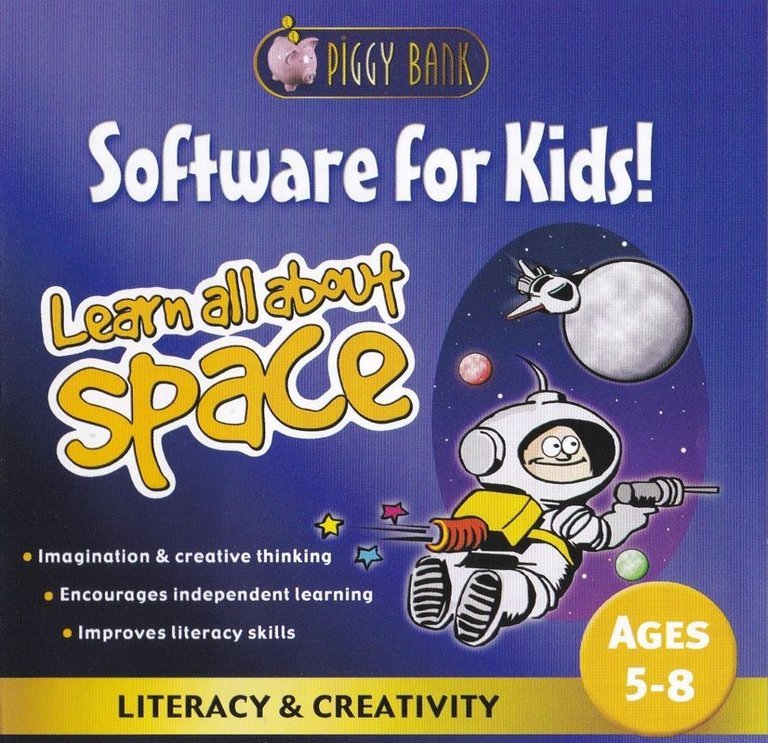
In the golden age of CD-ROM edutainment, Junkyard Adventures in Space (1999) emerged as a quirky Australian oddity—a title that promised galactic exploration but delivered something closer to a scrap-yard carnival. Developed by Smarty Pants Publishing, this Windows-era gem embodies the tension between playful whimsy and educational ambition. While its UK rebranding as Learn All About Space suggests a cosmic classroom, the game’s true legacy lies in its vibrant mini-games and irreverent charm. This review unpacks its contradictions: a flawed educational tool but a deftly crafted playground for young minds.
Development History & Context
The Studio & Vision
Smarty Pants Publishing Pty Ltd, an Australian studio with a focus on family-friendly titles, positioned Junkyard Adventures in Space as part of a broader series (including Junkyard Adventures with Dinosaurs). The team, led by producer Rosanna Morales and technical director Ben Lvovsky, aimed to merge rudimentary science lessons with irreverent humor, leveraging the era’s fascination with interactive CD-ROMs.
Technological Constraints & Gaming Landscape
Released in 1999, the game arrived at the tail end of the edutainment boom, competing with heavyweights like Reader Rabbit and JumpStart. Limited by Windows 98-era hardware, it prioritized simple point-and-click mechanics over intricate simulations. The use of static backgrounds, basic animations, and MIDI-style tunes reflects both budgetary constraints and a design ethos centered on accessibility for young children.
Narrative & Thematic Deep Dive
Plot & Characters
The game lacks a traditional narrative, instead framing activities within a fantastical Australian junkyard. Players explore four zones—a car, shed, mineshaft, and tip—each hosting mini-games loosely tied to space themes. Characters like the unseen narrator and the whimsical “Rosey’s Rocket” storybook protagonist serve as guides, though their roles are minimal.
Themes & Educational Value
While marketed as space-themed, the educational content is superficial. The Space Quiz offers basic multiple-choice questions (“What is the hottest planet?”), but the game shies away from scientific rigor. Themes of recycling (The Recycle Room) and creativity (Alien Game) overshadow astronomy, leaning into playful absurdity (e.g., “skating on Saturn’s rings”). As one reviewer notes, under its original title, it succeeds as “fun activity for young kids that sneaks in a bit of teaching”—but as Learn All About Space, it’s misleading.
Gameplay Mechanics & Systems
Core Activities
- The Car: Hosts two modes:
- I-Spy Quiz: A hidden-object challenge where children locate items like “five blue stars.”
- Space Quiz: A two-player trivia duel with buzzer-style input.
- The Shed: Features Rosey’s Rocket, an interactive storybook with three modes: read-along, sing-along, or coloring pages.
- The Mineshaft: Leads to The Recycle Room, an art studio where players collage planetary imagery.
- The Tip: Alien Game, a Space Invaders-lite arcade game starring color-matching aliens catching falling stars.
UI & Accessibility
The interface is deliberately simple: hotspots trigger animations or dialogue, while clear icons guide navigation. The lack of fail states and repetitive but randomized activities (e.g., I-Spy) ensure child-friendly replayability.
Flaws & Innovations
While polished for its scope, the game’s educational systems are shallow. The Space Quiz’s brief explanations (“Venus is the hottest planet”) lack depth, and the Alien Game prioritizes reflexes over learning. Yet its blend of music, art, and trivia was innovative for its time, offering a smorgasbord of engagement.
World-Building, Art & Sound
Visual Design
The junkyard setting bursts with chaotic charm: rusted cars, cluttered sheds, and cartoony aliens rendered in bright, low-poly art. While not technologically advanced, the aesthetic channels Sesame Street’s playful grunge, inviting exploration.
Sound Design
The soundtrack, composed by Gavin and Marshall Parker, leans on jaunty melodies and brief vocal ditties. Sound effects—clanking metal, alien chirps—are serviceable, though the voice acting stands out for avoiding the “hyper-enthusiastic” tone plaguing many kids’ games (per MobyGames reviewer piltdown_man).
Atmosphere
The game excels in creating a cozy, low-stakes sandbox. Hotspots reward curiosity with humorous asides (e.g., a bin lid clattering shut), fostering a sense of discovery without pressure.
Reception & Legacy
Initial Reception
Critics largely ignored the title, but user reviews praised its “well thought-out and carefully crafted” design. The sole MobyGames review (3.9/5) lauded its humor and accessibility while condemning its UK rebrand as Learn All About Space for overpromising educational value.
Long-Term Impact
While not a commercial juggernaut, Junkyard Adventures in Space epitomized late-’90s edutainment’s shift toward mini-game compilations. Its legacy lies in its rejection of sterile pedagogy—embracing silliness over syllabi. The studio’s follow-up, Junkyard Adventures with Dinosaurs, doubled down on this formula.
Conclusion
Junkyard Adventures in Space is a time capsule of CD-ROM whimsy—a game that triumphed as a playful diversion but stumbled as a pedagogical tool. Its vibrant art, catchy tunes, and gentle humor remain endearing, even as its slapdash space “lessons” frustrate. For nostalgic millennials or parents seeking non-didactic fun, it’s a charming relic. For historians, it’s a poignant reminder: not all edutainment needs to educate. Sometimes, a junkyard odyssey is enough.
Final Verdict: A flawed but fondly remembered B-tier edutainment title, best enjoyed as a cosmic playground—not a classroom.