
- Release Year: 2023
- Platforms: Windows
- Publisher: Breda University of Applied Sciences
- Developer: Our Sun
- Genre: Action, Driving, Racing
- Perspective: Behind view
- Game Mode: Single-player
- Gameplay: Vehicular combat
- Setting: Futuristic, Sci-fi
- Average Score: 39/100
Description
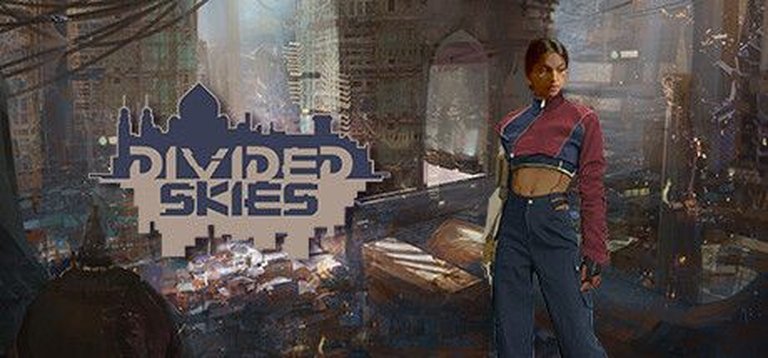
In the year 2100, ‘Divided Skies’ immerses players in the gritty, futuristic slums of New Mumbai. As Kyra, a member of the Nandaka gang, you navigate through dangerous missions, transporting illegal tech and mechanical enhancements while battling rival gangs. Fly through the metropolis, uncover hidden secrets, and experience the thrill of vehicular combat in this action-packed flight adventure game.
Where to Buy Divided Skies
PC
Divided Skies Guides & Walkthroughs
Divided Skies: A Turbulent Flight Through Ambition and Reality
Introduction
In the crowded skies of indie game development, Divided Skies emerges as a cautionary tale of ambition clashing with execution. Developed by students at Breda University of Applied Sciences and released in 2023, this free-to-play vehicular combat game invites players into the neon-drenched slums of futuristic Mumbai, where protagonist Kyra battles rival gangs on a hoverbike. While its vision of a cyberpunk open-world action-adventure is compelling, the game’s technical shortcomings and fragmented development narrative reveal a project that never quite soared to its potential. This review examines how Divided Skies—a student endeavor with flashes of brilliance—struggled to balance scale, creativity, and polish.
Development History & Context
A Student Project with Grand Ambitions
Divided Skies was crafted by Our Sun, a 29-person student team at Breda University, over 10 months using Unreal Engine 5. The project aimed to blend Grand Theft Auto’s open-world chaos with Star Wars: Squadrons’ vehicular combat, set against a politically charged cyberpunk backdrop. However, internal tensions and a lack of cohesive leadership plagued development. As level designer Michael Kostov noted in his post-mortem, the team was “a recipe for disaster”—overburdened by conflicting creative visions and inexperienced management.
Technological Constraints and Innovations
Despite Unreal Engine 5’s capabilities, the team struggled to optimize performance for PC, Steam Deck, and PlayStation 5. Technical designer Hidde Derks implemented a Jenkins-based CI/CD pipeline and a mission-creation system to streamline workflows, but the scope of an open-world game proved overwhelming. Procedural tools for generating slums (via Houdini) and dual streaming systems (traditional level streaming and World Partition) showcased technical ambition, yet uneven execution left environments feeling sparse.
Narrative & Thematic Deep Dive
Kyra and the Divided Metropolis
Set in 2100 New Mumbai, Divided Skies follows Kyra, an orphan-turned-gang member smuggling illegal tech for the Nandaka faction. The narrative hints at systemic inequality—contrasting the slums’ favela-like sprawl with the unreachable skyscrapers of the elite—but lacks depth. Missions revolve around fetch quests and combat, with little emotional investment in Kyra’s journey. While the premise borrows from cyberpunk staples (Blade Runner, Cyberpunk 2077), its storytelling feels underbaked, relying on environmental cues rather than meaningful dialogue or character arcs.
Themes of Resistance and Futility
The game’s title reflects its core theme: a city fractured by wealth disparity. Kyra’s struggle mirrors the developers’ own challenges—fighting against time, resources, and institutional constraints. Yet, this meta-commentary remains unintentional, as the narrative fails to interrogate its socio-political setting with nuance.
Gameplay Mechanics & Systems
VTOL Flight: A Double-Edged Propulsion
The hoverbike’s VTOL movement promised “fast and easy-to-control” traversal, but players criticized its clunky physics and imprecise handling. While weaving through dynamic traffic offered moments of exhilaration, collisions and erratic AI behavior (e.g., civilian pathfinding) disrupted immersion.
Mission Design and Combat
The mission system, designed to simplify objective creation, resulted in repetitive tasks: escort convoys, destroy rivals, and scavenge tech. Combat suffered from limp weapon feedback and uninspired enemy AI, with encounters feeling more like checklist items than dynamic challenges.
Open-World Growing Pains
New Mumbai’s open-world design, split into districts, allowed for exploration but lacked meaningful interactivity. Side activities were scarce, and the promise of “hidden areas” often led to empty corridors or placeholder assets.
World-Building, Art & Sound
Aesthetic Promise vs. Execution
The art team’s research into Mumbai’s architecture yielded a striking juxtaposition of ramshackle slums and sleek cyberpunk towers. KitBash3D assets and procedural slums added density, but inconsistent texture work and pop-in marred the visuals. The upper district, intended as an untouchable symbol of wealth, remained a distant backdrop rather than a narrative device.
Sound Design: Functional but Forgettable
The soundtrack leaned heavily on generic synthwave beats, failing to establish a distinct audio identity. Engine noises and combat SFX were serviceable but lacked punch, further diluting the game’s atmosphere.
Reception & Legacy
A Rocky Launch
Divided Skies debuted to “Mostly Negative” Steam reviews (38% positive), with players citing bugs, tedious missions, and poorly optimized controls. Its free-to-play model spared it financial scrutiny, but the lack of post-launch updates (development ceased post-graduation) left its potential unrealized.
Educational Value Over Industry Impact
While the game itself may fade into obscurity, its development process serves as a case study for student teams. Lessons in scope management, team coordination, and UE5 optimization will likely inform future projects at Breda University.
Conclusion
Divided Skies is a testament to both the promise and perils of student game development. Its ambitious vision—a cyberpunk odyssey through class struggle and neon-soaked chaos—clashed with the realities of inexperience and technical limitations. While the game falters in execution, it stands as a valuable learning experience for its creators. For players, it remains a curiosity: a brief, turbulent flight through a world that never fully coalesced. In the annals of gaming history, Divided Skies will be remembered not for what it achieved, but for the potential it hinted at—and the hard truths it taught its developers.