
- Release Year: 2022
- Platforms: Android, iPad, iPhone, Nintendo Switch, PlayStation 4, PlayStation 5, Windows, Xbox One, Xbox Series
- Publisher: Kiloo ApS, QUByte Interactive Ltda.
- Developer: Kiloo ApS
- Genre: Action, Arcade, Auto-run platformer, Platform
- Perspective: Behind view
- Game Mode: Single-player
- Gameplay: Challenges, Endless runner, Progression, Upgrades
- Setting: Contemporary
- Average Score: 61/100
Description
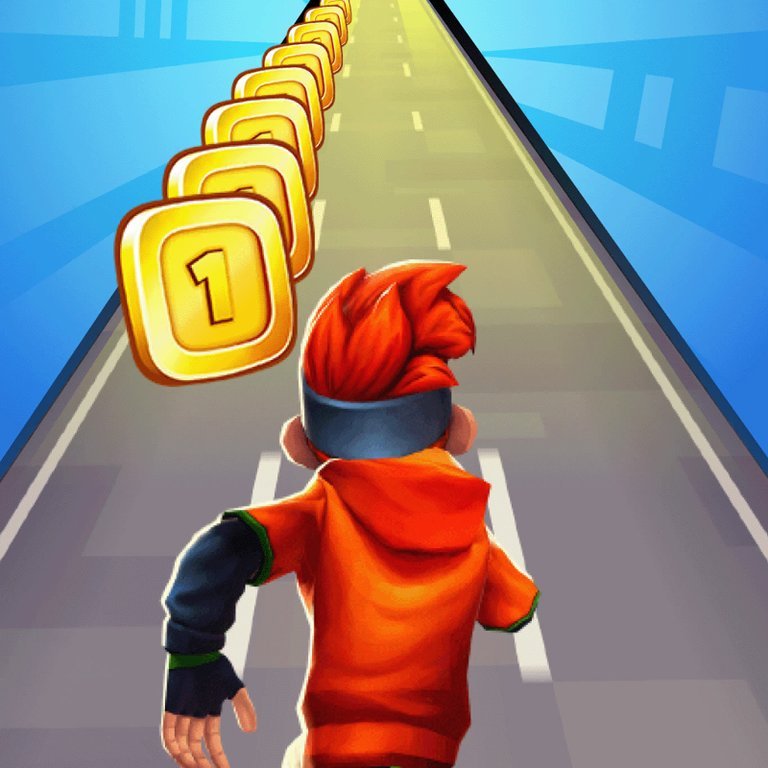
MetroLand is a vibrant endless runner set in a contemporary urban landscape, where players navigate through dynamically generated levels while dodging obstacles, collecting rewards, and unlocking power-ups. Utilizing a behind-view perspective, the game combines arcade-style action with direct controls, offering a fast-paced experience across multiple platforms. Originally released on mobile devices, MetroLand has expanded to consoles and PC, featuring colorful visuals, character customization, and an addictive progression system that appeals to fans of auto-run platformers.
Gameplay Videos
MetroLand Guides & Walkthroughs
MetroLand Reviews & Reception
vg-reloaded.com (65/100): MetroLand is your typical endless runner minus the microtransactions. It does this admirably, even if it becomes very repetitive and predictable after a few runs.
metacritic.com (70/100): MetroLand is a surprisingly accomplished endless runner. Try and push the non-action side of the game to one side, refusing to let the addiction really take hold, and you’ll enjoy the mindless score chasing that has been provided here.
churapereviews.com : I enjoyed MetroLand more than I thought I would. The game does feel like it was ported from a mobile game, and it can feel kind of clunky navigating through the UI, but the game works great.
gamezebo.com (50/100): MetroLand isn’t a bad game, it’s just a game that plays it as safe as it possibly can. There’s no rebellious thrill here, no rush of adrenaline or sudden desire to throw off the shackles of oppression and do something different.
MetroLand: Endless Runner, Endless Contradictions
Introduction
In an industry dominated by live-service juggernauts and open-world epics, MetroLand dares to ask: What if Temple Run had a base-building minigame? Released first on mobile in 2022 before migrating to consoles and PC in 2024, Kiloo ApS’s endless runner is a defiantly old-school artifact—a genre purist’s snack in a world craving five-course meals. Critics praised its simplicity and affordability (often retailing at $4.99) but lamented its lack of innovation, branding it “gaming junk food” (Nindie Spotlight). This review unpacks MetroLand’s identity crisis: a mobile-born rebel straining against the shackles of its own formula, desperate to say something meaningful about oppression while asking you to swipe right on microtransactions. Is it a hidden gem or a relic of the 2010s’ mobile boom? Strap in—we’re sprinting headlong into the contradictions.
Development History & Context
The Studio & Vision
Danish developer Kiloo ApS, best known for the Subway Surfers phenomenon (2012–2020), positioned MetroLand as a spiritual successor to their flagship runner. The studio’s 2022 press release framed it as “the next generation of casual endless runners,” boasting offline play, cross-platform accessibility, and a narrative veneer of youthful rebellion. Yet the project’s aspirations clashed with its roots: designed for quick mobile sessions, MetroLand later struggled to justify its console ports, where gamers expected deeper engagement. Kiloo’s vision—a mashup of Subway Surfers’ vibrancy and idle base-building—felt torn between mobile’s bite-sized demands and consoles’ hunger for complexity.
Technological Constraints & Landscape
Built in Unity, MetroLand leveraged lightweight mechanics perfect for smartphones but risked feeling “clunky” on consoles (Churape Reviews). Its 2022 mobile launch arrived amidst an endless-runner market saturation (Temple Run, Alto’s Odyssey), forcing Kiloo to innovate superficially: drones, shield power-ups, and cosmetic unlocks recycled genre staples. By 2024, when QUByte Interactive ported it to PS5/Xbox Series X|S, the game faced an industry transformed by premium indie runners like Aerial_Knight’s Never Yield (2021), which married parkour to narrative depth. MetroLand’s console debut felt like a latecomer to a party it helped start—a paradox acknowledged by critics who noted its “mobile feel” (VG-Reloaded).
Narrative & Thematic Deep Dive
Plot & Characters
“Rebels fleeing oppressive forces” sounds revolutionary—until you realize the “forces” are faceless drones and the rebels are ciphers. The game’s premise—players evade “MegaCorp” goons while spray-painting a dystopian city—borrows from YA dystopias like The Hunger Games but reduces its conflict to set dressing. There’s no character development, dialogue, or stakes beyond high scores. The “story mode” is a misnomer, serving only to gatekeep menus (VG-Reloaded). MegaCorp’s oppression manifests as… generic cops chasing you. The rebels’ cause? Collect coins. It’s activism as wallpaper.
Themes & Subtext
Beneath the neon spray-paint, MetroLand unintentionally mirrors its own meta-narrative: a corporate product (MegaCorp) masquerading as anti-corporate art. The base-building mechanic—where players deploy robots to “disrupt” MegaCorp—feels ironic when paired with Kiloo’s history of microtransaction-heavy mobile titles. The game’s plea for “independent thought” rings hollow when its gameplay loop hinges on Skinner-box progression (completing quests for trinkets). MetroLand wants to be a rebel anthem but settles for background noise.
Gameplay Mechanics & Systems
Core Loop
The endless runner foundation is polished but familiar: swipe to jump, slide, or dodge obstacles across three lanes. Collect coins, activate power-ups (magnets, shields), and evade pursuing drones. Each run culminates in a crash—intentional or otherwise—feeding into progression systems. It’s competent, responsive (7.5/10, PS4Blog.net), but devoid of surprises. The addition of parkour—gliding rooftops, diving tunnels—adds visual variety but no mechanical depth.
Progression & Base-Building
MetroLand’s boldest swing is its hideout management: players construct rooms, deploy robots on idle missions, and unlock cosmetics (hats, outfits). These layers aim to offset repetition but falter under shallow execution. Upgrades passively boost coin multipliers or unlock cosmetic fluff—no meaningful strategy emerges. Sending robots on “missions” is a menu chore, not a gameplay pillar. Compare to Fallout Shelter’s depth; here, base-building feels like a vestigial limb.
UI & Innovation
The interface suffers from “mobile port syndrome”: oversized buttons, nested menus (Churape Reviews), and a cluttered HUD detract from immersion. One genuine innovation—persistent progression across runs—earns praise (Review Graveyard), rewarding players even after failures. Nightly scavenger hunts and global leaderboards add replayability, though neither transcends genre conventions.
World-Building, Art & Sound
Visual Design
Kiloo’s art team crafts a vibrant, candy-coated dystopia: Tokyo-inspired skylines, graffiti-tagged alleys, and drone-filled skies pop with hyper-saturated hues. Character designs channel Jet Set Radio’s punk-lite aesthetic—all oversized sneakers and squid-ink hair—but lack personality beyond poses. The Unity engine runs smoothly (60 FPS on PS5), though environments cycle predictably, dulling the spectacle after hour one. It’s “cute” (Churape Reviews), not captivating.
Sound & Atmosphere
Synthwave beats and adrenaline-pumping basslines dominate the soundtrack, elevating the sense of momentum. Sound effects—coin chimes, drone whirs, crash thuds—are crisp but forgettable. Notably absent: voice acting or ambient storytelling. The world feels static, a playground for sprinting, not inhabiting. Contrast this with Sayonara Wild Hearts’ audiovisual synergy; MetroLand’s soundscape is energetic but anonymous.
Reception & Legacy
Launch & Critical Response
The mobile version (2022) floated under critics’ radars, but the 2024 console ports garnered mixed-to-positive reviews (74% average, MobyGames). Praise centered on accessibility and value: “perfect for a quick session” (TheXboxHub). Critiques homed in on repetition and underdeveloped systems: “blends together after a few runs” (VG-Reloaded). Notably, Nintendo Switch reviews highlighted its awkward fit for a non-mobile platform (Nindie Spotlight), while Xbox critics lauded its “addictive score-chasing.”
Cultural Impact
MetroLand’s legacy is one of missed potential. It proved endless runners could thrive on consoles without microtransactions—a rarity—but failed to evolve the genre. Its base-building hinted at hybrid gameplay later refined by indies like Moonlighter. Today, it’s a footnote, outshone by narrative-driven contemporaries (Aerial_Knight’s Never Yield) and Kiloo’s own Subway Surfers behemoth.
Conclusion
MetroLand is a paradox: a rebel without a cause, a console game trapped in mobile skin. Its strengths—pick-up-and-play immediacy, cheerful art, fair monetization—make it a guilt-free diversion for genre fans. Yet its narrative ambition crumbles under shallow execution, and its innovations (base-building, progression) never coalesce into a cohesive vision. For $4.99, it’s a solid carnival ride—6.5/10, fun but forgettable. As Gert Lush Gaming summarized: “A fun and addictive game… but repetitive.” In the endless marathon of gaming history, MetroLand isn’t a pacesetter. It’s a decent jog around the block.