
- Release Year: 2016
- Platforms: PlayStation 4, Windows, Xbox One
- Publisher: Koei Tecmo Games Co., Ltd.
- Genre: Compilation
- Game Mode: Online PVP, Single-player
Description
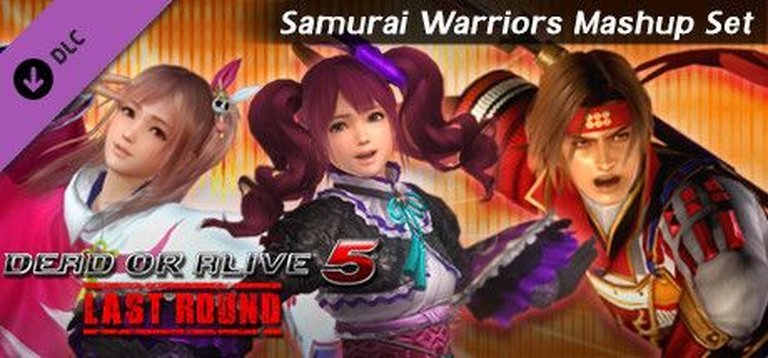
Dead or Alive 5: Last Round – Samurai Warriors Mashup Set is a compilation that merges the worlds of Dead or Alive and Samurai Warriors. This game features a unique crossover where characters from both series engage in dynamic and visually stunning battles. Players can enjoy a variety of fighting styles and strategies as they control their favorite characters from these iconic franchises, all set against the backdrop of feudal Japan.
Gameplay Videos
Dead or Alive 5: Last Round – Samurai Warriors Mashup Set Cracks & Fixes
Dead or Alive 5: Last Round – Samurai Warriors Mashup Set: Review
Introduction
In the pantheon of fighting game crossovers, Dead or Alive 5: Last Round – Samurai Warriors Mashup Set stands as a curious oddity: a lavish costume pack that marries Team NINJA’s signature fighter with Koei Tecmo’s hack-and-slash dynasty. Released in 2016 as part of DOA5LR’s third season pass, this DLC offers no new stages or mechanics—only 30 meticulously crafted costumes that reimagine DOA’s eclectic cast as feudal-era warriors. Does this mashup elevate the game’s spectacle, or is it a mere cash grab trading on nostalgia? This review unpacks the ambition, execution, and legacy of a collaboration that prioritizes style over substance—but does so with undeniable flair.
Development History & Context
A Studio Synergy
Developed by Team NINJA and published by Koei Tecmo, the Samurai Warriors Mashup Set emerged during a golden age of crossover content. By 2016, DOA5LR had already cemented itself as a live-service fighting game, buoyed by frequent DLC drops ranging from swimsuits to Attack on Titan tie-ins. This set, however, was a particularly meta move: Koei Tecmo leveraged its own Samurai Warriors IP to dress DOA’s fighters in historically inspired garb, capitalizing on shared fandom between the two franchises.
Technological and Market Constraints
The DLC’s scope was limited by the base game’s aging framework. Built for PlayStation 4, Xbox One, and PC, DOA5LR’s engine allowed for high-fidelity costume modeling but restricted transformative gameplay changes. The Mashup Set’s release window also coincided with the rise of “games as a service” models, where cosmetic microtransactions became a lucrative norm. At $36.99 for the full bundle (or $1.99 per costume), the DLC followed industry trends but drew ire for its premium pricing—a point that would later color its reception.
Narrative & Thematic Deep Dive
Clash of Iconographies
The Mashup Set’s premise is simple: recontextualize DOA’s modern brawlers as Sengoku-period generals and heroines. Kasumi becomes Oichi, the tragic warlord’s wife; Ryu Hayabusa dons the mantle of ninja legend Hanzo Hattori. While no narrative justification is provided, the thematic resonance is clear. Both franchises celebrate larger-than-life characters defined by loyalty, honor, and dramatic flair—traits that seamlessly bind DOA’s martial artists to Samurai Warriors’ battlefield legends.
Character Pairings as Commentary
Some pairings feel inspired: Marie Rose’s mischievous energy aligns with Gracia’s youthful idealism, while Bayman’s brutality mirrors Tadakatsu Honda’s stoic ferocity. Others, like Alpha-152’s merger with the “Mystery Officer” Oichi, feel arbitrary, highlighting the DLC’s hit-or-miss creative logic. Still, the mashup succeeds as a playful what-if scenario, inviting players to reimagine their favorite fighters through a historical lens.
Gameplay Mechanics & Systems
Cosmetics as Gameplay
As a purely cosmetic expansion, the Mashup Set leaves DOA5LR’s core systems untouched. The costumes integrate smoothly into the existing wardrobe, requiring no additional unlocks beyond purchase. However, the DLC’s lack of accompanying stages—notably absent is the teased Azuchi Castle arena—feels like a missed opportunity to deepen the crossover’s immersion.
UI and Accessibility
Navigating the costume selection remains intuitive, with each Samurai Warriors design slotting into the character-specific customization menus. Steam users, however, faced a unique constraint: unlike console players, they could not purchase individual costumes, forcing PC players to buy the full $36.99 bundle—a decision that sparked frustration among budget-conscious fans.
World-Building, Art & Sound
Visual Splendor
The DLC’s strongest asset is its artistry. Each costume is a masterclass in texture work, blending Samurai Warriors’ ornate armor and flowing fabrics with DOA’s hyper-detailed character models. Standouts include Helena’s regal Aya garb, dripping with gold embroidery, and Leon’s Kenshin Uesugi armor, which trades his usual brutishness for samurai elegance. Even smaller details—like the way Honoka’s Kunoichi outfit incorporates stealthy tabi boots—showcase Team NINJA’s reverence for the source material.
A Silent Crossover
Surprisingly, the DLC includes no Samurai Warriors-themed music or voice lines. The absence of Nobunaga’s roaring leitmotifs or period-specific sound effects leaves the crossover feeling visually vibrant but acoustically hollow.
Reception & Legacy
Commercial Performance and Critic Silence
At launch, the Mashup Set faced muted enthusiasm. With no critic reviews on aggregators like MobyGames and mixed player sentiment on Steam (where it holds a “Very Positive” rating skewed by its niche audience), the DLC’s legacy is defined by its commercial strategy. Its frequent discounts—now as low as $18.49—reflect Koei Tecmo’s acknowledgment of its precarious value proposition.
Influence on Cross-Promotion
While the Mashup Set didn’t revolutionize crossover DLC, it exemplified Team NINJA’s willingness to experiment. It paved the way for later collaborations like DOA6’s KOF costumes and reinforced the appeal of cosmetic crossovers in fighting games—a trend embraced by titles like Tekken 7 and Street Fighter V.
Conclusion
Dead or Alive 5: Last Round – Samurai Warriors Mashup Set is a beautifully crafted but inherently superficial addition to the game. Its costumes are a treat for fans of both franchises, offering a fresh aesthetic lens through which to experience DOA’s combat. Yet, the lack of gameplay integration or auditory flair renders it a curious footnote in crossover history—one that prioritizes visual fan service over meaningful innovation. For completionists and Sengoku-era enthusiasts, it’s a worthy indulgence at a discount; for others, it’s a reminder that even the prettiest armor can’t always hide hollow core.
Final Verdict: A visually stunning but conceptually narrow DLC that thrives as a celebration of style—yet fails to transcend its role as a cosmetic cash-in.