
- Release Year: 2015
- Platforms: Macintosh, Windows
- Publisher: Heiress Software
- Developer: Heiress Software
- Genre: Role-playing, RPG
- Perspective: Text-based / Spreadsheet
- Game Mode: Single-player
- Gameplay: Interactive fiction, Survival horror, Text adventure
- Setting: Oceania
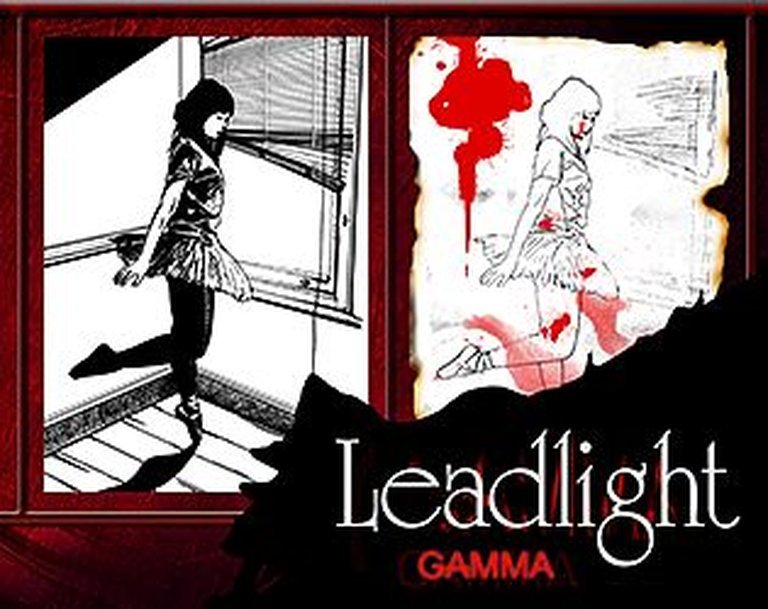
Description
Leadlight: Gamma is a text-based adventure and RPG hybrid with survival horror elements, set in a dark parallel version of a high school. Players control Belinda, a teenage girl who must navigate through puzzles and combat against spiders, zombies, and hostile classmates. The game features an updated interface, accessibility modes, and additional content compared to its 2010 predecessor, Leadlight.
Leadlight: Gamma Reviews & Reception
adventuregamers.com : if the idea of a fun horror romp with a heavily retro style appeals to you, then the game may well be worth your time.
ifdb.org : The old-school text adventure vibe helps make the horrific content more palatable.
Leadlight: Gamma: A Textual Descent into Survival Horror’s Heart of Darkness
Introduction
In an era dominated by photorealism and open-world excess, Leadlight: Gamma (2015) dares to confront players with the primal terror of the unseen. This remastered version of Wade Clarke’s 2010 cult classic Leadlight resurrects a hybrid of interactive fiction, survival horror, and RPG mechanics, delivering an experience that is as punishing as it is poetic. Set in a nightmarish Australian boarding school, the game leverages the unique power of text to paint visceral horrors in the player’s mind, channeling the oppressive dread of Silent Hill and the psychological unraveling of Black Swan. This review argues that Leadlight: Gamma is not merely a retro curiosity but a vital artifact of horror storytelling—one that confronts the limitations of its medium to transcend them.
Development History & Context
A Labor of Love (and Obsession):
Developed by solo creator Wade Clarke under his fledgling studio Heiress Software, Leadlight began as a passion project for the Apple II in 2010—a platform that had been obsolete for decades. Clarke, a veteran of interactive fiction (IF) and a retrocomputing enthusiast, coded the original in Eamon, a niche RPG framework, before painstakingly porting it to Inform 7 for Gamma’s 2015 release. This shift to modern IF engines like Glulx allowed cross-platform accessibility (Windows, Mac, Linux, iOS) and the addition of quality-of-life features like screen-reader support, dynamic mapping, and an in-game tutorial.
Against the Tide:
At a time when commercial IF was nearly extinct, Clarke’s decision to monetize Gamma—originally a freeware title—was a defiant act. The game’s $7.77 price tag on itch.io symbolized both irony and reverence for the medium’s history. Clarke’s design ethos reflects a dual commitment: preserving the austere creativity of 1980s text adventures while embracing modern accessibility. As he noted in a 2015 blog post, porting Leadlight was like “building a scale model of a ship in a bottle” while “studying the original’s microscaled plans.”
The Landscape of 2015:
The mid-2010s indie boom prioritized pixel art and roguelikes, leaving parser-driven IF in the shadows. Yet Gamma arrived alongside a quiet resurgence of narrative-focused titles like Hadean Lands and 80 Days, proving that text could still mesmerize—if wielded with precision.
Narrative & Thematic Deep Dive
Plot & Setting: A School of Nightmares
Players assume the role of 15-year-old Belinda Nettle, a student at Linville Girls High School in Australia’s Blue Mountains. After falling asleep in the library, Belinda awakens to a hellscape: her classmates transformed into zombified predators, the halls crawling with spiders, and surreal traps lurking in every shadow. The game’s stripped-down prose (“Charlotte is dead. Her glassy eyes stare at you”) evokes a claustrophobic tension, while its nonlinear exploration channels the desperate improvisation of classic survival horror.
Themes: Adolescence as Horror
Leadlight: Gamma weaponizes the vulnerabilities of teenage life—social ostracization, bodily transformation, institutional neglect—into existential terror. Belinda’s journey mirrors a Coming of Age tale corrupted by body horror and cosmic indifference. The school’s transformation into a labyrinth of flesh and decay symbolizes the protagonist’s inner turmoil, recalling Silent Hill 2’s psychological scaffolding.
Writing & Characters
Clarke’s prose is terse but evocative, balancing clinical descriptions of gore (“a wet crunch as the pipe connects”) with fleeting moments of melancholic beauty (“the moonlight through shattered windows looks like fractured bone”). Belinda’s internal monologue oscillates between vulnerability and grim resolve, while dialogue with NPCs—like the enigmatic Freya, whose paintings hint at deeper lore—adds layers of paranoia.
Gameplay Mechanics & Systems
Parser as Prison (and Tool):
The text parser—a relic of IF’s golden age—becomes both obstacle and asset. Commands like HIDE UNDER DESK or SMASH SKULL WITH BRICK demand tactile engagement, while the game’s cruelty (instant deaths, opaque puzzles) recalls Zork’s merciless design. Yet this friction enhances the horror: every mistyped verb or overlooked detail could mean death.
RPG & Survival Systems:
– Combat: A dice-roll-based system where weapons degrade, and every encounter feels fraught. The “Slain” score tracks kills, incentivizing aggression, but resources are scarce.
– Stealth: The HIDE mechanic drains stamina, forcing tense risk-reward calculations.
– Death & Consequences: Frequent autosaves mitigate frustration, but “Deathtraps Hit” taunts players with their failures.
Puzzles & Secrets
Solutions range from logical (decoding a locker combination from scattered notes) to sadistically abstract (using a severed hand to bypass a retinal scanner). The optional “Secrets Found” metric rewards thorough exploration, with meta-puzzles unlocking developer commentary and concept art.
World-Building, Art & Sound
Text as Atmosphere:
Without visuals, Gamma relies on language to build dread. Descriptions like “the walls pulse like a living heart” or “the air reeks of copper and burnt hair” evoke a grimy, biological horror. The status window’s shifting colors—green for safety, red for danger—subtly manipulate player anxiety.
Art & Sound Design:
Steve Amm’s monochrome illustrations, accessible via an in-game gallery, blend surrealism and grotesquery (e.g., Freya’s paintings of distorted figures). The new soundtrack by Clarke and Thallium & Milo layers ambient drones with discordant piano motifs, recalling Silent Hill’s Akira Yamaoka.
Reception & Legacy
Critical Divide
Adventure Gamers’ 70% review praised Gamma’s “ridiculous deaths and well-designed puzzles” but lamented its niche appeal. Fans lauded its ability to “craft pictures in your head far more evocative than modern graphics” (TK-Nation), while detractors dismissed it as “archaic.”
Influence & Preservation
Though commercially modest, Gamma became a touchstone for IF preservationists and horror experimentalists. Its accessibility features—a rarity in 2015—set a precedent for inclusive design. The 2023 removal of platform-specific installers in favor of cross-interpreter compatibility underscores Clarke’s commitment to longevity.
Conclusion
Leadlight: Gamma is a paradox: a game that feels simultaneously ancient and avant-garde. Its unflinching difficulty and reliance on text will alienate many, but for those willing to surrender to its horrors, it offers a masterclass in minimalistic storytelling and atmospheric dread. Like peeling back the layers of a decaying school wall, playing Gamma reveals rot and resonance in equal measure—a testament to the enduring power of words to terrify. In the pantheon of horror games, it occupies a singular niche: a love letter to the past, written in blood and syntax.
Verdict: ★★★★☆ (4/5) — A flawed but essential experiment in horror’s textual unconscious.