
- Release Year: 2008
- Platforms: Windows
- Publisher: Eidos Interactive Limited
- Genre: Special edition
- Game Mode: MMO
- Adult Content: Yes
Description
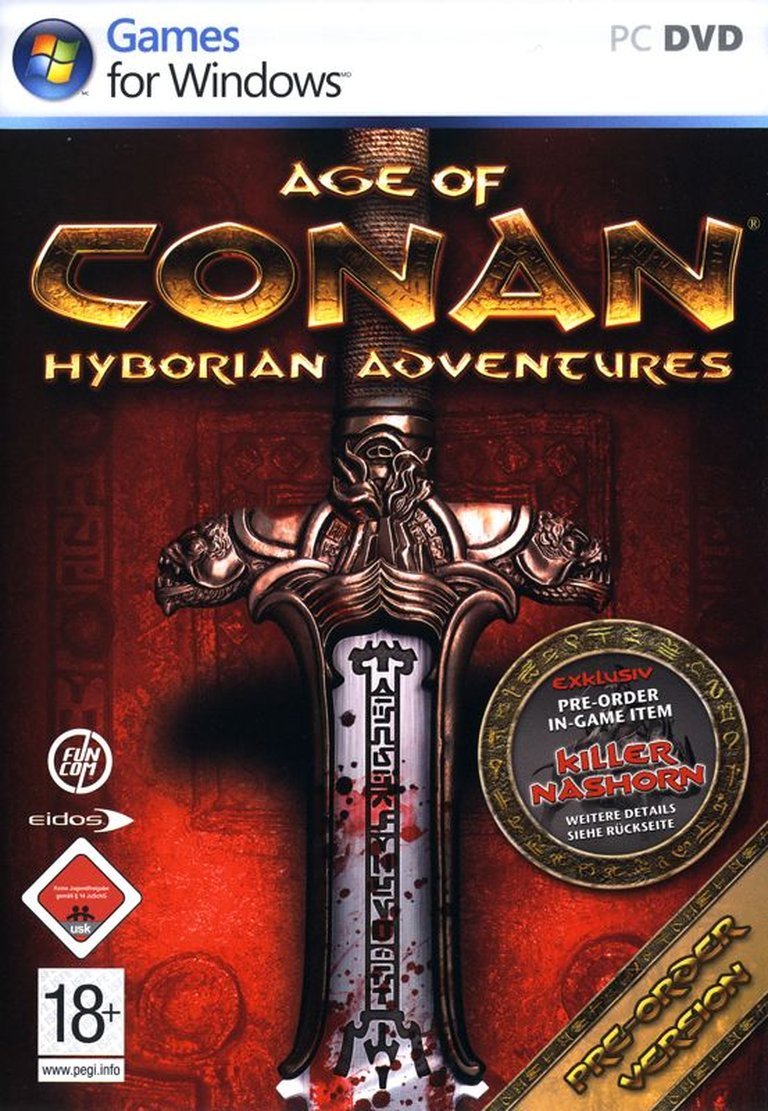
Age of Conan: Hyborian Adventures is a fantasy MMORPG set in the Hyborian kingdoms, a year after the events of Robert E. Howard’s ‘The Hour of the Dragon’. Developed by Funcom and published by Eidos Interactive, the game features a unique ‘Real Combat’ system that emphasizes real-time, skill-based combat. Players can engage in various combat styles, including melee, spell-casting, and mounted combat, and can team up to face other players or non-player armies.
Where to Buy Age of Conan: Hyborian Adventures (Pre-Order Version)
PC
Age of Conan: Hyborian Adventures (Pre-Order Version) Cracks & Fixes
Age of Conan: Hyborian Adventures (Pre-Order Version) Reviews & Reception
gamespot.com : Technical issues notwithstanding, the violently rewarding Age of Conan is one of the finest online RPGs available.
Age of Conan: Hyborian Adventures (Pre-Order Version): Review
Introduction
In the shadowed annals of MMORPG history, Age of Conan: Hyborian Adventures (2008) stands as a brutal, ambitious experiment—a game that dared to transplant Robert E. Howard’s savage Hyborian Age into a subscription-driven online world. Designed to be a mature counterpoint to World of Warcraft’s family-friendly fantasy, Funcom’s dark odyssey promised visceral combat, political intrigue, and a world steeped in blood, sorcery, and decadence. Yet its journey from pre-order hype to cult classic is riddled with technical missteps, unrealized potential, and eventual redemption. This review dissects the Pre-Order Version—a package offering beta access, exclusive mounts, and a tantalizing glimpse into a game that straddled genius and chaos.
Development History & Context
Studio & Vision
Norwegian developer Funcom, fresh from the sci-fi MMO Anarchy Online (2001), sought to redefine the genre with Age of Conan. Led by producer Gaute Godager, the team aimed to craft a “low fantasy” experience rooted in Howard’s original stories—eschewing elves and orcs for a pseudo-historical tapestry of Roman decadence, Mongolian hordes, and Babylonian mysticism. The goal? A “Real Combat” system that discarded auto-attacks for directional melee strikes, coupled with a narrative bold enough to include Conan himself as a central figure.
Technological Ambitions & Constraints
Built on the DreamWorld Engine, Age of Conan targeted DirectX 10 for cutting-edge visuals—a decision that strained mid-2000s hardware. Delays plagued development: initial launch dates in 2007 were pushed to May 2008 after beta feedback revealed unstable servers and incomplete endgame content. The Xbox 360 port, once touted as groundbreaking, was quietly shelved due to technical limitations.
The Gaming Landscape
Launched amid WoW’s dominance (10 million subscribers) and EA’s Warhammer Online, Age of Conan carved a niche with its Mature rating. Hyboria’s gore, sensuality, and political betrayals catered to adults weary of cartoonish orcs—but Funcom’s ambition outpaced execution. Over 500,000 beta sign-ups hinted at hype, yet post-launch player retention plummeted due to bugs and repetitive late-game content.
Narrative & Thematic Deep Dive
Plot & Characters
Set a year after Howard’s The Hour of the Dragon, the game casts players as enslaved amnesiacs on Tortage, an island serving as a solo-friendly tutorial zone (levels 1–20). Here, the Destiny Quest unfolds: a branching storyline involving pirate queens, serpent cults, and Conan’s struggle to hold Aquilonia’s throne. Voice acting elevates iconic figures like Valeria (Sandra De Sousa) and Thoth-Amon, though post-Tortage storytelling devolves into generic MMO fetch quests.
Themes & Tone
Howard’s signature themes—civilization’s fragility vs. barbarism’s primal vigor—permeate the world. Aquilonia’s gilded halls rot with intrigue, Cimmeria’s snow-swept peaks demand resilience, and Stygia’s deserts whisper forbidden magic. The Pre-Order Version’s First Steps in Hyboria booklet immerses players in lore, though the game’s tonal consistency wavers outside its polished intro.
Gameplay Mechanics & Systems
Core Combat Loop
The “Real Combat” system remains Age of Conan’s crown jewel. Melee classes manually strike upwards, sideways, or downwards, exploiting enemy shield gaps—a system demanding skill over stat checks. Spellcasters risk spell-weaving disasters, while mounted combat (unlocked at level 40) lets players trample foes with mammoths or siege guild-built cities.
Progression & Flaws
– Character Creation: Three races (Aquilonian, Cimmerian, Stygian) and 12 classes (e.g., Dark Templar, Herald of Xotli) offer depth, but race-locked archetypes limit flexibility.
– PvP & Sieges: Border Kingdom’s open-world PvP and guild-city sieges shine, yet balance issues plagued early builds (e.g., Soldiers overpowering Mages).
– Beta Perks: Pre-order bonuses—beta access, rhino/mammoth mounts—granted a fleeting advantage but couldn’t mask launch-era bugs like memory leaks.
UI & Accessibility
Clunky inventory management and sparse quest tracking frustrated newcomers, though patches later smoothed edges.
World-Building, Art & Sound
Visual Design
Art director Didrik Tollefsen translated Howard’s “crumbling mortar” aesthetic into Tarantia’s opulent spires, Cimmeria’s fog-draped forests, and Stygia’s sun-scorched ruins. Dynamic lighting and weather (sandstorms, thunderstorms) immerse players, though texture pop-in marred immersion on launch rigs.
Sound Design
Knut Avenstroup Haugen’s IFMCA-winning score blends Mongolian throat singing, Norwegian Völuspá chants (courtesy of Helene Bøksle), and Turbonegro’s punk-rock riffs. The result? A sonic landscape as epic and dissonant as Hyboria itself.
Reception & Legacy
Launch & Criticism
Metacritic: 80/100. Critics praised combat and visuals but panned bugs and shallow endgame (GameSpot: 8.5/10; IGN: 7.8/10). Subscribers plummeted from 700,000 (2008) to 100,000 (2010), prompting Godager’s resignation.
Post-Launch Evolution
– Rise of the Godslayer (2010): The Khitan-themed expansion added factions and raid tiers.
– Unchained (2011): The free-to-play reboot salvaged the game, hitting 1.4 million sales by 2018.
– Steam Release (2013): Improved accessibility but couldn’t revive peak popularity.
Industry Influence
Age of Conan’s DNA echoes in Conan Exiles (2018) and New World (2021)—proof that its brutal, directional combat and mature storytelling left an indelible mark.
Conclusion
Age of Conan: Hyborian Adventures is a tale of two games: one a groundbreaking, adult-oriented MMORPG that redefined combat and setting; the other a cautionary saga of technical overreach. The Pre-Order Version encapsulates this duality—beta excitement curdled by instability, mammoth mounts galloping into unfinished battlefields. Yet, like Conan himself, Funcom’s creation endured, its legacy living on in the Unchained era and beyond. For historians, it’s a pivotal artifact of MMO ambition. For players? A flawed gem still worth wielding—7.5/10.