
- Release Year: 2017
- Platforms: Windows
- Genre: Simulation
- Perspective: 1st-person
- Game Mode: Single-player
- Setting: Fantasy
- Average Score: 96/100
Description
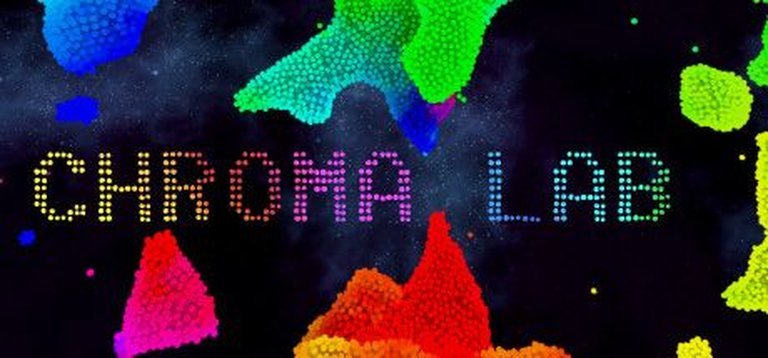
Chroma Lab is a mesmerizing VR experience that immerses players in a dynamic, colorful fluid simulation. Built with a custom particle physics engine, the game allows users to interact with psychedelic particle systems using tools to pull, explode, paint, and manipulate vibrant blobs. Particles react to music, change colors, and can be shaped into orbital patterns or black holes, offering a blend of creative expression and sensory relaxation. With customizable physics, visual settings, and support for mixed reality, it delivers a visually stunning sandbox for both VR newcomers and enthusiasts.
Where to Buy Chroma Lab
PC
Chroma Lab Patches & Updates
Chroma Lab Reviews & Reception
steambase.io (96/100): Chroma Lab has earned a Player Score of 96 / 100
Chroma Lab: Review
Introduction
In the burgeoning landscape of virtual reality, where developers grappled with translating traditional gameplay into immersive 3D spaces, Chroma Lab (2017) emerged as a mesmerizing outlier—a tech-driven sandbox that celebrated pure, unadulterated sensory exploration over structured objectives. Developed solo by Sean Tann, this VR-native experiment transformed fluid dynamics into an interactive psychedelic ballet, earning cult status as a “VR toy” rather than a conventional game. This review argues that Chroma Lab’s legacy lies in its ability to distill VR’s untapped potential into a minimalist yet profound experience—one that prioritizes player creativity, technological audacity, and meditative immersion above all else.
Development History & Context
Studio & Vision
Created independently by Sean Tann, a developer with a background in physics and GPU programming, Chroma Lab was born from a fascination with particle simulations and VR’s capacity to transform abstract systems into tactile experiences. Built using Unity Engine, Tann’s goal was to leverage the computational power of modern GPUs to simulate billions of particle interactions per second, a feat previously reserved for scientific applications. Released on August 22, 2017, the project arrived during VR’s formative years—a time when headsets like the Oculus Rift and HTC Vive sought software that justified their hardware ambitions.
Technological Ambitions
Tann’s custom physics engine exploited GPU parallelism to simulate fluid-like particle behavior in real-time, a technical marvel that demanded high-end hardware (e.g., GTX 970/R9 280 minimum) but rewarded users with unprecedented visual fidelity. The game’s design deliberately avoided traditional “game” elements (e.g., scoring, progression), instead framing itself as a sandbox for emergent experimentation. This aligned with a broader indie VR trend favoring experiential over competitive design (e.g., Tilt Brush, Google Earth VR).
Industry Landscape
At launch, VR struggled with a stigma of shallow “tech demos.” Chroma Lab countered this by offering deep interactivity and customization, positioning itself as a flagship for VR’s artistic potential. Its $4.99 price point and modest 500MB footprint made it an accessible entry point for newcomers—a deliberate choice to onboard users skeptical of VR’s value proposition.
Narrative & Thematic Deep Dive
The Absence of Story
Chroma Lab rejects narrative entirely. There are no characters, dialogue, or explicit thematic arcs. Instead, the game’s “story” is authored by the player—a kinetic poem of color, sound, and motion that unfolds through interaction.
Themes as Emergent Experience
Thematically, the game evokes:
– Play as Meditation: The fluid, music-reactive particles encourage a trance-like state, echoing apps like Luminal or Tripp.
– Chaos vs. Control: Players oscillate between sculpting orderly structures and reveling in explosive entropy (e.g., black holes, orbital tosses).
– Technological Sublime: The sheer scale of particle physics (thousands of entities interacting dynamically) mirrors awe-inspiring natural phenomena like nebulas or waterfalls.
This thematic weightlessness became a strength, allowing players to project their own emotional journeys onto the canvas of swirling chroma.
Gameplay Mechanics & Systems
Core Interaction Loop
Players wield VR motion controllers to manipulate particle fields using seven tools:
1. Grab: Sculpt and mold blobs.
2. Puller: Attract particles into vortexes.
3. Exploder: Shatter formations.
4. Painter: Recolor particles mid-flight.
5. Shooter: Launch particle streams.
6. Force Spheres: Create teleportation portals between orbs.
7. Time Controls: Freeze, slow, or reverse simulation flow.
Systems & Customization
– Physics Customization: Adjust viscosity, gravity, and jiggliness to simulate lava lamps, zero-g, or honey-like flows.
– Audio Reactivity: Particles pulse, split, and shift hues in sync with external music (a rare 2017-era feature).
– Preset Libraries: Save/load configurations (e.g., “galaxy,” “nebula”).
– Mixed Reality: MixCast support enabled users to film themselves interacting with particles for content creation.
UI/UX Innovations
The interface is minimalist—a radial menu for tool selection and sliders for physics tweaks—ensuring immersion isn’t broken by menus. However, early players noted a learning curve with tool gestures, and Quest 2 users later encountered controller detection issues (per Steam forums).
Critical Flaw
As a sandbox, Chroma Lab’s longevity hinges on self-motivated experimentation. Players seeking goals or structure found it lacking—a testament to its niche appeal.
World-Building, Art & Sound
Visual Design
The game’s aesthetic is psychedelic futurism: particles glow with emissive shaders, trails blur like neon comet tails, and color palettes range from earthy gradients to rave-ready RGB explosions. The absence of a traditional “world” is deliberate—the void-like arena focuses attention on the particles’ hypnotic dance.
Technical Artistry
Tann’s rendering tricks—real-time refraction, dynamic lighting on particles—pushed 2017-era GPUs, yet performance remained buttery smooth on supported hardware. Scaling options let users adjust the play area from seated to room-scale, ensuring accessibility across VR setups.
Sound Design
Though devoid of original music, Chroma Lab’s genius lies in its audio-visual synthesis. Particles visually respond to any external soundtrack’s bass, treble, and rhythm—effectively turning Spotify playlists into collaborative directors of the simulation. This created deeply personal moments, like watching particles erupt in sync with a favorite drum solo.
Reception & Legacy
Launch Reception
Critics praised Chroma Lab’s technical prowess and novelty:
– Road to VR: “A mesmerising particle simulation and a simple but stunning VR showcase.”
– The VR Grid: 8/10—”Flawless in execution and really a blast to play with.”
– Steam Users: 96% Positive (303 reviews)—praised as “trippy,” “therapeutic,” and “worth every penny.”
Commercial Impact
While not a blockbuster, its low price and word-of-mouth appeal sustained a niche audience. By 2025, it remained a go-to recommendation for VR newcomers seeking a “wow” moment.
Legacy & Influence
– Tech Democratization: Proved indie devs could harness GPU physics for artistic ends.
– VR’s “Toybox” Genre: Paved the way for successors like Cosmic Flow and VRChat’s creative tools.
– Academic Interest: Studied in VR design courses for its minimalist UX and emergent gameplay.
Yet, its legacy is bittersweet. Despite fan requests (Steam forums), updates grew sparse post-2020, leaving untapped potential (e.g., multiplayer, mod support).
Conclusion
Chroma Lab is not a game—it’s a technological séance. Sean Tann’s creation masterfully demonstrates how VR’s greatest strength lies in its ability to transform abstract math (particle physics) into visceral, emotive play. While its lack of structure limits broad appeal, its Very Positive Steam rating and enduring cult following underscore its success as a meditative tool, artistic platform, and GPU-powered daydream.
In the annals of VR history, Chroma Lab deserves recognition as a foundational proof-of-concept—a bite-sized revelation that still dazzles today. For $4.99, it remains one of VR’s most essential experiences: a digital snow globe for the psychedelic age.
Final Verdict: A landmark in emergent VR art—flawed as a “game,” but triumphant as an interactive spectacle. ★★★★☆ (4/5)