
- Release Year: 2019
- Platforms: Android, iPad, iPhone, Macintosh, Windows
- Publisher: Dan Fornace LLC
- Developer: Dan Fornace LLC
- Genre: Adventure
- Perspective: Third-person
- Game Mode: Single-player
- Gameplay: Japanese-style adventure, Visual novel
- Setting: Contemporary
- Average Score: 85/100
Description
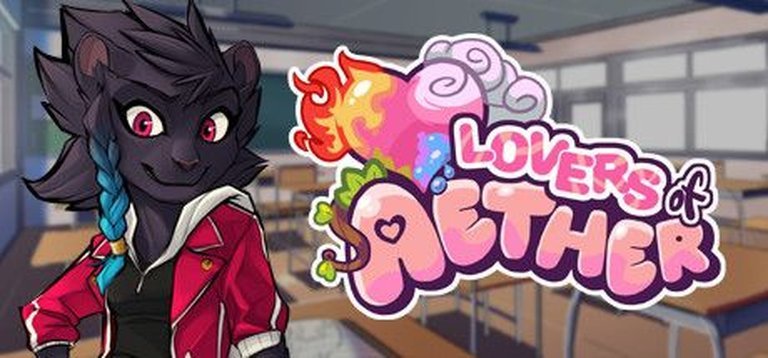
Lovers of Aether is a free dating sim visual novel developed by Dan Fornace LLC (Aether Studios) and set in the non-canonical Aether Universe. Players assume the role of a student at Aether Academy, aiming to woo a classmate and secure a date for the Homecoming Dance through strategic interactions. Released on April Fools’ Day 2019 via Steam, the game features anime-style artwork, turn-based gameplay, and lighthearted romantic scenarios, with follow-up stories later exploring college life at Aether University.
Where to Buy Lovers of Aether
PC
Lovers of Aether Mods
Lovers of Aether Guides & Walkthroughs
Lovers of Aether Reviews & Reception
store.steampowered.com (93/100): A wholesome animal dating simulator set in the world of Rivals of Aether.
steambase.io (94/100): Lovers of Aether has earned a Player Score of 94 / 100.
ominousbeep.com (70/100): A game that was made as a joke, it ended up being much better than some actual dating sims that were meant to be taken seriously.
Lovers of Aether: An Unexpectedly Profound Exercise in Wholesome Chaos
Introduction
What began as an April Fools’ Day joke in 2019 has, against all odds, cemented itself as a cult-classic footnote in indie gaming history. Lovers of Aether, a free-to-play dating simulator spin-off of the acclaimed platform fighter Rivals of Aether, subverted expectations by delivering a disarmingly sincere—and riotously funny—exploration of teenage romance within a high school populated by anthropomorphic warriors. This review argues that beneath its self-aware parody lies a surprisingly nuanced love letter to visual novel conventions, character-driven storytelling, and the transformative power of community-driven humor in indie development.
Development History & Context
Studio Vision & Origins
Developed by Dan Fornace LLC (later rebranded as Aether Studios), Lovers of Aether was conceived as a tongue-in-cheek departure from the studio’s flagship title, Rivals of Aether (2015). Fornace, a veteran of the competitive fighting game scene, sought to lampoon both dating sim tropes and his own community’s intensity. Built on GameMaker Studio, the project leveraged minimal resources—19 credited contributors, including pixel artist Jonathan Rousseau (Ellian) and composer Flashygoodness—to create a deliberately low-stakes experiment.
Technological & Cultural Constraints
Released on April 1, 2019, the game emerged during a golden age of indie visual novels (Doki Doki Literature Club, Hatoful Boyfriend) and amidst a resurgence of anthropomorphic character designs in mainstream gaming. Its development was constrained by budget and scope—a single school day, static sprites, and rudimentary mini-games—yet these limitations became strengths, allowing the team to focus on writing and charm. The decision to release it free on Steam (with optional Rivals of Aether promotions) mirrored the indie trend of using humor as a gateway to broader franchises.
Narrative & Thematic Deep Dive
Plot & Structure
Players assume the role of a gender-ambiguous student at Aether Academy, tasked with securing a date for the homecoming dance by day’s end. The narrative unfolds across six periods (e.g., History Class, Lunch, Computer Lab), each offering opportunities to interact with 12 romanceable characters—all reinterpretations of Rivals of Aether fighters. The plot is minimal but densely layered with absurdist lore (e.g., the “Ding Dong Tree” scandal) and meta-commentary on high school tropes.
Characterization & Themes
Lovers excels in Adaptational Reinvention:
– Maypul, a nature guardian in Rivals, becomes a tyrannical class president plotting wars against rival schools.
– Elliana, a tragic mecha-pilot in the main series, is reimagined as a bespectacled activist opposing Maypul’s regime.
– Forsburn, an edgy assassin, sulks in corners writing poetry.
The game’s thematic core satirizes academic hierarchy and teenage melodrama while celebrating queer-normative romance—players can pursue any character regardless of gender, subverting traditional dating sim binaries. Dialogue oscillates between heartfelt confessions and deliberate cringe (“Sylvanos will help you get ripped… obtain beautiful longtoids”), with font styles and text animations amplifying personality (e.g., Wrastor’s boastful dialogue flies across the screen).
Gameplay Mechanics & Systems
Core Loop & Progression
The game operates on a branching timeline where players allocate time slots to socialize, attend classes, or engage in mini-games. Key systems include:
– Relationship Building: Conversations unlock character-specific questions, with choices subtly influencing affinity.
– Academic Mini-Games:
– History Quiz: A lore dump masquerading as a test, with cheat-friendly peer interactions.
– Book Presentation: A timed clicker game where failure hilariously derails speeches.
– Computer Lab: A trivia-based puzzle echoing early ’90s edutainment.
UI & Innovation
The interface—a pixel-art homage to Rivals—prioritizes simplicity: point-and-click navigation, no manual saves (runs take 20-30 minutes), and a “confession reload” mechanic to explore endings efficiently. While depth is minimal, the game innovates through rejection narratives: failing to woo Orcane triggers a prankster’s wrath, while Maypul’s “betrayal” ending dismantles player agency with dictator-like glee. Achievements reward completionists (all 12 romances, perfect quiz scores), but the lack of stat tracking limits replay incentive.
World-Building, Art & Sound
Visual Direction
Artist Marc Knelsen (El Ranno) reimagines Rivals’ pixel-art fighters as anime/manga-inspired students, blending vibrant color palettes with exaggerated expressions. Backgrounds by Noel Rodriguez (Komoroshi) evoke nostalgic school tropes—locker-lined hallways, sun-dappled courtyards—while retro UI elements nod to the franchise’s pixelated roots. The Art Shift from fighter sprites to detailed illustrations amplifies comedic absurdity (e.g., Sylvanos flexing in a muscle tee).
Sound Design & Music
Flashygoodness’ soundtrack reworks Rivals’ battle themes into chiptune-leaning lounge tracks, juxtaposing calm piano melodies with frenetic classroom chaos. Sound effects—typewriter-like text beats, classroom chatter—are sparse but deliberate, reinforcing the game’s parody of visual novel conventions.
Reception & Legacy
Critical & Commercial Impact
At launch, Lovers of Aether garnered “Very Positive” Steam reviews (93% of 1,579 reviews), praised for its humor, accessibility, and unexpected depth. Critics like Ominous Beep noted it “exceeded joke-game expectations,” rating it 7/10 for its writing and charm. Though not a commercial titan (estimated 38K units via Steambase), its free model drove visibility, funneling players toward Rivals of Aether.
Cultural Legacy
The game’s influence permeates the Aether universe:
– Follow-up shorts in Rivals Direct showcases expanded its college-themed AU.
– Cosmetics in Rivals of Aether (2020) and its sequel immortalize Lovers designs.
– It pioneered Aether Studios’ tradition of April Fools’ projects (Creatures of Aether, Dreams of Aether).
More broadly, Lovers exemplifies how indie developers can leverage humor and minimalism to explore genre deconstruction—a precursor to titles like Boyfriend Dungeon in blending combat-free character arcs with mainstream appeal.
Conclusion
Lovers of Aether is a paradoxical triumph: a joke that stopped being funny because it became genuinely compelling. Its genius lies in balancing self-aware absurdity with authentic warmth, transforming pixelated fighters into relatable teens navigating crushes and cafeteria drama. While mechanically shallow and unabashedly niche, it remains a vital artifact of indie gaming’s willingness to embrace audacious creativity—proving that even April Fools’ Day can birth enduring art. For historians, it’s a case study in franchise elasticity; for players, it’s a 30-minute burst of joy. In the annals of video game history, Lovers of Aether is a footnote worth italicizing.
Final Verdict: A flawed but indispensable curio—7/10 for execution, 10/10 for ambition.