
- Release Year: 2010
- Platforms: iPad, Macintosh, Windows
- Publisher: Big Fish Games, Inc, Focus Multimedia Ltd
- Developer: Big Fish Games, Inc
- Genre: Adventure
- Perspective: 1st-person
- Game Mode: Single-player
- Gameplay: Inventory management, Point-and-click, Puzzle
- Setting: Fantasy
- Average Score: 75/100
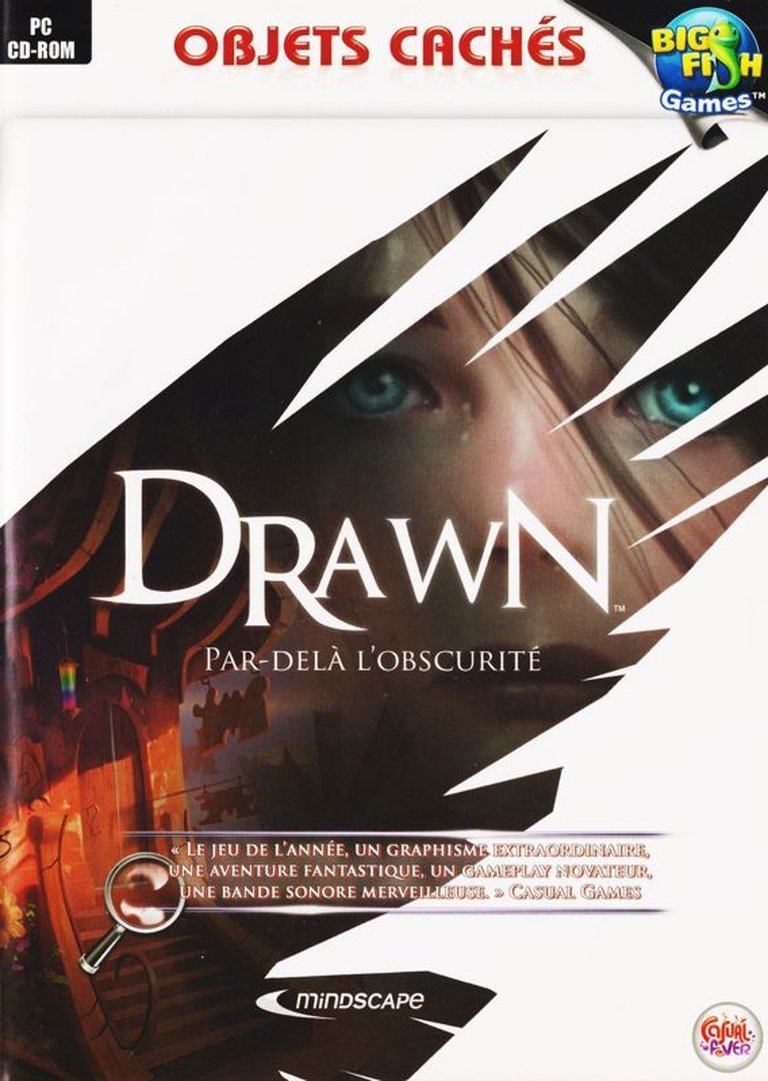
Description
Drawn: Dark Flight is a first-person, point-and-click adventure game set in a fantasy world where a young girl named Iris, born with the magical ability to bring drawings to life, must save her kingdom from a tyrannical ruler. The game features traditional puzzle elements and intricate graphics, with players collecting and using items to solve puzzles and restore light to the land.
Gameplay Videos
Where to Buy Drawn: Dark Flight
PC
Drawn: Dark Flight Cracks & Fixes
Drawn: Dark Flight Guides & Walkthroughs
Drawn: Dark Flight Reviews & Reception
metacritic.com (75/100): Initially haunting and lonely, then blossoming into something joyous, Drawn: Dark Flight is a triumph of creativity and imagination.
eurogamer.net : Drawn: Dark Flight is a rare adventure game in which the puzzles simply make sense, and never feel convoluted despite several intertwining layers within the fiction.
ign.com (75/100): I love the fact that it’s accessible without being dumbed down and has a fairly rich story, especially for a casual title.
mobygames.com : Drawn: Dark Flight is a traditional first-person, point-and-click adventure game with simple puzzles created for casual players.
maroonersrock.com : Never before have I played a game that was so gorgeous, so astoundingly beautiful that I actually took my sweet time.
Drawn: Dark Flight: A Masterclass in Whimsical Storytelling and Puzzle Craftsmanship
Introduction
In an era dominated by high-octane shooters and sprawling open worlds, Drawn: Dark Flight (2010) emerged as a testament to the enduring magic of quiet, contemplative adventure games. A direct sequel to Drawn: The Painted Tower (2009), this Big Fish Studios production elevated its predecessor’s legacy with richer storytelling, refined mechanics, and an art style that blurred the line between game and interactive painting. This review argues that Dark Flight represents the pinnacle of the casual adventure genre—a game that transcends its “hidden object” roots to deliver a tightly woven, emotionally resonant experience.
Development History & Context
Studio Vision & Creative Ambitions
Big Fish Studios, a subsidiary of Big Fish Games, aimed to redefine casual gaming by merging accessible mechanics with AAA-quality artistry. Led by Executive Producer Patrick Wylie and Art Director Brian Thompson, the team sought to expand the lore of the Drawn universe while refining its puzzle design. Their goal was clear: create a game that felt like “stepping into a living storybook,” as one developer described it.
Technological Constraints & Innovation
Built during the twilight years of Flash-based casual games, Dark Flight leveraged 2D hand-drawn assets and pre-rendered environments to sidestep the hardware limitations of 2010-era PCs and iPads. The game’s first-person perspective and fluid animations—crafted by Rebecca Coffman and Michael Baran—pushed the boundaries of what players expected from a $9.99 downloadable title.
The 2010 Gaming Landscape
Released amidst a resurgence of narrative-driven indie games (Limbo, Machinarium), Dark Flight carved a niche by blending Myst-like exploration with the approachability of casual puzzlers. Its October 2010 launch capitalized on Big Fish’s established audience while appealing to adventure fans disillusioned by the genre’s decline in mainstream studios.
Narrative & Thematic Deep Dive
Plot & Characters
Dark Flight continues the story of Iris, a child queen with the power to bring drawings to life, now hiding from the tyrannical King within the crumbling kingdom of Stonebriar. The player, guided by the spectral butler Franklin, must reignite three beacons to dispel the shadows engulfing the land. The narrative unfolds through environmental clues, letters, and hauntingly minimalist dialogue—eschewing cutscenes for organic storytelling.
Themes: Light vs. Shadow, Creation vs. Destruction
The game’s central conflict—light versus darkness—is mirrored in its puzzles, which often involve restoring color to monochrome environments. Themes of artistic creation pervade every corner: sketches become tools, paintings warp into portals, and even the UI resembles a painter’s palette. This metaphorical weight elevates the simple “save the princess” premise into a meditation on hope amid decay.
Dialogue & Subtle Storytelling
Characters speak through poetic riddles (“From blue light comes sight”) rather than exposition. Franklin’s hints—delivered via a ghostly chalkboard—subtly reinforce the game’s melancholic tone. Even the antagonist, never fully seen, feels ominously present through decaying murals and shattered statues.
Gameplay Mechanics & Systems
Core Loop: Exploration & Puzzle-Solving
Dark Flight follows a traditional point-and-click structure:
1. Item Collection: Context-sensitive cursor (hand, magnifying glass) indicates interactables.
2. Inventory Puzzles: Combine sketches (e.g., a rope drawing becomes a functional bridge).
3. Environmental Manipulation: Rotate gears, pull levers, and repair broken machinery.
Standout Mechanics
- Pop-Up Book Puzzles: Foldable dioramas that require spatial reasoning (e.g., aligning towers to light beacons).
- Dynamic Hint System: Franklin’s portrait offers escalating clues, respecting player autonomy.
- Mini-Games: From deciphering musical runes to color-mixing challenges, these avoid genre clichés like slide puzzles.
Flaws & Frustrations
Some late-game puzzles suffer from moon logic (e.g., the infamously convoluted beacon color-mixing sequence). Backtracking can also feel tedious, though the game’s compact length (6–8 hours) mitigates this.
World-Building, Art & Sound
Visual Design: A Painterly Feast
Brian Thompson’s team crafted a world that feels like a watercolor painting in motion:
– Stonebriar: A gothic-meets-whimsical kingdom with crumbling towers, ink-splattered libraries, and surreal paper-cutout forests.
– Lighting: Dynamic shadows recede as puzzles are solved, symbolizing the player’s progress.
Audio & Voice Acting
Composer Peter Yiap’s score blends melancholic piano motifs with orchestral swells during climactic moments. Voice acting, though sparse, excels—Franklin’s gravelly baritone contrasts beautifully with Iris’s ethereal innocence.
Reception & Legacy
Critical & Commercial Success
- Scores: 82% average critic score (GameZebo: 100%, IGN: 7.5/10).
- Awards: Nominated for “Casual Game of the Year” at the 13th Annual Interactive Achievement Awards.
Enduring Influence
Dark Flight inspired successors like Rusty Lake and The Room series, proving that “casual” need not mean shallow. Its collector’s edition—featuring bonus content and achievements—set a precedent for premium casual releases.
Conclusion
Drawn: Dark Flight is more than a hidden-object game; it’s a love letter to the power of imagination. While its puzzles occasionally stumble, the experience coalesces into something transcendent—a reminder that games can be art, storytellers, and portals to other worlds. Over a decade later, it remains a benchmark for narrative-driven casual adventures, securing its place in the pantheon of timeless point-and-click classics.