
- Release Year: 2015
- Platforms: PlayStation 4, Windows, Xbox One, Xbox Series
- Publisher: R8 Games Ltd.
- Developer: R8 Games Ltd.
- Genre: Driving, Racing
- Perspective: Behind view
- Game Mode: Online Co-op, Single-player
- Gameplay: Arcade, Direct control, Hovercraft, Track racing
- Setting: Futuristic, Sci-fi
- Average Score: 50/100
Description
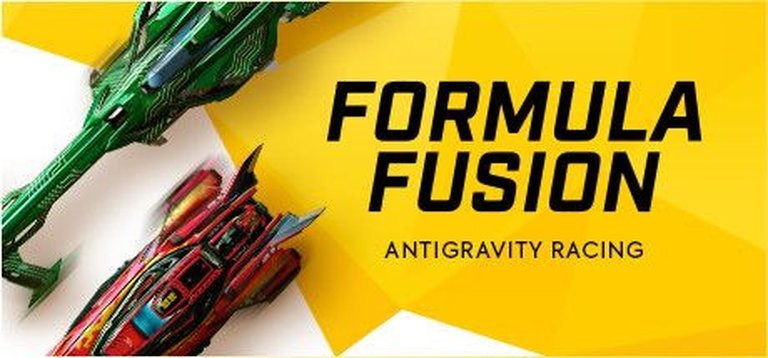
Formula Fusion, also known as Pacer, is a futuristic hovercraft racing game that combines high-speed arcade-style racing with strategic weapon use. Players navigate through sci-fi tracks, competing in various game modes both offline and online. The game is praised for its thrilling gameplay, customizable vehicles, and engaging multiplayer experience, making it a worthy successor to classic racing series like Wipeout.
Formula Fusion Free Download
Formula Fusion Cracks & Fixes
Formula Fusion Guides & Walkthroughs
Formula Fusion Reviews & Reception
cgmagonline.com (50/100): A flawed far future racing game that can’t keep up with recent entries.
themadwelshman.com : Despite some odd notes, I can’t help but like the backstory here.
Formula Fusion: Review
Introduction
In the pantheon of futuristic anti-gravity racers, few franchises loom as large as Wipeout. Enter Formula Fusion (later rebranded as Pacer), a spiritual successor crafted by R8 Games, a studio staffed by veterans of the genre. Released in 2015 amid a resurgence of interest in high-speed sci-fi racing, the game aimed to recapture the adrenaline-fueled magic of its predecessors while injecting modern innovations. This review dissects Formula Fusion’s triumphs and stumbles, arguing that while it honors its lineage with precision, it struggles to fully escape the gravitational pull of past giants.
Development History & Context
Studio Vision & Legacy
R8 Games, founded by Andrew Walker (a BAFTA-winning designer for Wipeout 3), sought to revive the high-octane anti-gravity racing genre after Sony shuttered Studio Liverpool in 2012. The team’s pedigree included members from Wipeout 3 and collaborators like The Designers Republic, the iconic studio behind Wipeout’s visual identity. Their vision was clear: blend the series’ DNA with contemporary tech and deeper customization.
Technological Ambitions
Built on Unreal Engine 4, Formula Fusion leveraged modern rendering techniques to amplify speed and spectacle. Modifications to the engine prioritized fluid motion, though early builds struggled with optimization, particularly on PC. The transition from Kickstarter (raising £79,000 in 2014) to Steam Early Access in 2015 was rocky, with players criticizing incomplete content and bugs. The 2020 console rebrand as Pacer marked a relaunch, addressing critiques and refining mechanics.
Gaming Landscape
At release, Formula Fusion entered a niche yet competitive field. Redout and Fast RMX were carving their own spaces, while Sony’s Wipeout Omega Collection reminded players of the gold standard. R8 Games faced the dual challenge of appealing to nostalgic fans and distinguishing itself in a crowded market.
Narrative & Thematic Deep Dive
Setting & Lore
Set in 2075, Formula Fusion imagines a post-nuclear world where racing leagues are battlegrounds for mega-universities vying for research dominance. Tracks thread through dystopian cityscapes like New York’s ruins (Mannahatta) and Dubai’s neon-lit canals (Galaxy Racing), each locale reflecting socio-economic divides. The narrative is thinly woven—more backdrop than driving force—but effectively contextualizes the high-stakes competition.
Themes & Satire
The game critiques corporatized academia, with teams like Trans-Am Yangs (USA/Mexico/Canada) and Midas AG (Europe) representing geopolitical blocs. Weaponized research and pilot conditioning echo themes of exploitation, though these ideas are underexplored in favor of pure spectacle. Satirical billboards and ads, designed by The Designers Republic, inject the series’ trademark cheeky cynicism.
Gameplay Mechanics & Systems
Core Racing Loop
Formula Fusion delivers blistering speeds across five classes (FF4000 to Elite), demanding mastery of airbrakes, pitch control, and boost management. The self-charging boost system rewards strategic use, while speed pads encourage precision drifting. Higher classes, however, expose a steep difficulty curve, with tracks like Atlas Torres demanding pixel-perfect turns.
Customization & Progression
The Garage system allows deep craft customization:
– Performance Mods: Adjust handling, acceleration, and defense.
– Weapon Loadouts: Mix energy bolts, Gauss cannons, and mines, augmented by behavior cards (e.g., homing missiles or area-of-effect blasts).
– Cosmetics: Skins and trail colors, though options feel limited compared to contemporaries.
Multiplayer & Modes
Online 10-player races and modes like Storm (a battle royale-esque shrinking arena) shine, but inconsistent server populations hampered longevity. Split-screen absence was a notable omission for local play.
Flaws & Frustrations
– UI Clunkiness: Menus feel dated, with unclear tooltips for mod effects.
– Control Mapping: Default binds for airbrakes and pitch feel counterintuitive, requiring manual tweaks.
– Balance Issues: Weapons like the Flashbang disrupt flow without adding strategic depth.
World-Building, Art & Sound
Visual Design
The Designers Republic’s fingerprints are everywhere: sleek holographic HUDs, team logos dripping with cyberpunk flair, and tracks that blend grandeur with decay. Standouts include Niagara’s sewer tunnels and El Muro’s Mexican favelas, though texture pop-in and sparse crowds dent immersion.
Soundtrack & Atmosphere
Leon Switch’s dubstep/trance fusion amplifies the intensity, though it lacks the cultural resonance of Wipeout’s ’90s electronica. Engine roars and weapon discharges are satisfyingly punchy, but the absence of dynamic weather or crowd noise leaves races feeling sterile at times.
Reception & Legacy
Launch & Re-Evaluation
Initial reviews (Metacritic: 58/100 for PC) panned Formula Fusion as an “unfinished beta,” citing bugs and sparse content. The 2020 Pacer rebrand earned warmer receptions (Metacritic: 77/100 PS4, 79/100 Xbox), praised for refined physics and track variety. Critics lauded its faithfulness to Wipeout but noted it lacked innovation.
Cultural Impact
While no Wipeout killer, Pacer proved the genre’s viability, inspiring indies like Retrowave World. Its modular customization influenced later racers, though its legacy remains tied to niche appeal.
Conclusion
Formula Fusion (and its Pacer iteration) is a love letter to anti-gravity racing’s golden age, offering white-knuckle speed and customization depth. Yet, it stumbles under the weight of technical hiccups and derivative design. For genre diehards, it’s a worthy homage—one that respects its roots but rarely surpasses them. In the annals of futuristic racing, it earns a solid 7/10: a flawed but fervent tribute to the games that inspired it.