
- Release Year: 2010
- Platforms: Windows
- Publisher: Activision Publishing, Inc.
- Genre: Compilation
- Game Mode: Single-player
- Average Score: 87/100
Description
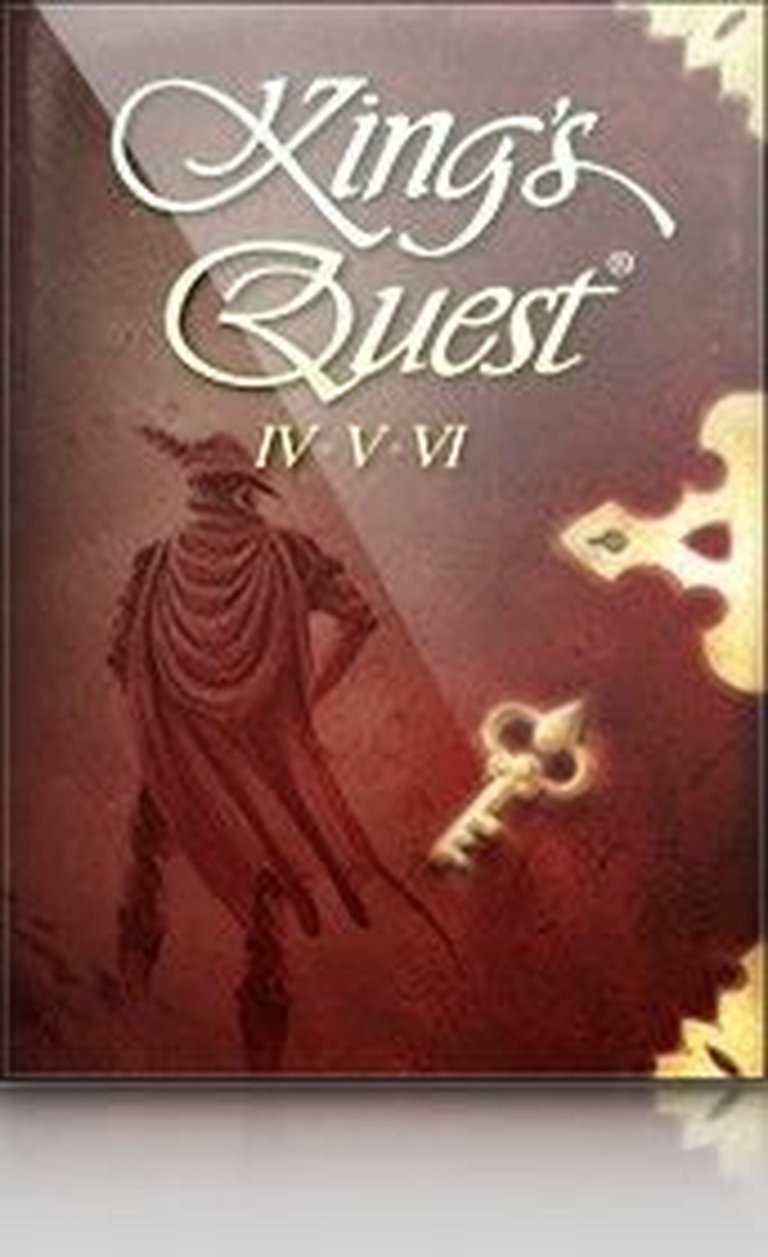
King’s Quest 4+5+6 is a compilation of three iconic graphic adventure games from Sierra Entertainment, chronicling the fantastical journeys of the royal family of Daventry. The bundle includes King’s Quest IV: The Perils of Rosella (1988), King’s Quest V: Absence Makes the Heart Go Yonder! (1990), and King’s Quest VI: Heir Today, Gone Tomorrow (1992), each blending puzzle-solving, exploration, and fairy-tale storytelling in magical kingdoms filled with witches, wizards, and perilous quests.
Where to Buy King’s Quest 4+5+6
PC
King’s Quest 4+5+6 Reviews & Reception
advgamer.blogspot.com : The puzzles in King’s Quest VI are pretty good and have sensible solutions.
metacritic.com (83/100): I’m rating this game a 10 for what it was in its time, not what it would be now.
gog.com (92/100): Life is easy in the magical kingdom of Daventry, at least so long as the Graham family is at its helm.
King’s Quest 4+5+6 Cheats & Codes
King’s Quest 4 – The Perils of Rosella (AGI Version)
| Code | Effect |
|---|---|
| beam me | Rosella will be beamed up to a space ship full of Sierra employees! |
| rap kq | Rosella will start rapping and break dancing to a rap song! |
King’s Quest 4+5+6: The Pinnacle of Sierra’s Golden Age
A Definitive Trilogy Review
Introduction
The King’s Quest series stands as a foundational pillar of the graphic adventure genre, and nowhere is its legacy more vividly encapsulated than in the King’s Quest 4+5+6 compilation. This digital bundle—released in 2010 via GOG.com—gathers three pivotal entries (The Perils of Rosella, Absence Makes the Heart Go Yonder!, and Heir Today, Gone Tomorrow) that chart Sierra On-Line’s evolution from text-parser pioneers to cinematic storytellers. This review argues that while technological constraints of the 1980s–90s shaped their design, these games transcended limitations to deliver narratives rich in fairy-tale wonder, thematic depth, and mechanical innovation, cementing their place as timeless benchmarks of interactive storytelling.
Development History & Context
Studio Vision & Technological Constraints
Sierra On-Line, co-founded by Ken and Roberta Williams, was a trailblazer in narrative-driven games. Roberta’s ambition—to create “living storybooks”—drove the King’s Quest series. The trilogy’s development spanned a transformative era:
– KQ IV (1988): Built on Sierra’s SCI0 engine, it was among the first games to support 16-color EGA graphics and AdLib sound cards. Its development was notoriously chaotic; staff worked 30-day crunch periods to meet deadlines after engine overhauls delayed production.
– KQ V (1990): Shifted to VGA graphics and a point-and-click interface, abandoning the text parser to appeal to broader audiences. Budgetary constraints led to rushed animations, yet its voice-acted CD-ROM version (1991) was a industry milestone.
– KQ VI (1992): Co-designed with Jane Jensen (Gabriel Knight), it leveraged SCI1.1 for SVGA cutscenes and branching dialogue. A “talkie” edition featured Hollywood voice talent (Rob Paulsen, Dom DeLuise).
The Gaming Landscape
Released amid LucasArts’ rise (Monkey Island), Sierra countered with high-fidelity visuals and complex puzzles. However, hardware limitations forced compromises:
– Disk space constraints in KQ IV led to repetitive environments.
– KQ V’s linear design—criticized for “pixel hunting”—reflected Sierra’s push for accessibility over depth.
– The trilogy’s reliance on dead ends and “moon logic” puzzles became divisive hallmarks of Sierra’s design philosophy.
Narrative & Thematic Deep Dive
Plot Synopses & Characters
– KQ IV: Princess Rosella’s dual quest—to save her father, King Graham, and a cursed fairy—established Sierra’s first female protagonist. Her journey through Tamir (a realm blending Arabian Nights and Grimm horror) subverted damsel tropes, emphasizing cunning over brute force.
– KQ V: A familial rescue mission against Mordack, whose sorcery kidnaps Graham’s castle. The game’s tone darkens, exploring loss and sacrifice, buoyed by comic relief from Cedric the owl.
– KQ VI: Prince Alexander’s politically charged romance with Princess Cassima in the Green Isles. Themes of identity, free will, and colonialism emerge (e.g., the vizier Abdul Alhazred’s manipulation echoes The Tempest).
Recurring Motifs
– Fairy Tale Syncretism: KQ IV’s Lolotte (Sleeping Beauty), KQ V’s Serenia (Wizard of Oz), KQ VI’s Isle of Wonder (Alice in Wonderland).
– Family & Legacy: Each game interrogates dynastic duty—Rosella’s filial devotion, Alexander’s struggle to prove himself beyond his lineage.
– Moral Ambiguity: Villains like Mordack and Alhazred are nuanced; their motives blend vengeance and loneliness, reflecting Roberta’s rejection of cartoonish evil.
Gameplay Mechanics & Systems
Evolution of Interaction
– KQ IV: Hybrid text-parser/point-and-click; inventory puzzles dominate (e.g., trading a worm for a reed pipe). Day/night cycles added tension but clashed with unforgiving timing.
– KQ V: Full icon-based interface simplified play but introduced criticisms of “dumbing down.” Puzzles like the desert tomb’s spelling riddle became infamous for opaque solutions.
– KQ VI: Refined design with multiple endings and nonlinear exploration. The “Cliffs of Logic” puzzle—requiring players to consult the manual’s poem—epitomized Sierra’s blend of brilliance and frustration.
Flaws & Innovations
– UI Issues: KQ V’s cursor suffered from ambiguous responses (e.g., “walk” vs. “use” inconsistencies).
– Sound & Pacing: KQ VI’s CD-ROM version elevated immersion via orchestral scoring (e.g., “Girl in the Tower”) but highlighted the trilogy’s erratic difficulty spikes.
World-Building, Art & Sound
Visual Direction
– KQ IV: Douglas Herring’s EGA art melded storybook charm with eerie realism (e.g., Tamir’s fog-shrouded graveyard). The shift to SCI engine allowed pseudo-3D depth—a leap from its AGI roots.
– KQ V: Mark Crowe’s painterly VGA backdrops (Serenia’s ice caves, Mordack’s gothic castle) rivaled Disney animations, though limited animation cycles drew criticism.
– KQ VI: Aesthetic peak; Andy Hoyos’ SVGA rendered the Green Isles as a mosaic of mythologies—from Greek-inspired winged beings to Arabian genies.
Atmosphere & Audio
– Soundscapes: Ken Allen’s KQ IV score—haunting woodwinds during Tamir’s nights—set a benchmark. KQ V’s CD-ROM voice acting (Daventry’s royal decree: “Bring me Graham!”) was revolutionary.
– Ambient Storytelling: KQ VI’s Catacombs used whispers and dripping water to convey dread without jump scares, a subtlety rare for its era.
Reception & Legacy
Critical & Commercial Impact
– KQ IV: Sold 150,000+ copies; praised for Rosella’s agency but critiqued for punitive design (CGW: “A gem… if you have patience”).
– KQ V: Topped sales charts for 18 months; won Computer Gaming World’s 1990 Adventure Game of the Year, despite “cat hair moustache” puzzle backlash.
– KQ VI: Lauded as the apex—94% in PC Gamer; its nuanced writing and multiple paths influenced The Longest Journey.
Enduring Influence
Aesthetic Impact:
– Inspired Kyrandia and The Witcher 3’s fairy-tale intertextuality.
Mechanical Legacy:
– KQ VI’s dialogue trees presaged Mass Effect’s Paragon/Renegade system.
Cultural Resonance:
– The trilogy’s compilation (2010) spurred fan remakes (AGD Interactive’s KQ2+3) and The Odd Gentlemen’s 2015 reboot.
Conclusion
The King’s Quest 4+5+6 anthology is more than a nostalgia capsule—it is a testament to Roberta Williams’ vision of games as participatory folklore. While technical flaws and esoteric puzzles date certain aspects, the trilogy’s narrative ambition, artistic splendor, and mechanical experimentation remain unrivaled. For historians, it captures Sierra’s zenith; for modern players, it offers a masterclass in world-building. In the pantheon of video game legends, this compilation isn’t merely a relic—it’s a crown jewel.
Final Verdict: A seminal trilogy that defined—and transcended—its era, King’s Quest 4+5+6 is essential for understanding adventure gaming’s evolution. Its legacy endures not in spite of its imperfections, but because they illuminate the bold creativity of a studio unafraid to reach for the stars—even when the path was strewn with trolls and typos.