
- Release Year: 2009
- Platforms: Windows, Xbox 360
- Publisher: Square Enix, Inc.
- Developer: PopCap Games, Inc., Square Enix Co., Ltd.
- Genre: Puzzle, Role-playing (RPG)
- Perspective: 2D
- Game Mode: Single-player
- Gameplay: Experience System, Tile-matching, Turn-based combat
- Setting: Fantasy
- Average Score: 70/100
Description
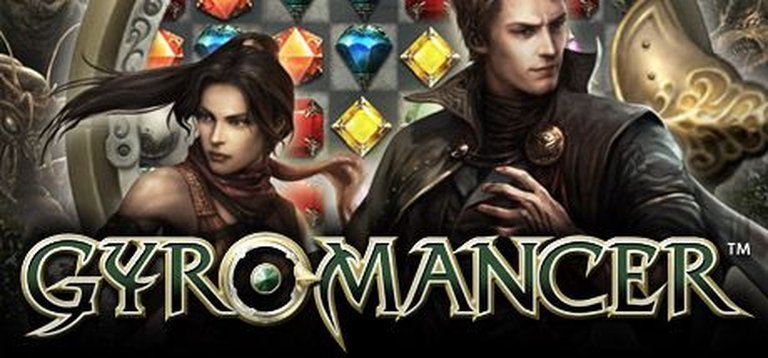
Gyromancer is a fantasy-themed puzzle/RPG hybrid where players navigate 2D levels accompanied by three unique beasts. Combat unfolds through a Bejeweled Twist-inspired gem-matching system: rotating 2×2 gem clusters on an 8×8 grid to create matches, energizing beast abilities. Successful chains attack foes while failures empower enemies, with defeated beasts benched until the level ends. Players earn XP to strengthen beasts and discover codes to summon powerful allies, blending strategic team management with addictive puzzle mechanics.
Gameplay Videos
Where to Buy Gyromancer
Gyromancer Cracks & Fixes
Gyromancer Guides & Walkthroughs
Gyromancer Reviews & Reception
metacritic.com (75/100): A shameless clone of role-playing puzzle hybrid Puzzle Quest, but a slick and addictive one all the same.
rpgamer.com : Though the initial premise is novel, the execution of the game falls short of expectations and lacks the necessary traits to be a solid game and not just an excuse to play Bejeweled.
steambase.io (52/100): Gyromancer has earned a Player Score of 52 / 100.
ign.com (83/100): Gyromancer is a game that blends together both RPG and puzzle elements.
Gyromancer: Review
In the pantheon of puzzle-RPG hybrids, few titles have left as indelible a mark as Gyromancer. Released in 2009, this collaboration between PopCap Games and Square Enix seamlessly blends the addictive gameplay of Bejeweled Twist with the rich narrative and strategic depth of traditional RPGs. Over a decade later, Gyromancer stands as a testament to the potential of merging disparate genres, offering a unique and engaging experience that continues to captivate players. This review will delve into the game’s development history, narrative depth, gameplay mechanics, world-building, critical reception, and enduring legacy.
Development History & Context
Gyromancer was born out of a serendipitous meeting between PopCap Games and Square Enix in 2007. During this gathering, Jason Kapalka, PopCap’s chief creative officer, half-jokingly proposed a game that combined Bejeweled-style gameplay with RPG elements, dubbing it “Final Fantasy Bejeweled.” The idea resonated with Yuichi Murasawa, the designer behind Final Fantasy Tactics Advance, leading to the formal development of Gyromancer.
The game was designed to differentiate itself from Puzzle Quest: Challenge of the Warlords, another popular puzzle-RPG. To achieve this, the developers chose to base the gameplay around Bejeweled Twist rather than the original Bejeweled, believing it better fit the game’s art direction. Other candidates, such as Zuma and Peggle, were considered but ultimately rejected for not aligning with the combat theme.
PopCap developed the early prototype, after which Square Enix took the reins, focusing on the RPG aspects. The collaboration resulted in a game that was announced in September 2009 and released on November 18, 2009, for both Xbox Live Arcade and Steam. The development team included notable figures such as director Yuichi Murasawa, producer Yoshinori Kamei, and artist Yuki Matsuzawa, who was tasked with creating a “dark fantasy” art style to appeal to a global audience.
Narrative & Thematic Deep Dive
Gyromancer tells the story of Rivel, an immortal summoner tasked with tracking down the rebel group Temperance, led by Quraist Kingsley. The rebels have assassinated a member of the royal family, and Rivel, accompanied by Laska the ranger, ventures into the enchanted Aldemona Wood to bring them to justice. The forest, known for its mystical power and ability to seal itself, serves as the game’s primary setting.
The narrative is presented through a series of cutscenes and in-game text, with the bulk of the story buried in menus. This approach, while innovative, can be confusing and unmotivating for players who prefer a more linear storytelling experience. The plot itself is a mix of generic and unique elements, with a nice slant that is often overshadowed by the game’s addictive puzzling mechanics. The dialogue, while endearing, occasionally feels forced, and the old English used in some parts can be challenging to follow.
Despite these flaws, the story serves as a backdrop to the game’s core mechanics, providing context and motivation for the player’s actions. The themes of rebellion, justice, and the pursuit of power are woven into the narrative, adding depth to the characters and their motivations.
Gameplay Mechanics & Systems
At its core, Gyromancer is a puzzle-RPG hybrid that combines the best elements of both genres. Players traverse 2D levels, carrying three beasts with different powers. When encountering foes, players must choose one of their beasts to fight, engaging in a battle system reminiscent of Bejeweled Twist.
The battle grid is an 8×8 set of gems, with players rotating groups of four to line up three or more jewels of the same color. Matching gems energizes the player’s beast, while failing to make a match allows the enemy’s energy to rise quickly. The game encourages chaining up matches to maximize the player’s energy and minimize the enemy’s, adding a layer of strategy to the puzzling mechanics.
Each beast has three abilities, with corresponding colors that affect the gameplay. For example, matching gems of the same color as the player’s chosen beast fills the energy gauge faster. Enemy monsters can change gems on the board to skulls, which cause damage if not lined up within a certain number of moves. This mechanic adds an element of risk and reward, forcing players to think strategically about their moves.
The game also features a variety of items that can be used during battles, such as the Hock of Ham, which places all three current monster ability gems on the board, and the Magick Mirror, which reverses the twist for one move. These items are scarce and must be rationed carefully, adding another layer of strategy to the gameplay.
Character progression is handled through experience points earned during battles, which increase the power of the summoned beasts. The UI, while functional, can be non-intuitive, with settings and controls that are not always clearly explained. The game’s difficulty is largely under the player’s control, with no difficulty setting but multiple optional objectives per stage that can be completed to keep up with the game’s pace.
World-Building, Art & Sound
Gyromancer is set in the enchanted Aldemona Wood, a mystical forest that serves as the game’s primary setting. The art direction, led by Yuki Matsuzawa, is characterized by a “dark fantasy” style that focuses on realism rather than traditional fantasy aesthetics. This approach gives the game a unique visual identity that appeals to a global audience.
The game’s visuals are lush and varied, with detailed backgrounds, monsters, and characters that bring the world to life. The battle effects are polished and delightful, adding to the overall appeal of the game. However, the graphics have been criticized for being “murky and grainy,” and the lack of animation in battles and cutscenes has been noted as a drawback.
The soundtrack, created by Tsuyoshi Sekito, is a mix of rousing orchestral tunes and Japanese videogame metal during boss battles. While the music is generally well-received, it has been criticized for lacking variety and being somewhat forgettable. The sound design, however, is top-notch, with sound effects that enhance the gameplay experience.
Reception & Legacy
Gyromancer received a generally positive reception from critics, who praised its addictive gameplay and replay value. The game was noted for its similarity to Puzzle Quest, but critics found it to be a fun and engaging experience in its own right. The Metacritic scores for the PC and Xbox 360 versions were 71 and 75, respectively, indicating a generally favorable reception.
Critics took issue with the game’s perceived limited graphics, some aspects of the music, and a weak and confusing plot. Despite these flaws, the gameplay was described as “fun and addictive,” with a great deal of replay value. The game’s unique blend of puzzle and RPG elements was praised, with critics noting that it had done more than enough to set itself apart from Puzzle Quest.
In terms of commercial success, Gyromancer was a modest hit, selling well enough to warrant downloadable content and a sequel. The game’s influence can be seen in subsequent puzzle-RPG hybrids, with developers drawing inspiration from its innovative gameplay mechanics and engaging world-building.
Conclusion
Gyromancer is a shining example of what can be achieved when two seemingly disparate genres are combined. The game’s unique blend of puzzle and RPG elements, coupled with its engaging narrative and rich world-building, makes it a standout title in the puzzle-RPG genre. Despite its flaws, Gyromancer remains a testament to the potential of innovative gameplay mechanics and the power of collaboration between industry giants.
In the annals of video game history, Gyromancer will be remembered as a pioneering title that pushed the boundaries of what was possible in the puzzle-RPG genre. Its legacy can be seen in the countless games that have followed in its footsteps, drawing inspiration from its innovative gameplay and engaging world. For those seeking a challenging and rewarding gaming experience, Gyromancer is a must-play title that continues to captivate players more than a decade after its release.