
- Release Year: 2022
- Platforms: Windows
- Publisher: Gnarlewood
- Developer: Gnarlewood
- Genre: Adventure
- Perspective: 1st-person
- Game Mode: Single-player
- Gameplay: Mini-games, Puzzle elements
- Setting: Time travel
Description
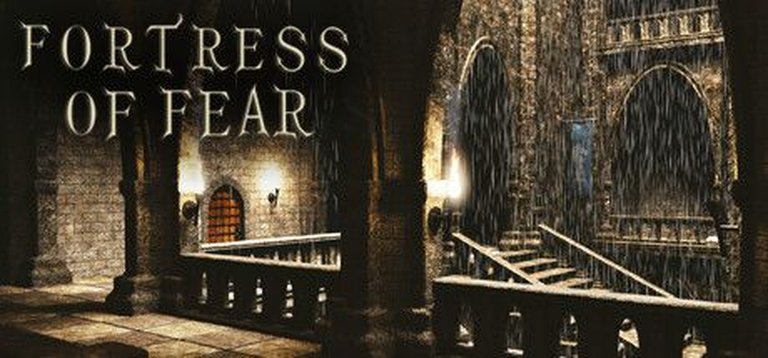
Fortress of Fear is a first-person adventure game developed by Gnarlewood, released for Windows in February 2022. Set within an enigmatic fortress, players navigate eerie environments while solving intricate puzzles, engaging in mini-games, and utilizing time-travel mechanics to unravel the mysteries of its haunting setting. The game emphasizes atmospheric exploration and combines supernatural themes with strategic challenges.
Fortress of Fear Guides & Walkthroughs
Fortress of Fear Cheats & Codes
Game Boy
Enter codes at the high score screen.
| Code | Effect |
|---|---|
| W[Heart]W | Start the next game with 6 lives |
Game Boy (Gameshark Codes)
Use a Gameshark device or emulator to enter these codes.
| Code | Effect |
|---|---|
| 010221C3 | Unlimited Lives |
| 010C22C3 | Unlimited Health |
| 010945C3 | Unlimited Keys |
| 019923C3 | Moon Jump |
Fortress of Fear: Review
Introduction
In an era dominated by open-world epics and live-service titans, Fortress of Fear dares to be a deliberate anachronism—a tightly designed, linear first-person puzzle-adventure that channels the spirit of early 2000s Gothic horror games. Developed by indie studio Gnarlewood and released in 2022, the game invites players into a labyrinthine castle where time itself is both a tool and a trap. This review argues that while Fortress of Fear stumbles under the weight of its technical limitations, its atmospheric ambition and inventive puzzle design carve out a niche worthy of recognition in the pantheon of indie curiosities.
Development History & Context
A Solo Vision in a Crowded Landscape
Gnarlewood, a one-person studio, crafted Fortress of Fear as a passion project, drawing inspiration from cult classics like Myst and Amnesia: The Dark Descent. Released in February 2022, the game arrived during a resurgence of retro-styled indie titles, yet its focus on linear, checkpoint-driven progression bucked trends favoring open-ended exploration. Built in Unity, the game’s development was constrained by budgetary limitations, evident in its minimalist UI and reliance on pre-built assets for environmental design.
Technological Constraints and Ambitions
The decision to implement a time-travel mechanic—shifting between seasons and a ghostly “Limbo” dimension—pushed the engine’s capabilities, resulting in occasional frame-rate dips and texture pop-in. Despite these hurdles, Gnarlewood prioritized atmosphere over polish, leveraging dynamic lighting and seasonal palette swaps to breathe life into the fortress’s aging stone walls.
Narrative & Thematic Deep Dive
A Gothic Rescue Mission
Players assume the role of Lord Robert Temin, a brooding aristocrat tasked with rescuing the soul of his beloved, Lady Elizabeth Kestle, from a Demonic Entity haunting his ancestral home. The plot is skeletal, delivered through environmental cues (e.g., torn letters, spectral echoes) and minimal dialogue. Yet, this simplicity serves the game’s themes: isolation, temporal entrapment, and the futility of resisting fate.
The Demonic Entity as Mechanic
The Entity is less a traditional antagonist and more a manifestation of the castle’s decay. Its presence disrupts time, forcing players to solve puzzles across multiple eras. For example, a collapsed bridge in “Winter” might be intact in “Summer,” requiring players to manipulate the environment across timelines. This mechanic reinforces the narrative’s cyclical tragedy—a clever, if understated, metaphor for grief.
Gameplay Mechanics & Systems
Puzzle Design: A Mixed Banquet
Fortress of Fear shines brightest in its diverse puzzle portfolio, which includes:
– Logic grids requiring players to match seasonal symbols.
– Music-based challenges where players replicate ghostly harp melodies.
– Memory trials that test observational skills across time shifts.
However, the game’s adherence to linearity becomes a double-edged sword. While the 60-checkpoint system ensures progression, it stifles experimentation. A poorly timed autosave can lock players into unwinnable states—a flaw critiqued in Steam forums.
Combat (or Lack Thereof)
The game replaces combat with environmental threats: skull ghosts that teleport players backward and spike traps demanding precise platforming. While this aligns with the horror aesthetic, the clunky movement controls (noted in player complaints about “unresponsive mouse sensitivity”) undermine tension.
World-Building, Art & Sound
A Castle That Breathes
The titular fortress is the game’s true protagonist. Its grandiose architecture—vaulted ceilings, subterranean crypts, and clockwork mechanisms—evokes a decaying Hogwarts by way of H.R. Giger. Each season layers distinct visuals: Autumn drowns halls in amber light, while Limbo bathes rooms in sickly green hues.
Soundscape of Dread
The soundtrack, a blend of orchestral swells and ambient whispers, elevates the experience. Water drips echo in flooded chambers, and distant footsteps hint at unseen prowlers. Yet, the reliance on stock sound effects for puzzles (e.g., generic “click” noises for lever pulls) occasionally breaks immersion.
Reception & Legacy
Quiet Launch, Cult Following
Fortress of Fear flew under the radar at release, with no major critic reviews cataloged on Metacritic or MobyGames. Player reception on Steam was polarized: praise for its “Lovecraftian mood” (per user vodkins) clashed with frustrations over technical hiccups.
Influences and Iterations
While the game’s legacy remains nascent, its time-shifting puzzle framework echoes in later indies like The Entropy Centre (2023). For better or worse, Fortress of Fear stands as a testament to solo developers’ ability to craft worlds that AAA studios often overlook.
Conclusion
Fortress of Fear is a flawed gem—a game that marries Gothic grandeur with inventive puzzles but falters under the weight of its technical shortcomings. It is not for everyone: its deliberate pace and archaic design will test modern players’ patience. Yet, for those willing to brave its haunted halls, it offers a haunting, introspective journey through time and loss. In the annals of indie gaming history, Fortress of Fear may not be a king, but it is undoubtedly a noble.
Final Verdict: A 7/10 experience—best suited for patient players craving atmospheric, puzzle-driven storytelling.