
- Release Year: 2017
- Platforms: Windows
- Publisher: IMGN.pro
- Developer: Telepaths Tree
- Genre: Action
- Perspective: 1st-person
- Game Mode: Single-player
- Gameplay: Shooter
- Setting: Fantasy
- Average Score: 57/100
Description
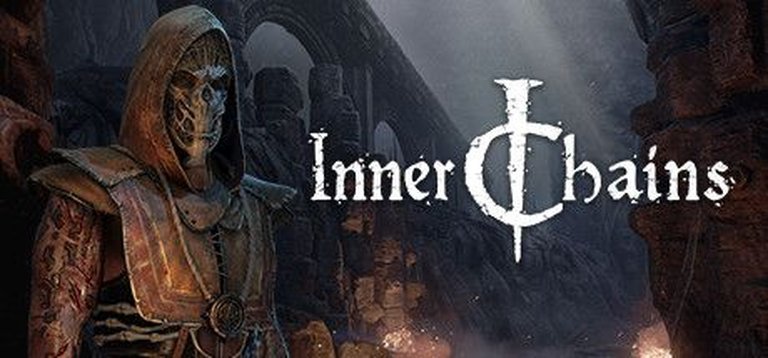
Inner Chains is a first-person shooter set in a post-apocalyptic world dominated by a cult of Four Evil Princes, who are revered as Messiahs by the enslaved populace. Players take on the role of an unnamed protagonist who challenges this oppressive regime in a dying world filled with volcanic ash and mutated vegetation. The game features a mix of combat with firearms and melee attacks, and the protagonist’s journey is marked by a quest to uncover hidden runic tablets scattered throughout the game world.
Gameplay Videos
Where to Buy Inner Chains
Inner Chains Free Download
Inner Chains Cracks & Fixes
Inner Chains Guides & Walkthroughs
Inner Chains Reviews & Reception
metacritic.com (40/100): Rather than feeling any sort of tension, I was mostly bored.
opencritic.com (59/100): Welcome to Inner Chains, a slow and slightly cutthroat excursion into the depths of suffering and horror.
opencritic.com (50/100): Inner Chains has gorgeous visuals and its artistic style is wonderful, but its poor gameplay makes it an almost unplayable game.
metacritic.com (40/100): Inner Chains has been a big opportunity wasted.
Inner Chains Cheats & Codes
PC
Press HOME to activate trainer.
| Code | Effect |
|---|---|
| Numpad1 | Infinite life |
| Numpad2 | Super run |
| Numpad3 | Infinite energy |
| Numpad4 | Guns without overheating |
| Numpad5 | Super jump |
| Numpad6 | One hit kill |
Inner Chains: A Fractured Vision of Biomechanical Horror
Introduction
In the annals of first-person horror shooters, Inner Chains (2017) stands as a striking paradox: a game that dazzles with its grotesque beauty but falters under the weight of its own ambition. Developed by Polish studio Telepaths’ Tree and published by IMGN.PRO, this Kickstarter-funded project promised a surreal, biomechanical nightmare inspired by the works of H.R. Giger and Beksiński. Yet, beneath its haunting aesthetic lies a game marred by technical limitations, disjointed design, and unfulfilled narrative potential. This review argues that while Inner Chains is a visual triumph, its gameplay and storytelling failures render it a cautionary tale about the risks of prioritizing style over substance.
Development History & Context
Telepaths’ Tree, founded by veterans of CD Projekt RED and Flying Wild Hog, sought to channel their experience into a daring indie project. CEO and Art Director Tomasz Strzałkowski envisioned a “biomechanical odyssey,” blending surreal horror with environmental storytelling. Funded via Kickstarter in April 2016, the game faced immediate challenges: a small team, budget constraints, and the daunting task of realizing its dystopian vision using Unreal Engine 4.
Released in May 2017, Inner Chains entered a crowded market dominated by polished AAA shooters and narrative-driven indies. Its timing was unfortunate, overshadowed by titles like Prey (2017) and Resident Evil 7, which offered tighter mechanics and clearer artistic identities. Despite its ambition, Inner Chains struggled to carve a niche, criticized for feeling more like a tech demo than a finished product.
Narrative & Thematic Deep Dive
Plot and Characters
Set on a far-future Earth where nature and technology have fused into a hostile ecosystem, Inner Chains follows a voiceless protagonist rebelling against the Four Evil Princes—deified rulers who enforce oppressive caste systems. The narrative unfolds through cryptic environmental cues and collectible tablets inscribed with a runic alphabet, which players must decode to fully grasp the lore.
While the premise brims with potential, the execution falters. The story is buried under excessive ambiguity, relying on repetitive flashbacks and vague symbolism. Characters lack depth, reduced to archetypal villains (e.g., the “witch” burning maiden in the prologue) or faceless enemies. The protagonist’s silence, intended to enhance immersion, instead creates emotional detachment.
Themes
Inner Chains explores themes of control, faith, and ecological collapse, with the ruling caste weaponizing humanity’s ignorance to maintain power. The biomechanical setting reflects a parasitic relationship between organisms and machines—a metaphor for toxic symbiosis. However, these ideas are underdeveloped, overshadowed by the game’s fixation on spectacle.
Gameplay Mechanics & Systems
Core Loop and Combat
The gameplay oscillates between exploration, puzzle-solving, and combat. Players wield three biomechanical weapons:
1. Lightning Cannon: Weak against enemies, better for activating environmental traps.
2. Flamethrower: Effective but drains health as ammunition.
3. Fisticuffs: A last-resort melee option.
Combat is Inner Chains’ weakest link. Enemies—shambling “death figures” and hellhounds—are repetitive and poorly animated. Weapons lack impact, with foes often ignoring damage. The health-as-ammo system, while innovative, frustrates due to sparse refill stations and unclear risk-reward dynamics.
Progression and UI
No skill trees or upgrades exist; progression hinges on deciphering lore tablets. The UI is minimalistic to a fault, offering little guidance. Players frequently stumble into dead ends or soft-lock themselves, exacerbated by clunky movement controls.
World-Building, Art & Sound
Visual Design
Inner Chains’ greatest strength is its art direction. The world is a macabre tapestry of pulsating biomechanical structures, jagged organic growths, and derelict machinery. Levels like the “Volcanic Wastes” and “Cathedral of Flesh” evoke Giger’s Alien fused with Beksiński’s dystopian landscapes. Each environment drips with detail—corroded metal, arterial vines, and disturbing altars—though foliage pop-in and texture flickering betray technical limitations.
Sound Design
The soundtrack, a blend of dissonant drones and industrial clangs, heightens tension but lacks memorability. Voice acting is sparse, with the opening narrator’s stilted delivery (Bad “Bad Acting,” per TV Tropes) setting a jarring tone. Environmental sounds, however, excel: the creak of biomechanical limbs and distant screams immerse players in the hellscape.
Reception & Legacy
Critical Response
Inner Chains received mixed-to-negative reviews:
– Metascore (PC): 40/100
– Steam Reviews: 48% positive (at its peak).
Critics praised its visuals but lambasted its gameplay. COGconnected called it “boring,” while CD-Action lamented its “awfully boring shooter mechanics.” Performance issues—frame drops, crashes—further tarnished its reputation.
Legacy
Though commercially overlooked, Inner Chains influenced later biomechanical horror games like Scorn (2022), which learned from its mistakes by pairing strong art with refined gameplay. Today, it persists as a cult curiosity, celebrated in indie horror circles for its audacious aesthetics but cited as a case study in unbalanced design.
Conclusion
Inner Chains is a fractured gem—a game that dares to envision a world of deranged beauty but collapses under its own weight. Its art direction remains a benchmark for surreal horror, and its themes of ecological and societal decay resonate in an era of climate crisis. Yet, plagued by half-baked mechanics and narrative obscurity, it serves as a reminder that even the most stunning worlds need cohesive design to captivate. For historians, Inner Chains is a fascinating footnote; for players, it’s a flawed but haunting experience best appreciated in retrospect.