
- Release Year: 2015
- Platforms: Macintosh, Windows
- Publisher: Reverb Triple XP
- Developer: ICOM Simulations, Inc.
- Genre: Adventure
- Perspective: 1st-person
- Game Mode: Single-player
- Gameplay: Puzzle elements
- Setting: Fantasy
- Average Score: 61/100
Description
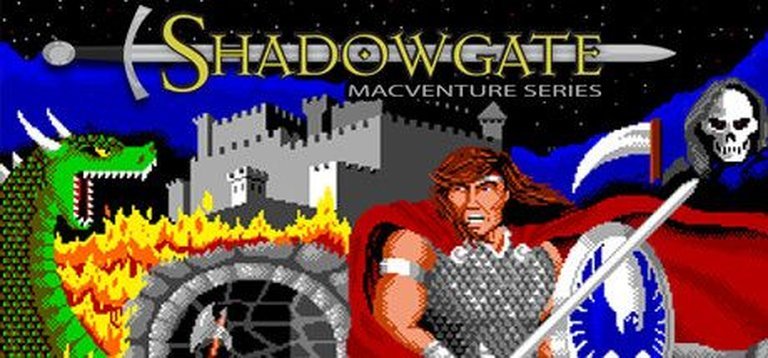
Shadowgate: MacVenture Series is a re-release of the classic 1987 adventure game, Shadowgate. This version includes both the original 128k black-and-white Macintosh and the 16-color Apple IIgs versions, updated for modern systems. Players navigate through the treacherous Castle Shadowgate, home to the evil Warlock Lord, using a drag-and-drop interface to solve puzzles and avoid deadly traps. The game features customizable UI, unlimited save points, and scalable graphics for an immersive experience.
Gameplay Videos
Where to Buy Shadowgate: MacVenture Series
PC
Shadowgate: MacVenture Series Guides & Walkthroughs
Shadowgate: MacVenture Series Reviews & Reception
niklasnotes.com : The reviews for Shadowgate: MacVenture Series highlight a mix of nostalgia and frustration, with many players appreciating its classic status while criticizing its dated controls, lack of soundtrack, and unforgiving gameplay mechanics.
Shadowgate: MacVenture Series Cheats & Codes
Nintendo Entertainment System
| Code | Effect |
|---|---|
| AAOIGZLA | All Secrets Revealed |
| XVOZXZAV | Can Move Through Closed Or Locked Doors |
| OXOILUPX | Can Move Through Closed/Locked Doors |
| IAXTANEN EPXVTNNN EGXVYNNY ZAUTZNNY EGUTINNY ELUTPNNY EIUTLNNY GAUTGNNY OZUVPNNN AIUVLNNY KIUVGNNN IAUTANNN EIOVYYEP GAUVANNY AGUVINNN OZUVTNNN SAKTANNN TAKTPNNY IAKTZNNY EPUTYNNY ATSTPNNN OTSTZNNN AISTGNNY UGSTINNY OZKTLNNN SAKTINNN SZKVTNNN GASTLNNN IAKTYNNY GAKTTNNY LAKTGNNN OZKVANNN SAKVZNNN IAKVLNNY IAKVGNNY XTKVINNN AAUVYNNY IGUTTNNN AAKVPNNY |
Fill Items List With 60+ Items |
| IXSUYLPE | First Door Leads To Cave Of Titans (Warlock Room), More Rooms In Note |
| GLEGUTAO | Full Torch After Continue |
| XVESZNVK | Infinite torches! |
| ATSIUAAZ ATUSSESZ |
Survive All Traps |
| AVKIANSZ | Torch Doesn’t Burn Down |
Shadowgate: MacVenture Series: A Definitive Retrospective
Introduction
Beneath the flickering torchlight of gaming history lies Shadowgate: MacVenture Series, a relic of 1987 resurrected in 2015. This re-release of the seminal point-and-click adventure encapsulates both the ingenuity and frustrations of a bygone era. Known for its labyrinthine puzzles, atmospheric dread, and a “game over” screen around every corner, Shadowgate carved a niche as a cult classic. This review argues that while the MacVenture Series re-release preserves the game’s foundational legacy, it also underscores the tension between nostalgic preservation and modern accessibility—a time capsule best appreciated by retro enthusiasts and historians.
Development History & Context
Studio & Vision
Developed by ICOM Simulations—a Chicago-based studio pioneering narrative-driven adventures—Shadowgate was the third entry in the MacVenture series, following Déjà Vu (1985) and Uninvited (1986). Co-creators Dave Marsh and Karl Roelofs sought to blend text-based adventure depth with visual interactivity, leveraging the Macintosh’s nascent GUI capabilities. Their vision was simple yet ambitious: a “living castle” where every object mattered, and death lurked in poetic absurdity.
Technological Constraints
The original 1987 Mac version was constrained by 128k floppy disks, forcing stark 1-bit black-and-white visuals and compression tricks. Rooms reused geometric patterns to save memory, while sound was limited to sparse effects. Later ports to the Amiga, Atari ST, and NES expanded color palettes, but the core design—drag-and-drop verb commands, perma-deaths, and torch-fueled tension—remained intact. The 2015 re-release faithfully emulates these technical quirks, including the Apple IIgs’ 16-color version, offering a dual historical snapshot.
Gaming Landscape
In 1987, Shadowgate stood apart in a market dominated by platformers and RPGs. Its first-person perspective and parser-free interface anticipated later classics like Myst, while its grim tone contrasted with Nintendo’s family-friendly ethos. The NES port, despite censorship concerns, retained macabre descriptions like “your neck snaps like a twig,” cementing its reputation as a dark fantasy pioneer.
Narrative & Thematic Deep Dive
Plot & Structure
The player assumes the role of the “Seed of Prophecy,” a warrior-king tasked with preventing the Warlock Lord from summoning the titan Behemoth. The journey through Castle Shadowgate is a gauntlet of traps, riddles, and mythical foes—a hero’s quest stripped to its skeletal essence. The narrative unfolds through minimalist environmental storytelling: journals hint at rituals, frescoes foreshadow bosses, and sarcastic death messages (“You’re dead. How heroic.”) punctuate failures.
Characters & Dialogue
Characters are sparse but memorable: the spectral wraiths, a troll guarding a bridge, and the recurring Lakmir, a druid whose warnings frame the quest. Dialogue is utilitarian, yet the prose oscillates between eerie gravitas and gallows humor. The NES version’s “hint” system—vague nudges like “Something glitters underwater”—softened the brutality but retained the Sisyphean trial-and-error core.
Themes
Shadowgate explores futility and perseverance, with the castle itself as an antagonist. The torch mechanic—a finite resource dictating survival—metaphorizes time’s inexorable march. Beyond its fantasy veneer, the game is a meditation on player agency: every action risks death, demanding cautious experimentation.
Gameplay Mechanics & Systems
Core Loop
The gameplay revolves around verb-based puzzle-solving: “Open,” “Use,” “Look,” and “Move” interact with objects across 50+ rooms. Progression hinges on item combinations (e.g., using a skull as a chalice) and environmental triggers. The re-release preserves the original’s drag-and-drop interface, though modern players may find it clunky compared to contemporary point-and-click standards.
Innovations & Flaws
- Torch System: A genius stressor—extinguish all flames, and darkness kills you. This enforced urgency, but limited torches risked unwinnable states.
- Death Variety: Over 30 deaths (e.g., eaten by sharks, dissolved by slime) celebrated failure as spectacle. However, moon logic puzzles (e.g., “Play lyre to distract cyclops”) frustrated even veterans.
- UI Modernization: The 2015 version adds unlimited saves and scalable graphics, mitigating the original’s harshness.
World-Building, Art & Sound
Visual Design
The original’s 1-bit art—crafted by Mark Waterman—used dithering to imply depth, evoking a Gothic sketchbook. The Apple IIgs color version (included in the re-release) added moody blues and crimsons, while the NES port introduced detailed sprites. The castle’s architecture—spiral staircases, crypts, and alchemy labs—feels cohesive, a haunted-house-as-game-board.
Atmosphere
Shadowgate thrives on dread. Shadow-drenched halls, creaking doors, and the ever-dimming torch create Hitchcockian tension. The 2015 re-release’s optional CRT filter amplifies the retro unease.
Soundscape
The Mac original lacked music, relying on stark silence punctuated by footsteps and monster growls. The NES version’s Hiroyuki Masuno score—haunting chiptune dirges—became iconic, though absent from the 2015 package. A missed opportunity.
Reception & Legacy
Initial Reception
- 1987 Reviews: Computer Gaming World praised its “superior interface,” while Macworld lauded its “technically dazzling” design but critiqued tonal inconsistency.
- NES Port: Garnered a cult following despite its difficulty, selling ≈500,000 copies.
Modern Reassessment
The 2015 re-release earned mixed reviews (Steam: 70% positive). Veterans appreciated its fidelity, but newcomers bristled at dated design. As one Steam review noted: “A museum piece—fascinating, but not always fun.”
Industry Influence
- Inspired successors like Myst and Resident Evil (for tension) and Dark Souls (for punishing stakes).
- Zojoi’s 2014 remake and 2025’s Beyond Shadowgate sequel—Kickstarted by fans—prove its endurance.
Conclusion
Shadowgate: MacVenture Series is a time machine to gaming’s primal DNA—a masterclass in atmosphere and masochistic challenge. While its re-release lacks quality-of-life refinements, it serves as an essential artifact for historians and a rite of passage for adventure purists. Like the Torch of Fury within its dungeons, Shadowgate flickers defiantly—a reminder that brilliance often thrives in the shadows of imperfection.
Final Verdict: A flawed yet foundational pillar of adventure gaming, best suited for retro completists and scholars of the medium’s evolution.