
- Release Year: 2017
- Platforms: PlayStation 4, Windows
- Publisher: Bandai Namco Entertainment America Inc., Bandai Namco Entertainment Europe S.A.S., Bandai Namco Entertainment Inc.
- Developer: Aplus Co., Ltd.
- Genre: Role-playing
- Perspective: Third-person
- Game Mode: Co-op, Online Co-op, Single-player
- Gameplay: Action, RPG
- Setting: Fantasy
- Average Score: 46/100
Description
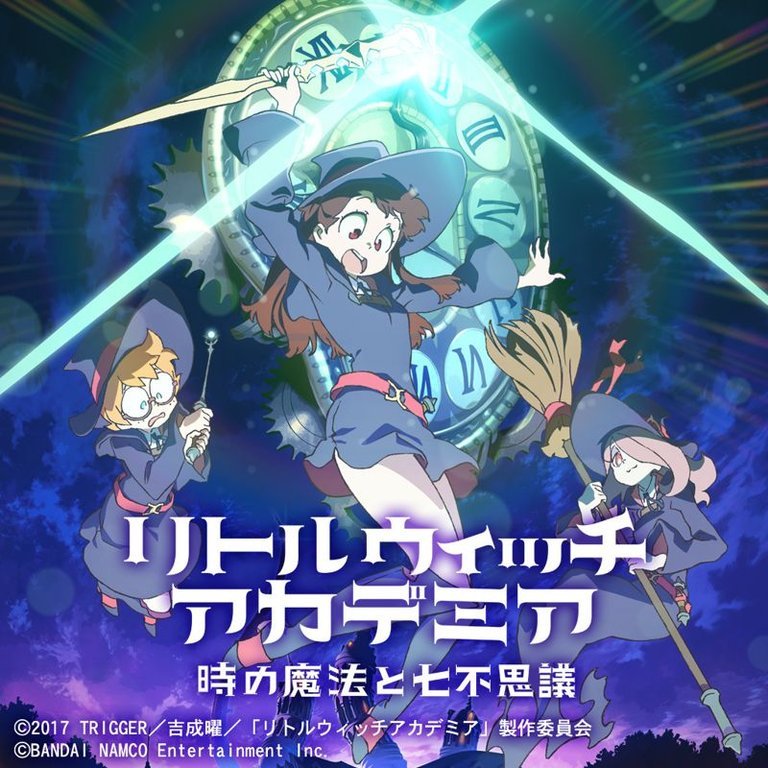
Set in the magical Luna Nova Academy, ‘Little Witch Academia: Chamber of Time’ follows protagonist Akko Kagari and her friends as they uncover the secrets of a mysterious time-altering chamber. This action RPG blends side-scrolling exploration, spellcasting combat, and puzzle-solving within a whimsical fantasy school setting. Designed to complement the beloved anime series, the game immerses players in a world of witchcraft, friendship, and supernatural anomalies, though it leans heavily on existing franchise appeal.
Gameplay Videos
Where to Buy Little Witch Academia: Chamber of Time
PC
Little Witch Academia: Chamber of Time Free Download
Little Witch Academia: Chamber of Time Cracks & Fixes
Little Witch Academia: Chamber of Time Guides & Walkthroughs
Little Witch Academia: Chamber of Time Reviews & Reception
metacritic.com (58/100): This game comes with loads of great fan service, including a full voiced cast. Sadly, when you look at it as a hack and slash action game, the game has little depth. Still, if you can live with average gameplay there is plenty to enjoy here.
opencritic.com (59/100): There’s maybe a third of a good game in here, weighed down by a mountain of big and ambitious ideas, none of them given the time and attention they needed to really function.
imdb.com (10/100): I grew beyond frustrated at the inability to progress in the main story for lacking a specific spell.
twinfinite.net (60/100): The fanservice (not that kind) Little Witch Academia Chamber of Time provides can be ever-so-pleasing. Unfortunately, it’s not enough to excuse a rather dull game.
Little Witch Academia: Chamber of Time: Review
Introduction
Once upon a witchcraft academy brimming with charm, Studio Trigger’s Little Witch Academia emerged as a radiant love letter to animation, enchanting audiences with its whimsical spirit and heartfelt messages about perseverance. Chamber of Time, its 2017 video game adaptation, sought to bottle that magic into an interactive potion—a beat ’em up/RPG hybrid exploring a time-loop mystery within Luna Nova Academy. But beneath its vibrant facade lie deep cracks in the cauldron. This review argues that while Chamber of Time admirably channels the anime’s warmth and aesthetic, it collapses under its own ambition, burying its strengths beneath clunky systems, technical missteps, and a failure to translate Trigger’s kinetic energy into compelling gameplay.
Development History & Context
The Studio and Vision
Developed by Aplus Co., Ltd. (known for Macross 30 and Tales of Symphonia remasters) and published by Bandai Namco, Chamber of Time was conceived as a multimedia expansion for Little Witch Academia’s growing fandom. Released for PlayStation 4 and PC in 2017–2018, the game aimed to blend Studio Trigger’s signature animation (via original cutscenes) with an exploration-heavy RPG. Built on Unity Engine, the project prioritized fidelity to the anime’s aesthetic, though Aplus faced constraints adapting its fluid 2D animation into 3D while integrating varied gameplay loops. At the time, anime-licensed games oscillated between low-effort cash-ins (Seven Deadly Sins: Knights of Britannia) and polished experiments (Dragon Ball FighterZ). Chamber of Time fell squarely into the latter ambition—yet stumbled into the former’s pitfalls.
Technological and Market Constraints
The mid-2010s saw licensed games struggle with budget realities and tight production windows. Chamber of Time’s structure—pairing 3D school exploration with 2.5D combat—evoked classics like Dragon’s Crown but lacked the same polish. According to director Hideaki Mizota (later of Kill la Kill: If), deadlines hampered deeper integration of Trigger’s flair into gameplay systems, leaving a disjointed experience. Moreover, the game targeted a niche demographic already underserved by Western anime fans, limiting resources for localization polish (e.g., no English dub despite Netflix’s anime localizations).
Narrative & Thematic Deep Dive
Plot: A Groundhog Day Caper
Set mid-season between episodes 7 and 8 of the anime, the story casts Akko Kagari—Luna Nova’s relentlessly optimistic, magically inept protagonist—into a time-loop crisis. After discovering the Holorogium Chamber beneath the library, she triggers a spell causing the first day of summer vacation to repeat endlessly. Partnering with friends (Lotte, Sucy) and rivals (Diana), Akko investigates the Seven Wonders of Luna Nova, anomalies tied to magical keys needed to stabilize time. The narrative’s strength lies in its slice-of-life charm: quests involve mundane tasks (cleaning, fetching tea) juxtaposed with supernatural phenomena, reinforcing themes of friendship overcoming isolation.
Characters and Dialogue
The game excels in characterization, leveraging original Japanese voice acting and Trigger-scripted scenes to deepen personalities. Akko’s boundless enthusiasm clashes delightfully with Diana’s icy pragmatism (Teeth-Clenched Teamwork), while Molly McIntyre—an NPC elevated to tragic antagonist—embodies the theme of loneliness. Molly’s backstory, revealed late-game, poignantly mirrors Akko’s struggles: a witch cursed to repeat time for centuries after failing to connect with peers. Side quests flesh out background students (e.g., Hannah’s crush on Amanda’s male disguise), though repetition saps emotional resonance.
Themes: Perseverance vs. Entropy
Like the anime, Chamber of Time interrogates legacy vs. innovation in magic. The Holorogium Chamber symbolizes stagnation—Molly’s cycle of despair versus Akko’s growth through collaboration. Yet, the narrative stumbles in pacing; Groundhog Day mechanics feel less a meaningful loop (à la Majora’s Mask) than a padding device, forcing players to re-traverse environments ad nauseam.
Gameplay Mechanics & Systems
Core Loop: Two Halves, Uneven Whole
Chamber of Time bifurcates into two modes:
1. 3D School Exploration: Free-roam Luna Nova, accept quests, and chat with characters.
2. 2.5D Side-Scrolling Combat: 3-witch parties battle through dungeons in Dragon’s Crown-esque brawls.
Exploration suffers from poor UX design:
– Tedious Navigation: No dynamic time-advance forces backtracking to Akko’s dorm.
– Vague Objectives: Quests lack tracking; map icons confuse rather than clarify.
– Save System: No autosave; save points require scarce potions.
Combat, meanwhile, balances customization with frustration:
– Character Progression: 10 playable witches (including post-game unlock Diana), each with unique spells (e.g., Constanze’s Grand Charion mech) and RPG skill trees.
– Controls: Sluggish movement and imprecise hit detection undermine combo potential.
– Boss Fights: Erratic difficulty spikes (e.g., ice dragon requiring minutes of button-mashing) and brain-dead AI companions.
Innovation and Flaws
Aplus ambitiously hybridized genres but faltered in execution. The “Horologium Chamber” time-loop could’ve enabled inventive puzzles; instead, it recycled content. Co-op multiplayer existed but was buried in menus. Even progression systems felt unbalanced—grinding dungeons for gems (to buy fast-travel potions) became mandatory, not optional.
World-Building, Art & Sound
Visual Design: A Sparkling Facade
Luna Nova’s cel-shaded 3D recreation masterfully mirrors Trigger’s art style. Character models emote vividly (Akko’s yawns when idle), and locales like the library and greenhouse burst with whimsical detail. Original anime cutscenes (directed by Yoshinari himself) dazzle with fluid action—yet contrast sharply with stiff in-engine sequences.
Sound and Music
The OST recycles Yugo Kanno’s score from the anime, evoking whimsy and grandeur. Fully voiced Japanese dialogue honors the source (Megumi Han is Akko), but lip-sync is absent, breaking immersion. Environmental sounds—broom clatters, spell incantations—add charm but can’t salvage repetitive dungeon themes.
Atmosphere and Immersion
For fans, wandering Luna Nova feels magical—until technical issues intrude. Frame drops plague combat, especially on base PS4, while texture pop-in and loading screens fracture pacing. The school’s layout, though authentic, becomes a labyrinth of wasted time.
Reception & Legacy
Launch Response
Critics savaged Chamber of Time’s gameplay, awarding a Metascore of 58 (PS4). Praise focused on story and presentation (IGN Japan: 81/100 for “fan service”), while detractors lambasted systems (Destructoid: 4/10 – “disappointment”). Players echoed this divide: niche fans cherished character moments; others quit over clunkiness.
Evolution and Influence
The game faded swiftly, eclipsed by better anime adaptations (e.g., My Hero Academia’s arena fighters). Its failure underscored risks of over-scoped licensed games—Aplus’ attempt to please fans with a “complete” RPG backfired. However, it remains a cult artifact for LWA devotees, preserving expanded lore (e.g., Molly’s Ascended Extra role) absent from the anime.
Conclusion
Little Witch Academia: Chamber of Time is a paradoxical brew: a game radiates love for its source material yet falters in execution. Its strengths—Trigger’s cutscenes, character writing, and art direction—are undeniable, but they drown under repetitive quests, technical jank, and half-baked mechanics. For die-hard fans craving more Luna Nova lore, it offers fleeting enchantment; for all others, it’s a tedious slog best left on the shelf. In the annals of video game history, Chamber of Time stands not as a triumph but as a cautionary tale: magic alone can’t save a flawed foundation.
Final Verdict: 5.6/10 – A flawed charm offensive for franchise faithfuls; skip the anime and replay the show instead.