
- Release Year: 2008
- Platforms: Windows
- Developer: Mike Inel
- Genre: Action
- Perspective: 3rd-person, Side view
- Game Mode: Single-player
- Gameplay: Collecting, Stamina management
Description
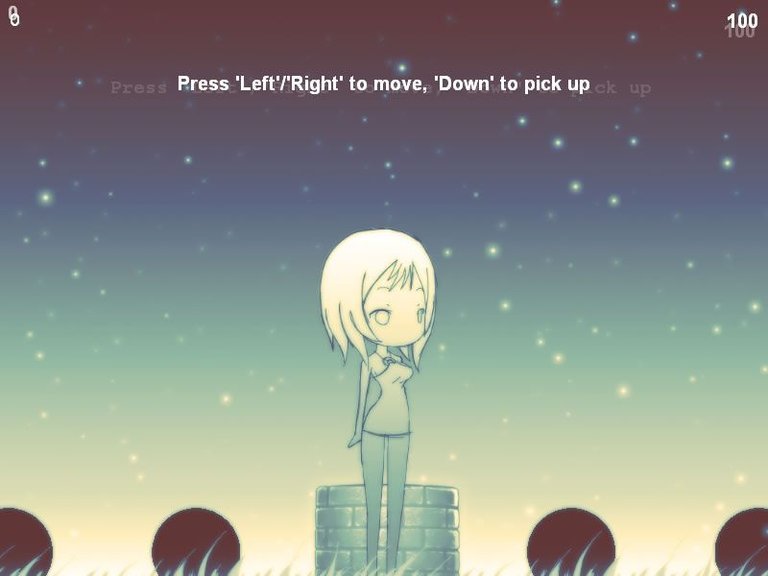
How is a short side-scrolling action game where players control a girl tasked with collecting balls and depositing them into a well within a five-minute time limit. The side-view perspective challenges players to strategize movement and stamina management, as running or carrying balls for too long drains energy. A unique twist allows the girl to eat balls to replenish stamina, adding a risk-reward dynamic to the fast-paced, time-limited objective.
Where to Buy How
PC
How: Review
A Minimalist Experiment in the Shadow of Titans
Introduction
In the annals of video game history, 2008 stands as a watershed year—a period defined by Grand Theft Auto IV’s open-world revolution, Fallout 3’s post-apocalyptic immersion, and LittleBigPlanet’s user-generated creativity. Yet nestled among these behemoths was How, a freeware curiosity by solo developer Mike Inel. A side-scrolling action game bereft of narrative ambition or mechanical complexity, How embodies the antithesis of 2008’s blockbuster ethos. This review examines How not as a footnote but as a deliberate minimalist experiment, exploring how its constrained design reflects both the possibilities and limitations of indie development in an era of escalating production values.
Development History & Context
How emerged from a landscape dominated by AAA spectacle. Developed by Mike Inel—known for niche projects like How Much? (2006) and How Many… (2008)—the game was released on November 3, 2008, for Windows. Inel operated outside the commercial mainstream, crafting How as freeware with no monetization strategy. Technologically, the game leveraged basic 2D mechanics, side-stepping the era’s push for 3D realism seen in Metal Gear Solid 4 or Gears of War 2. While 2008 heralded breakthroughs in environmental storytelling (Bioshock) and emergent narratives (Left 4 Dead), How retreated to arcade-era simplicity. Its development philosophy echoed early text adventures like Colossal Cave Adventure, privileuting mechanical purity over narrative depth—a stark counterpoint to the industry’s growing infatuation with cinematic gravitas.
Narrative & Thematic Deep Dive
How defies traditional narrative analysis. There is no protagonist arc, no dialogue, and no lore—only a nameless girl fetching balls to deposit into a well. The “story,” if it can be called such, is a functional skeleton: a five-minute race against stamina depletion. Unlike the atmospheric logs of Dead Space or the ethical quandaries of Fallout 3, How’s “world-building” is a void. The absence of context transforms gameplay into abstraction: balls are not MacGuffins but obstacles to be managed. Thematic resonance emerges unintentionally: the Sisyphean act of collecting and consuming balls mirrors futility, yet this interpretation feels more accidental than authored. Inel’s design rejects thematic ambition, reducing the player’s role to that of a mechanical operator rather than a story participant.
Gameplay Mechanics & Systems
At its core, How is a stamina-management puzzle wrapped in a platformer’s skin. The player maneuvers left and right to collect balls, balancing movement speed against stamina depletion. Running or carrying too many balls drains stamina, forcing the player to consume balls—a self-cannibalizing act that replenishes energy at the cost of progress. This creates a tense feedback loop: greed accelerates failure, while caution squanders time.
The UI is Spartan: a timer and stamina bar dominate the screen. There are no power-ups, no difficulty settings, and no progression systems—only raw optimization of movement and resource allocation. While innovative in its austerity, the design falters in execution. The stamina mechanic lacks nuance, leading to repetitive trial-and-error. Unlike the strategic depth of Into the Breach or the fluidity of Celeste, How’s gameplay feels undercooked, a prototype yearning for iteration.
World-Building, Art & Sound
Visually, How embraces minimalism with jarring inconsistency. The girl sprite is crudely animated, evoking early Flash games, while the well and balls resemble placeholder assets. Backgrounds are static and nondescript, offering no environmental storytelling or aesthetic cohesion. The art direction suggests haste—a functional visualization of mechanics rather than a crafted world.
Sound design is equally rudimentary: generic collision noises and a ticking timer heighten tension but contribute nothing to atmosphere. Compared to World of Goo’s whimsical audio landscape or Braid’s haunting piano, How’s sonic palette feels like an afterthought. These elements reflect the constraints of solo development but fail to elevate simplicity into artistry.
Reception & Legacy
How garnered little attention upon release. MobyGames records a lukewarm average player score of 2.2/5 based on two ratings, with no critic reviews. Its commercial impact was nonexistent—a stark contrast to 2008’s bestsellers like Wii Fit (12.96 million sold) or GTA IV (10 million). While indie gems like Braid and World of Goo reshaped perceptions of small-scale design, How vanished into obscurity.
Yet its legacy lies in unintended lessons. The game’s blunt focus on mechanical purity anticipates today’s “hyper-casual” mobile market, where frictionless loops dominate. It also exemplifies the risks of under-scoped ambition: where Super Meat Boy (released two years later) refined minimalism into excellence, How’s lack of polish renders it more curio than classic.
Conclusion
How is a paradox: a game so simple it becomes opaque. Its refusal to engage with narrative or aesthetics feels less like a statement than a surrender—a placeholder for ideas never fully realized. While 2008’s titans redefined storytelling and immersion, How retreats into arcade-era asceticism, offering a brief, frictionful distraction. For historians, it serves as a snapshot of indie experimentation in AAA’s shadow. For players, it is a five-minute oddity—a reminder that not all minimalism transcends its limits. In the pantheon of gaming, How is less a milestone than a whisper, drowned out by the roar of its contemporaries.