
- Release Year: 2007
- Platforms: Windows
- Publisher: Atari, Inc.
- Genre: Special edition
- Game Mode: Single-player
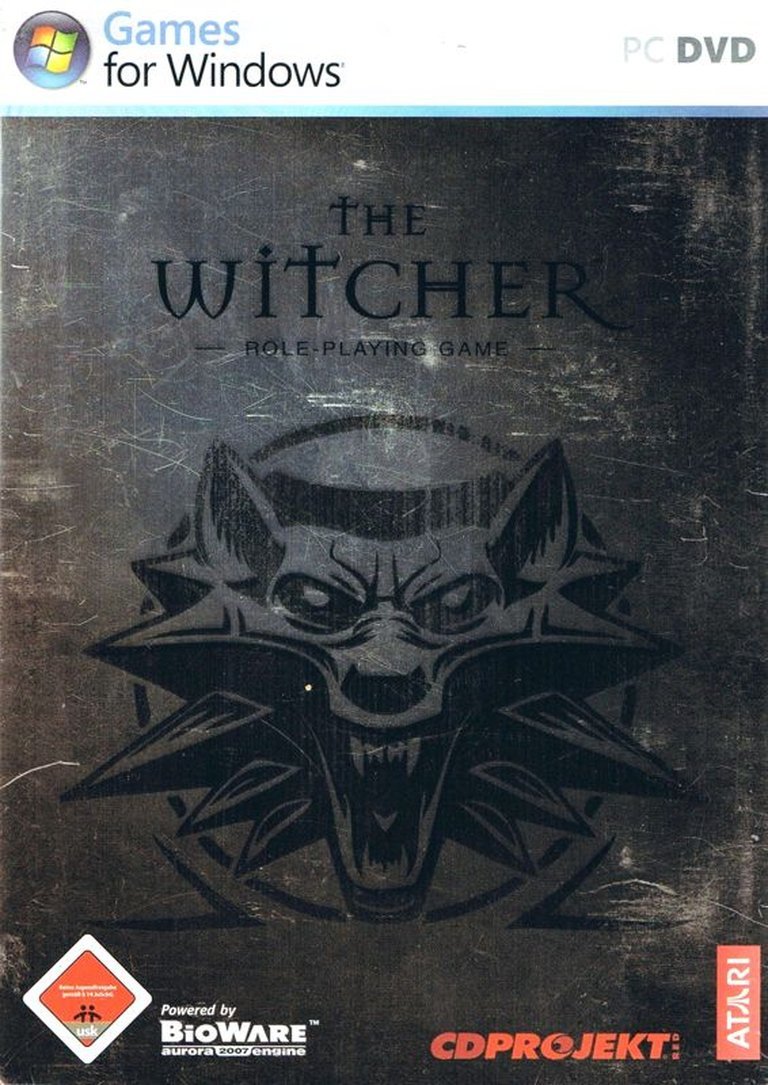
Description
The Witcher (Steelbook Edition) is an action role-playing game set in a dark fantasy world where players take on the role of Geralt of Rivia, a witcher suffering from amnesia. As Geralt, players navigate a complex web of political intrigue, alliances, and enemies, choosing between three primary paths: aligning with the elves, supporting the Order of the Flaming Rose, or maintaining neutrality. The game features a rich storyline with multiple endings based on the player’s choices, making each playthrough unique. The Steelbook Edition includes the official soundtrack, a making-of DVD, and exclusive behind-the-scenes footage.
Gameplay Videos
Where to Buy The Witcher (Steelbook Edition)
PC
The Witcher (Steelbook Edition) Cracks & Fixes
The Witcher (Steelbook Edition) Guides & Walkthroughs
The Witcher (Steelbook Edition): Review
Introduction
In an era where Western RPGs like The Elder Scrolls and Mass Effect dominated the landscape, Polish developer CD Projekt Red delivered a dark horse that would redefine narrative depth in role-playing games—The Witcher. Released in 2007 and bundled in its collectible Steelbook Edition with a soundtrack, making-of DVD, and premium packaging, this adaptation of Andrzej Sapkowski’s novels emerged as a cult classic. While flawed, it laid the foundation for one of gaming’s most revered franchises. This review argues that The Witcher is a pivotal artifact in RPG history: a morally complex, visually gritty triumph constrained by its era’s technical limitations, yet revolutionary in its storytelling ambition.
Development History & Context
CD Projekt Red, then a fledgling studio, sought to translate Sapkowski’s Slavic-tinged fantasy universe into an interactive experience. Acquiring the license for a mere 35,000 PLN (~$9,500 USD) from Sapkowski—who opted for upfront payment over royalties—the team faced skepticism. Poland’s gaming industry was nascent, and RPGs were overwhelmingly influenced by Gothic and Baldur’s Gate. The studio chose BioWare’s Aurora Engine (used in Neverwinter Nights), modifying it extensively for single-player immersion. Challenges included rendering a dynamic day/night cycle, weather systems, and modular NPC behaviors within 2005-era hardware constraints.
Launched during a resurgence of mature fantasy (Game of Thrones was gaining literary traction), The Witcher arrived amidst divisive expectations. Atari’s Western publishing deal brought censorship debates (e.g., toned-down romance cards), while technological hurdles led to infamous load times. Yet, the team’s passion—evident in the Enhanced Edition’s 2008 overhaul—refined combat, rewrote translations, and added cut content, solidifying its cult status.
Narrative & Thematic Deep Dive
The Witcher’s story is a labyrinthine meditation on morality, prejudice, and destiny. Following Geralt of Rivia—a genetically enhanced monster hunter with amnesia—the game intertwines political upheaval (Nilfgaard’s encroachment, Temerian instability) with deeply personal arcs. The Salamandra conspiracy, stealing Witcher mutagens, serves as a linchpin, but the true brilliance lies in side quests and faction allegiances.
The narrative forces players into “lesser evil” dilemmas:
– Chapter I’s Beast of Vizima reveals a tragic lover, not a monster, challenging Geralt’s role as executioner.
– Chapter IV’s Lakeside conflict forces allegiance to the racist Order of the Flaming Rose, rebel Scoia’tael elves, or a treacherous neutrality.
– The epilogue deconstructs Jacques de Aldersberg’s apocalyptic zealotry, paralleling real-world extremism.
Characters like Triss Merigold (a sorceress masking vulnerability) and Dandelion (a bard subverting comic relief tropes) enrich Sapkowski’s themes of otherness. The amnesia device—initially a cliché—becomes a tool to interrogate identity: Geralt’s forgotten past lets players redefine his ethics, making choices like sacrificing Alvin (a child Source) or sparing antagonists feel deeply personal.
Gameplay Mechanics & Systems
The Witcher’s DNA blends action-RPG combat with CRPG intricacy, albeit unevenly:
– Combat System: The trio of styles (fast, strong, group) demands tactical awareness. Silver swords slay specters; steel eviscerates humans. Rhythm-based combos add nuance, but clunky animations plague responsiveness.
– Alchemy: A standout feature. Brewing potions like Swallow (regeneration) or Cat (night vision) requires herb hunting and toxicity management, rewarding preparation. Oils and bombs further deepen strategy.
– Character Progression: Mutagens and talents encourage hybrid builds (sign magic vs. swordsmanship), though imbalanced skills (e.g., overpowered Igni sign) undermine late-game challenge.
– UI/UX: The original release’s cluttered inventory and endless load screens were infamous. The Enhanced Edition streamlined these but retained a learning curve.
The time-delayed consequence system remains revolutionary. Helping a village against necrophages in Act I might seed a pogrom in Act III. Such ripple effects reward replayability, though uneven pacing (e.g., tedious swamp treks) mars momentum.
World-Building, Art & Sound
Set on the war-torn Continent, The Witcher’s world oozes grim authenticity:
– Visual Design: Gritty, rain-slicked Vizima channels Eastern European medievalism. Kaer Morhen’s crumbling grandeur and murky swamps leverage the Aurora Engine’s limitations with moody lighting and texture work. Monster designs—from zeugls to strigas—are grotesque yet grounded.
– Soundscape: Adam Skorupa and Paweł Błaszczak’s OST mixes Slavic folk motifs with haunting choirs. The leitmotif “Believe” underscores Geralt’s journey, while ambient tavern chatter and monster growls sell immersion.
– Atmosphere: Dynamic weather and NPC routines (villagers fleeing rain, nocturnal monsters) create a lived-in world. The Enhanced Edition’s restored dialogue—warts and all—preserves Sapkowski’s dark humor and vulgarity.
The Steelbook Edition’s making-of DVD showcases this labor of love, revealing concept art and voice-acting hurdles.
Reception & Legacy
Upon launch, The Witcher earned 81/100 on Metacritic, praised for narrative depth but criticized for bugs and pacing. The Enhanced Edition (2008) boosted scores to 86/100, fixing technical woes and adding content. Commercially, it sold 800,000 copies in ten months, birthing a franchise that has since moved 75+ million units.
Its legacy is multifaceted:
– Narrative Innovation: CD Projekt’s choice-driven storytelling paved the way for The Witcher 3’s acclaim.
– Cultural Impact: Catalyzed global interest in Slavic fantasy, influencing Gwent spin-offs and Netflix adaptations.
– Industry Influence: Proved Eastern European studios could rival AAA giants, inspiring titles like Kingdom Come: Deliverance.
Critically, it remains flawed—combat aged poorly, and racial allegories (elves as oppressed minorities) occasionally veer into cliché—yet its ambition is undeniable.
Conclusion
The Witcher (Steelbook Edition) is a paradox: a technically rough gem that redefined RPG storytelling. Its tactile world, moral complexity, and alchemical depth make it a historian’s delight, while its stumbles reflect the growing pains of a studio daring to dream big. Two decades later, standing in the shadow of its sequel’s triumphs, this edition serves as both artifact and testament. For collectors, the Steelbook’s extras offer nostalgic charm; for players, it’s a foundational chapter in gaming’s evolution. 8/10—a must-play for RPG devotees, warts and all. As Geralt himself might say: “Evil is evil, but mediocrity? This game transcends it.”