
- Release Year: 2006
- Platforms: Windows, Xbox
- Publisher: 1C Company, Groove Media Inc.
- Developer: Direct Action Games
- Genre: Action
- Perspective: 1st-person
- Game Mode: LAN, Online PVP, Single-player
- Gameplay: Shooter
- Setting: Berlin, World War II
- Average Score: 22/100
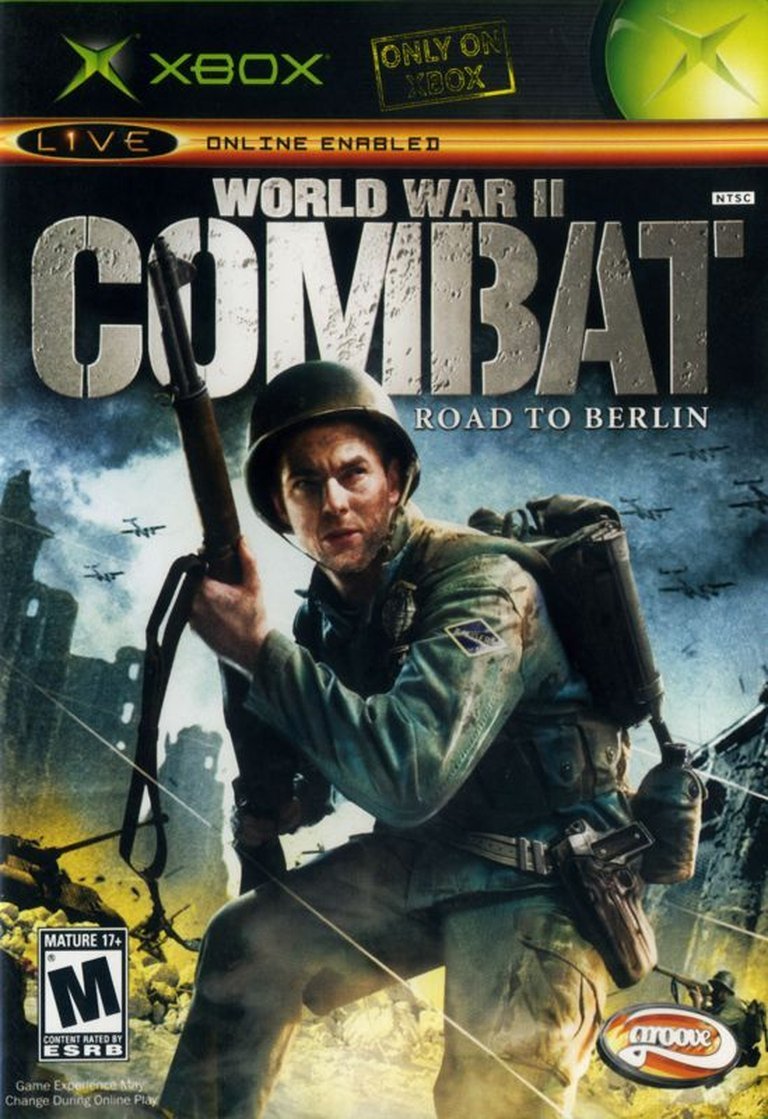
Description
World War II Combat: Road to Berlin is a first-person shooter set during the final days of World War II. Players take on the role of Steven Moore, an officer in the Office of Strategic Services, tasked with securing German ‘Vengeance Weapons’ research before the Russians can obtain it. The game features a single-player campaign that spans various locations, including aircraft fields, submarine bunkers, and the ruins of Berlin. The multiplayer mode offers seven different modes, a variety of weapons, and large maps, providing a robust online experience.
Gameplay Videos
World War II Combat: Road to Berlin Free Download
World War II Combat: Road to Berlin Cracks & Fixes
World War II Combat: Road to Berlin Patches & Updates
World War II Combat: Road to Berlin Mods
World War II Combat: Road to Berlin Reviews & Reception
gamespot.com (20/100): If America’s participation in World War II was as frustratingly terrible as this game, all of Europe would be speaking German today.
metacritic.com (23/100): The awful controls are a hindrance, the missions are pedantic, and the levels are apparently designed by LevelBot 3000.
mobygames.com (24/100): One of the worst games I’ve ever played, and that’s saying something.
mobygames.com (24/100): A WWII game so horrible, the Allied soldiers shoot at you instead of the Axis.
World War II Combat: Road to Berlin Cheats & Codes
PC
Press ” during gameplay and type the code.
| Code | Effect |
|---|---|
| god | God Mode (Invincibility) |
| weapons | All Weapons |
| allammo | Full Ammunition |
| ghost | No Clipping Mode |
| fly | Flight Mode |
| walk | Disable No Clipping and Flight |
World War II Combat: Road to Berlin: Review
Introduction
In the saturated landscape of mid-2000s World War II shooters, WWII Combat: Road to Berlin stands not as a forgotten relic, but as a notorious case study in rushed development, broken design, and squandered potential. Released in 2006 by Direct Action Games (later rebranded as Zombie Studios) and published by Groove Games, this budget-tier FPS promised a race against Soviet forces to secure Nazi “Vengeance Weapons” in the war’s dying days. Instead, it delivered an experience so riddled with technical failures and design missteps that one player likened it to “digital disaster.” This review interrogates how Road to Berlin collapsed under its ambition, cementing its legacy as a cautionary tale of how not to execute a historical shooter.
Development History & Context
Studio Background & Vision
Direct Action Games, a Seattle-based studio with credits like Shadow Ops: Red Mercury (2004), aimed to capitalize on the fervor for WWII shooters ignited by franchises like Call of Duty and Medal of Honor. Leveraging a modified version of Unreal Engine 2 from Shadow Ops, the team sought to deliver a “cinematic” tale blending espionage and frontline combat. Executive producers Mark Long and Joanna Alexander envisioned a narrative-driven campaign with multiplayer depth, but ambition clashed with resource constraints.
Technological & Market Constraints
In 2006, the Xbox and PC markets were flooded with polished AAA WWII titles, raising the bar for visuals, AI, and mechanics. Road to Berlin‘s budget status ($20 USD at launch) forced compromises: the studio reused assets from Shadow Ops, including particle effects and animations, while rushing development to meet deadlines. Performance issues plagued the engine, with critics noting “chunky, blocky, pixelized garblemesh” textures and unstable physics. Multiplayer bots—a touted feature absent in predecessor Combat: Task Force 121—were added haphazardly, inheriting the campaign’s flawed AI.
Narrative & Thematic Deep Dive
Plot & Characters
Players assume the role of Lieutenant Steven Moore, an OSS officer tasked with intercepting Soviet efforts to seize Nazi Wunderwaffen (wonder weapons). The story unfolds across 10 missions, from submarine pens to ruined Berlin streets, with Moore photographed salvaging intel to unlock “bonus trivia”—historical tidbits reviewers dismissed as “pseudo-history.”
Thematic Missteps
Though thematically poised to explore Cold War foreshadowing (e.g., Soviet ambitions vs. Allied ideals), the narrative collapses under shallow execution. Allies and enemies blur into cannon fodder, with AI scripting so broken that “friendly” G.I.s frequently turn on the player, triggering instant game-over screens. The Cold War angle is reduced to a MacGuffin chase, devoid of moral nuance or contextual depth.
Gameplay Mechanics & Systems
Core Combat & Controls
At its most functional, Road to Berlin resembles a broken arcade shooter. The weapon arsenal—including BARs, sniper rifles, and pistols—feels “terribly weak” (per player reviews), with firing rates “sluggish” and hit detection unreliable. The sniper rifle forced players out of zoom after each shot, while the “threat reticle” designed to indicate incoming fire reportedly “always reported random results.”
Progression & Health Systems
A divisive absence of health packs meant players relied solely on end-of-level regeneration, creating frustration when checkpoints saved while critically wounded. Limited weapon-swapping (players could only carry starter weapons and loot ammo) compounded rigidity. Worse, starting a level with a sniper rifle and no close-combat alternative rendered many encounters unfairly punishing.
AI & Multiplayer
Enemy AI navigated levels “like cardboard targets sliding on ice” (Player: Tony Denis), while allies lacked faction awareness, often shooting players “as if they were on the Axis side” (Player: Spartan_234). Multiplayer offered seven modes (Deathmatch, CTF) for 16 players, but bots recycled campaign AI, making matches chaotic yet predictable.
World-Building, Art & Sound
Visual Design
Running on Unreal Engine 2, Road to Berlin’s graphics were savaged for “carpet-like” textures, boxy level geometry, and repetitive character models. Tanks and vehicles lacked animated treads or wheels, with details painted onto static meshes. The much-hyped “war-torn Berlin” setting felt sterile, with one critic noting “barely noticeable blood effects” and “ash [that] looked like patches of grass.”
Sound Design & Voice Acting
Soundtracks evoked “1920s movie scores” (Player: Spartan_234), while weapons emitted identical “firecracker” reports. Voice acting, led by a “bored” narrator, reinforced the game’s cheap production values. One player quipped, “Fred Newman from Doug could’ve done better.”
Reception & Legacy
Critical & Commercial Failure
Road to Berlin bombed critically, earning Metascores of 20/100 (PC) and 23/100 (Xbox). GameSpot branded it a “failure from top to bottom,” while Official Xbox Magazine awarded a 1/10, calling its controls a “hhindrance [sic].” User reviews echoed this: MobyGames players rated it 2.7/5, with many labeling it “unplayable.” Commercially, it sank without a trace, though bargain bins ensured cult infamy.
Industry Impact
The game’s sole legacy is as a meme of ineptitude—a “worst of WWII shooters” punchline. Its rushed development highlighted pitfalls of asset-flip sequels, while its multiplayer bots presaged later AI controversies. Follow-up WWII Combat: Iwo Jima fared no better, effectively ending the short-lived series.
Conclusion
World War II Combat: Road to Berlin is less a game than a forensic exhibit in how mechanical dysfunction, technical apathy, and narrative hollowing can converge into anti-art. Beyond its “so bad it’s funny” quirks—like treasonous allies or AI-piloted carnival targets—it reflects a darker truth: budget constraints and deadlines can strangle creativity, leaving behind a product divorced from its era’s standards. For historians, it serves as a relic of the mid-2000s’ shooter glut. For players? A grim punchline, best left buried in the ruins of its titular city. Final Verdict: A masterclass in failure; essential only as a museum piece of gaming’s missteps.