
- Release Year: 2000
- Platforms: Macintosh, Windows
- Publisher: Hasbro Interactive, Inc., MacPlay, MediaQuest, MicroProse Software, Inc., Paradox Interactive AB
- Developer: Cyberlore Studios, Inc.
- Genre: Strategy, Tactics
- Perspective: Diagonal-down
- Game Mode: LAN, Online Co-op, Single-player
- Gameplay: Building construction, Business simulation, Hero recruitment, Managerial, Real-time strategy, Resource Management, RPG elements, Spell casting
- Setting: Fantasy
- Average Score: 84/100
Description
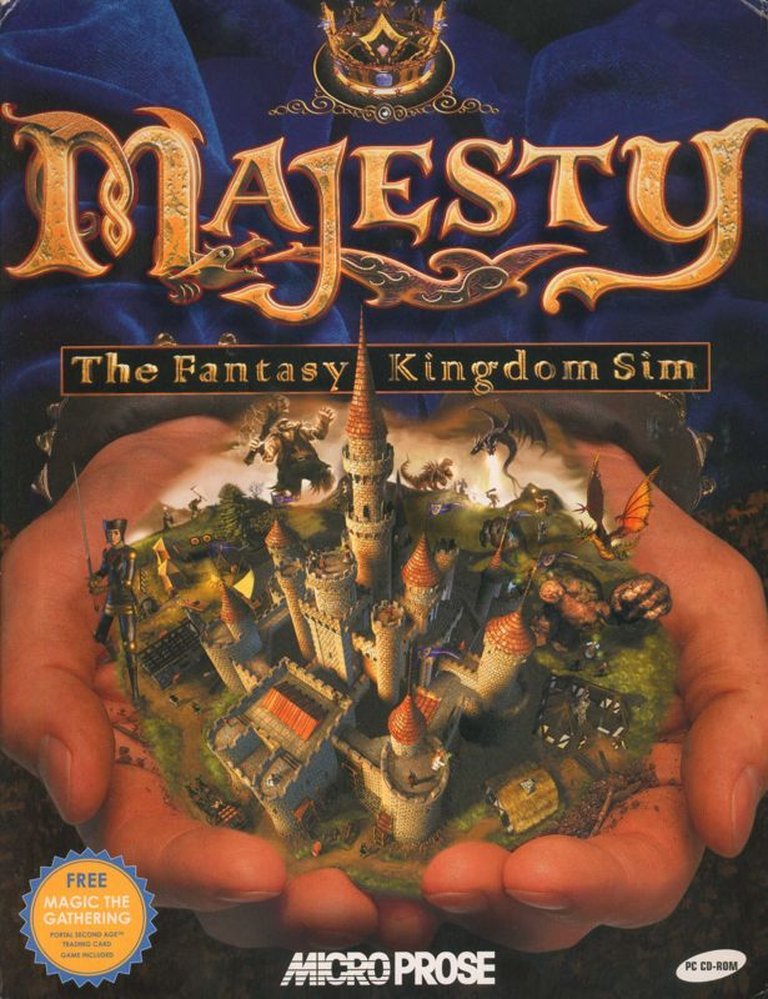
Majesty: The Fantasy Kingdom Sim is a unique real-time strategy game set in the fantasy kingdom of Ardania. Players assume the role of the king, managing heroes who operate independently, motivated by bounties and quests set by the player. The game features a rich economy based on gold, gathered through taxes and hero activities, and a campaign that involves reuniting the kingdom from various monsters and evildoers.
Gameplay Videos
Majesty: The Fantasy Kingdom Sim Free Download
Majesty: The Fantasy Kingdom Sim Cracks & Fixes
Majesty: The Fantasy Kingdom Sim Patches & Updates
Majesty: The Fantasy Kingdom Sim Mods
Majesty: The Fantasy Kingdom Sim Guides & Walkthroughs
Majesty: The Fantasy Kingdom Sim Reviews & Reception
metacritic.com (72/100): I feel like Majesty came out of nowhere. I suppose as someone who was never able to sample most of the PC’s classics it kind of did. I’m glad I finally had the chance to play it this time around, and I hope that it gets all the attention it so rightly deserves.
gamespot.com : Majesty is original, fun, and challenging, and it’s a winning combination of real-time strategy and role-playing elements.
ign.com (90/100): Majesty is a unique sim putting you in the crushed velvet hotseat of your own kingdom.
game-over.net (90/100): This could perhaps be their biggest title to date, which, if successful, could really boost their image and perhaps make their name known among the gaming community.
Majesty: The Fantasy Kingdom Sim Cheats & Codes
PC
Press [Enter] during gameplay, type the code, then press [Enter] again.
| Code | Effect |
|---|---|
| fill this bag | Add 10,000 Gold |
| build anything | Unlock all buildings |
| give me power | Unlock all spells |
| cheezy towers | Unlimited spell range |
| restoration | Restore hit points to all buildings/units |
| grow up | Highlighted hero gains 5 levels |
| now you die | Kill selected target (monster/building) |
| revelation | Reveal entire map |
| victory is mine | Instantly win the mission |
| i’m a loser baby | Instantly lose the game |
| frame it | Display frame rate counter |
| night of the living dead | Spawn undead enemies |
| goblin rush | Spawn goblins |
| prepare to die | Spawn dragons and rock golems |
| planet fargo | Royal Advisor sings |
| pump up the volume | Spawn general monsters |
| give me action | Spawn minotaurs |
Gold Edition (PC)
| Code | Effect |
|---|---|
| fill his bag | Add 10,000 Gold |
| i have the power | Unlock all powers |
Multiplayer
| Code | Effect |
|---|---|
| leave me alone | Exit multiplayer and continue solo |
Majesty: The Fantasy Kingdom Sim – A Monarch’s Burden, a Strategist’s Delight
Introduction
In an era dominated by starcraftian militarism and age-of-empiresian empire-building, Majesty: The Fantasy Kingdom Sim dared to ask: What if the ruler couldn’t command his subjects? Released in 2000 by Cyberlore Studios under MicroProse, this innovative RTS/RPG/simulation hybrid cast players not as a god or a general but as a beleaguered monarch forced to govern a realm of capricious, gold-hungry heroes. Though flawed, Majesty carved a niche as a dark-horse cult classic, blending Dungeons & Dragons archetypes with economic strategy—a provocative experiment that still resonates today.
Development History & Context
Cyberlore’s Risky Gambit
Led by designer Jim DuBois, whose prior work on Heroes of Might and Magic II and Warcraft II: Beyond the Dark Portal hinted at his affection for fantasy tropes, Cyberlore spent four years refining Majesty’s concept after its 1996 inception. The studio faced publisher skepticism—Ripcord collapsed, Microsoft passed—until Hasbro Interactive (via MicroProse) greenlit the project in 1999. This delay proved serendipitous, allowing deeper systems like hero autonomy and temple rivalries to mature.
A Land of Constraints and Ambition
Released amid 2000’s RTS glut, Majesty defied expectations by ditching direct unit control—a radical move that alienated traditionalists but intrigued sim fans. Technical limitations of the era forced compromises: sprite-based isometric visuals, small maps, and erratic AI. Yet these constraints birthed creativity. The game’s economy boiled down to gold, sidestepping complex resource chains, while heroes borrowed RPG stat progression (levels, gear, spells) rarely seen in strategy games.
Narrative & Thematic Deep Dive
Ardania: A Parody of Fantasy Clichés
Set in the fractured kingdom of Ardania, Majesty’s “plot” is a satirical tapestry woven from D&D tropes. Players, as the newly crowned Sovereign, must reunite the realm by completing quests like slaying dragons or rescuing nobles—each mission a self-contained vignette mocking hero myths. The genius lies in perspective: You’re not the chosen one but the underfunded bureaucrat hiring mercenaries to clean up the mess.
The Gods and the Fickle Hero
Ardania’s pantheon—Krolm (god of rage), Krypta (death), Dauros (order)—dictates temple choices and hero allegiances. Opt for Paladins of Dauros, and you lose access to Priestesses of Krypta, mirroring D&D’s alignment conflicts. Dialogue drips with irony: heroes boast titles like “Thog the Oblivious” or flee battles screaming, undercutting epic fantasy’s grandeur. The Royal Advisor’s dry narration (voiced with Sean Connery-esque gravitas) juxtaposes royal decrees with bureaucratic drudgery—tax collectors chirping “More gold, Your Majesty!” while ratmen loot your treasury.
Gameplay Mechanics & Systems
Indirect Control: Gold as Motivation
Majesty’s core innovation is its bounty-driven gameplay. Want heroes to explore a ruin? Place a reward flag. Need a dragon slain? Offer gold on its head. Heroes act autonomously based on class: Rogues chase paydays but steal from markets; Rangers explore recklessly; Wizards hoard power but crumble in melee. This creates emergent chaos: a Level 10 Warrior might solo a troll while 20 allies flee, or Rogues kamikaze into a lair before reinforcements arrive.
Economy and Infrastructure
Gold flows from taxes, market sales, and loot. Buildings serve dual roles: Warrior Guilds train tanks, Taverns boost morale, while Temples unlock divine spells (e.g., Helia’s Solar Flare). But Majesty’s economy is fragile—sewer-dwelling Ratmen pilfer gold, forcing tower defenses. Poor AI pathfinding and auto-placed houses clog streets, exacerbating crises. Temple choices ripple through gameplay: Fervus’ Cultists summon chaos, while Agrela’s Healers revive fallen allies—but you can’t have both.
Flawed Brilliance
The hero AI is Majesty’s double-edged sword:
– Pros: Unpredictable heroes feel alive, fostering attachment to oddballs like “Lady Isadora, Dragonslayer.”
– Cons: Idiotic decisions—rangers fighting in melee, heroes ignoring potions—sabotage strategy. Late-game relies on grindy resurrection or spell spam since coordination is impossible. Missions devolve into solved puzzles: Survive the initial onslaught, then coast.
World-Building, Art & Sound
Aesthetics of Absurdity
Majesty’s 2D isometric visuals blend WarCraft II whimsy with muted realism—stone castles, neon spell effects—while hero portraits ooze personality (drunken Dwarves, preening Elves). Maps vary from snowbound wastes to goblin-infested forests, though repetitive textures betray budget limits.
Soundscapes of Sovereignty
Kevin Manthei’s score layers lute melodies with martial drums, evoking a Renaissance fair. Voice acting shines: the Advisor’s smug commentary (“Another glorious day for Ardania!”) contrasts heroes’ bravado (“None may challenge Grum-Gog!”). Ambient chatter (tavern songs, blacksmith clangs) fleshes out the realm, even as Ratmen squeal during raids.
Reception & Legacy
Critical Divide, Cult Adoration
At launch, Majesty earned 75% aggregate scores (PC Gamer: 82%; IGN: 84%). Critics lauded its novelty but panned inconsistent AI and limited replayability. Player reviews echoed this: “Charming… but shallow” (Jeff Watts, MobyGames). Yet it won Computer Gaming World’s “Pleasant Surprise of the Year” (2001), validating its cult appeal.
Influence and Iterations
Majesty’s DNA surfaces in Dungeon Village (Kairosoft’s mobile sim) and Recettear (shopkeeping meets hero management). Its 2001 expansion, The Northern Expansion, added quests and units, while Majesty Gold HD (2012) modernized resolutions. The ill-fated Majesty 2 (2009) abandoned the original’s wit for generic RTS mechanics, proving indirect control was irreplaceable.
Conclusion
Twenty-three years later, Majesty: The Fantasy Kingdom Sim remains a flawed masterpiece—a game that dared to question RTS orthodoxy, even as its heroes stumbled into ambushes. Its blend of satirical world-building, emergent storytelling, and heroic chaos created moments no scripted campaign could match. Yes, the AI is infuriating. Yes, missions lose steam. But where else can you bribe a Paladin to fight a dragon, only to watch him flee while a Rogue loots his corpse? For those craving innovation over polish, Majesty reigns supreme: a royal pain worth enduring.